Characteristics of Sumerian Religious Thought
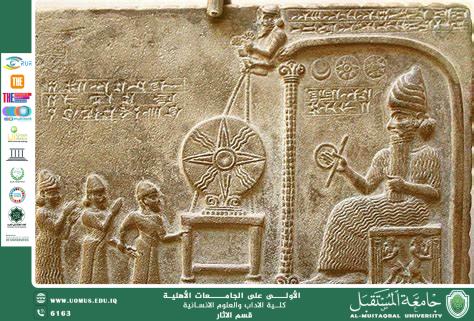
Characteristics of Sumerian Religious Thought<br />Dr. Mariam Imran Musa<br />(Presented within the framework of Sustainable Development Goal 4: Quality Education)<br /><br />Religious thought is an extremely important subject, as cuneiform documents indicate that religion played a significant role in human life. Consequently, most texts—regardless of their nature—inevitably reflect religious influence, since every human endeavor was greatly impacted by religion.<br /><br />Religious beliefs held a distinguished position in the studies of many intellectuals. The cuneiform texts that have been discovered and translated reveal that the Sumerians engaged in extensive contemplation of nature and speculated on the origin and formation of the universe. However, they did not record their religious knowledge in the form of formal rules or laws; rather, it appeared in their literary works—such as myths and epics—which constitute the majority of their literary corpus. Some of these texts address fundamental topics in religious thought, such as the creation and organization of the universe and the creation of man, while others explore themes like death, the description of the underworld, and the condition of the deceased. This indicates that religion played a vital role in ancient Iraqi society, manifesting in every aspect of public life—be it judicial, astronomical, or medical. Despite the diversity of sources through which we understand ancient Iraqi religion (archaeological remains, myths, prayers, hymns), the available evidence represents the core of the religious doctrine.<br /><br />Sumerian religious thought is characterized by several distinctive features. Foremost among these is pluralism, which means the belief in a multitude of gods. People believed that there were many deities, and thus the universe was divided into segments, with each segment governed by a particular god or group of gods. Different gods were assigned to various aspects of life because the supernatural forces that caused and directed events were numerous. Another key characteristic is vitalism—the belief in the existence of inherent forces and spirits in various natural phenomena, which were personified in the form of deities. This principle, known as animism, implies that every phenomenon, no matter how small or large, must be animated by a living force that renders it effective. Consequently, the ancient person regarded natural forces as divine, considering every aspect of nature—such as the sun, moon, stars, rivers, winds, and others—as living beings akin to humans, animals, and plants. In other words, the universe did not appear inert but teemed with life, making Sumerian religion a vital religion—one of the fundamental elements upon which their religious beliefs were based.<br /><br />Anthropomorphism was another defining feature of Sumerian religion. The ancient Iraqis believed in the human-like life of the gods; they depicted them as living in a society governed by specific laws and regulations. Therefore, anthropomorphism is one of the basic principles of their religion and is clearly manifested in myths, where gods are portrayed much like humans—they eat, drink, dress, rejoice, quarrel, and even have a state in the heavens comparable to a city. Although the gods possessed human traits, the Sumerians strove to depict the deity representing the sacred world in a higher, more exalted form, attributing to it superhuman qualities—most notably immortality—along with transcendence, superiority, and dominion, thanks to its capacities and intellect that far surpassed that of humans. Another notable characteristic is continuity; the fundamental principles and foundations of religion in ancient Iraq remained unchanged throughout the historical eras, and the religious beliefs were consistently preserved during those periods.<br /><br />Al‑Mustaqbal University – The Premier University in Iraq.