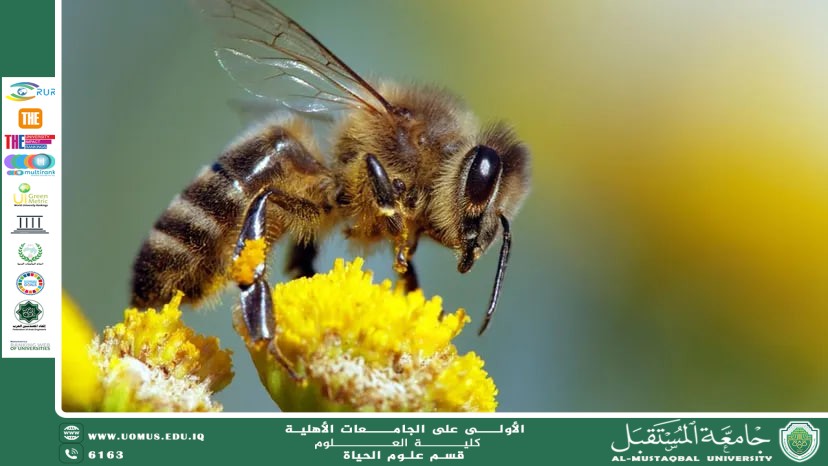
A scientific article by Ms. (Nour Al-Huda Azmi Hassan) entitled "The role of insects in pollination and their impact on biodiversity"
Pollination is a vital ecological process that enables many plants to reproduce by transferring pollen from one flower to another, facilitating fertilization. Insects, particularly bees, butterflies, moths, beetles, and flies, are key players in this process. They play a vital role in ensuring the reproduction of a wide range of plants, including many that humans depend on for food. The contributions of insects to pollination are integral to maintaining biodiversity by supporting a variety of ecosystems and species.<br /><br />Insects as Pollinators<br /><br />Insects are responsible for pollinating approximately 75% of the world's flowering plants, including approximately 35% of global food crops. The most well-known pollinators are:<br /><br />Bees: Bees, particularly honeybees and house bees, are the most efficient pollinators due to their specialized body structures that collect and transport pollen. Bees visit flowers primarily for nectar, during which they attach pollen to their bodies and then transfer it to other flowers.<br /><br />Butterflies and moths: These insects are particularly important for pollinating plants with large, often brightly colored flowers, which are adapted to their feeding habits. These insects are attracted to flowers with sweet scents and, as they feed on nectar, unwittingly transfer pollen between flowers.<br /><br />Flies: Flies, especially float flies, are effective pollinators of plants with small flowers. They are particularly important for pollinating crops such as carrots, onions, and cherries.<br /><br />Beetles: Beetles are among the oldest pollinators and are particularly important for pollinating some ancient plant species. They typically pollinate plants with large, bowl-shaped flowers, often with a strong, fragrant scent.<br /><br />How Pollination Happens<br />The process of insect pollination involves several steps:<br /><br />Attraction: Insects are attracted to flowers through visual cues (color and shape) and olfactory cues (fragrance). Flowers have evolved distinctive features, such as bright colors, pleasant scents, and nectar, to attract pollinators.<br /><br />Pollen transfer: When insects feed on nectar, they rub against the reproductive parts of a flower, transferring pollen from the male part (anther) to the female part (stigma). This process facilitates fertilization.<br /><br />Reproduction: The transfer of pollen from one flower to another fertilizes the flower, resulting in the production of seeds, fruits, or other reproductive structures, allowing the plant to continue its life cycle.<br /><br />Impact of insects on biodiversity<br /><br />Promoting plant diversity: By pollinating a wide range of plants, insects contribute significantly to their diversity. Many plants, especially in tropical regions, depend exclusively on insect pollination. This diversity of plant species supports a wide range of other organisms that depend on plants for food, shelter, and habitat.<br /><br />Supporting animal species: The availability of diverse plant species directly impacts the animals that depend on plants for food. For example, many herbivores feed on the fruits, leaves, or seeds of pollinated plants. In addition, many animals, including birds, mammals, and insects, depend on plant diversity for habitat and nesting sites.<br /><br />Maintaining ecosystem services: Pollinators contribute to the maintenance of ecosystems by enabling plant reproduction and supporting food webs. Seed and fruit production facilitates plant regeneration, which is vital for soil stability, water purification, and carbon sequestration.<br /><br />Agricultural and economic impact: Pollinators have a direct impact on agriculture, as many crops rely on insect pollination for optimal yields. Insects pollinate staple food crops such as fruits, vegetables, nuts, and seeds. Without these pollinators, the diversity and abundance of agricultural products would diminish, leading to reduced food security and economic losses for farmers.<br /><br />Enhancing genetic diversity: Pollination often involves cross-pollination, where pollen from one plant fertilizes the flowers of another. This genetic exchange between plants promotes genetic diversity, which is essential for adapting to diseases, pests, and environmental changes.<br /><br />Threats Facing Pollinating Insects<br /><br />Despite their essential role, pollinators face numerous threats:<br /><br />Habitat Loss: Urban expansion, agriculture, and deforestation have destroyed natural habitats, shrinking the places where pollinators live and feed.<br /><br />Pesticides: The widespread use of chemical pesticides in agriculture has been shown to harm pollinators, especially bees. Pesticides can weaken their immune systems, disrupt insect movement, and even kill pollinators directly.<br /><br />Al-Mustaqbal University is the First university in Iraq.