Archaeological Mound
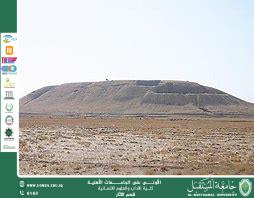
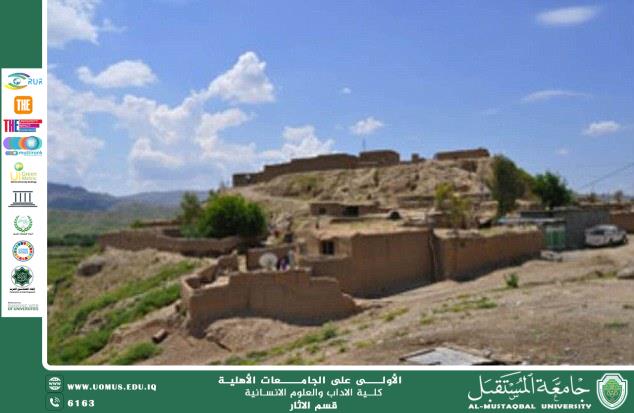
The Concept of the Archaeological Mound<br />Dr. Mariam Imran Musa<br />(Presented within the framework of Sustainable Development Goal 4: Quality Education)<br /><br />An archaeological mound is defined as a site containing evidence of human activities from a specific historical period or from previous periods. In other words, it is the place where people lived during a certain era—whether that period was continuous or intermittent—and left behind traces that represent the activities they engaged in while inhabiting the site. These traces include architectural remains such as palaces, temples, houses, and tombs, as well as archaeological artifacts represented by stone tools, pottery, sculptures, clay tablets, metal industries, and more.<br /><br />Archaeological mounds are widespread in many parts of the Near East, with a particularly high concentration in Iraq. These mounds contain remains that date back to multiple eras. The phenomenon of successive settlement at a single site can be attributed to the fertility of the soil, its proximity to water sources, and its ease of connectivity with other areas via transportation routes. When residents abandon a site for various reasons, a new group may settle in the same location, occupying the ruins left by previous communities. Several factors contribute to the abandonment of old sites and the transition to new ones, including natural factors—such as changes in the courses of rivers on whose banks those villages or cities were built, the drying up of springs and wells leading to the degradation of agricultural lands, and the shift of commercial routes that once led to the emergence of settlements—as well as human factors like invasions, wars, and others. Thus, a site evolves from a flat area into a mound of accumulated ruins over time.<br /><br />Under natural conditions, the layers of ruins extend uniformly from the virgin, undisturbed soil up to the surface of the site, with these layers representing a sequential and organized chronology of the cultural, economic, and industrial history of the region. For example, during archaeological excavations, the presence of a large number of small scattered pottery shards on the site’s surface indicates that the area was once an inhabited archaeological site, occupied either during a single era or across successive or intermittent periods. The artifacts found in the lower layers are older than those in the upper layers; hence, the archaeological mound represents an orderly chronological sequence of the cultural, economic, and industrial history of the area in which it is located.<br /><br />The size of archaeological mounds varies according to what they represent. If a mound represents a city, it will cover a vast area, whereas rural sites may differ in scale. At times, mounds appear as transient villages or temporary camps inhabited by people for short periods. Moreover, the height of these mounds varies depending on the duration of settlement; some mounds are relatively low in height, while others are taller due to the accumulation of successive habitation layers.<br /><br />It is noteworthy that mounds first emerged with the establishment of agricultural villages, and over time, their area and height increased, indicating that these archaeological sites were originally ancient villages or cities.<br /><br />Al‑Mustaqbal University – The Premier University in Iraq.