"Environment impact due to drilling oil wells"
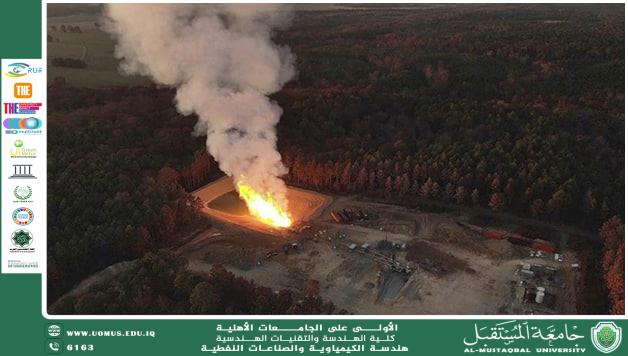
"Environment impact due to drilling oil <br />wells" <br />Russul Ahmed <br />Department of Chemical Engineering, University of Almustaqbal, Babil, Iraq <br />[email protected] <br />The research on the issue of the following Sustainable Development Goals: the environment <br />effect due to drilling operation in oil field <br />Abstract <br />Oil drilling is essential for energy production but has severe environmental consequences. <br />From land disturbance to greenhouse gas emissions, the drilling process poses significant risks <br />to eco-systems and human health. This research aims to explore these impacts, analyze the <br />underlying Causes, and propose strategies to mitigate the environmental damage. <br />INTRODUCTION <br />Oil drilling plays a vital role in global energy production, powering industries, transportation, and economies. <br />However, the process has significant environmental consequences, including habitat destruction, water and soil <br />contamination, and air pollution. Drilling operations require extensive land use and involve chemicals that can seep <br />into the environment, posing risks to ecosystems and human health. Beyond the immediate site, oil spills, gas flaring, <br />and emissions contribute to climate change and long-term environmental damage. Offshore drilling, in particular, <br />threatens marine life and coastal communities. While technological advancements have improved efficiency, the <br />industry must adopt stricter regulations and sustainable practices to reduce its ecological footprint. This study explores <br />the key environmental impacts of oil well drilling, their causes, and potential solutions to mitigate harm while <br />maintaining responsible energy production. <br />PROBLEM DESCRIPTION <br />The process of killing a well and flaring is a necessary but environmentally harmful practice in the <br />oil and gas industry. Killing a well involves injecting fluids, such as heavy drilling mud or brine, <br />to suppress reservoir pressure and control blowouts. While this is a critical safety measure, it often <br />results in unintended environmental consequences, such as fluid spills, groundwater <br />contamination, and ecosystem disruption. <br />Flaring, the controlled burning of excess gases during well operations is another major <br />environmental concern. This practice is used to manage gas that cannot be processed or transported <br />efficiently, especially in emergencies or during well testing and maintenance. However, the <br />combustion of hydrocarbons releases large amounts of carbon dioxide (CO₂), methane (CH₄), <br />nitrogen oxides (NOₓ), sulfur dioxide (SO₂), and other volatile organic compounds (VOCs) into <br />the atmosphere. These emissions contribute to air pollution, acid rain, and global warming. One of <br />the most harmful byproducts of flaring is black carbon (soot), a fine particulate matter that not only <br />reduces air quality but also accelerates climate change by absorbing heat in the atmosphere. The <br />exposure of nearby communities and workers to toxic smoke from flaring increases the risk of <br />respiratory diseases, cardiovascular problems, and cancer. Moreover, continuous flaring disrupts <br />local biodiversity by degrading air quality and causing light pollution, which affects nocturnal <br />wildlife. The high-temperature flames can also lead to thermal pollution, harming nearby <br />vegetation and ecosystems. Despite growing awareness, flaring remains a widespread issue, <br />particularly in regions with inadequate gas capture infrastructure. Reducing flaring through gas <br />recovery systems, reinjection techniques, and alternative energy utilization is essential to minimize <br />environmental and health hazards associated with this practice. <br />CAUSES <br />1. Soil and Water Contamination: Oil spills, leakage from pipelines, and disposal of drilling fluids <br />contribute to groundwater pollution. <br />2. Air Pollution: Gas flaring and emissions from drilling equipment release carbon dioxide, <br />methane, and other harmful gases. <br />3. Deforestation and Habitat Destruction: Land clearing for drilling operations disrupts <br />biodiversity. <br />4. Waste Generation: Toxic byproducts, drilling cuttings, and chemicals need proper disposal to <br />avoid contamination. <br />5. Seismic Activity: Hydraulic fracturing (fracking) and deep drilling can induce earthquakes in <br />some regions. <br />EFFECTS AND SOLUTIONS TO THE PROBLEM <br />To minimize the environmental impact of oil well drilling, killing, and flaring, the industry must <br />adopt a combination of advanced technology, regulatory enforcement, and sustainable practices. <br />Gas recovery and utilization offer a practical alternative to flaring, allowing excess gas to be <br />captured and repurposed instead of being burned. This captured gas can be reinjected into <br />reservoirs to enhance oil recovery, used for power generation within drilling operations, or <br />processed into liquefied natural gas (LNG) or compressed natural gas (CNG) for transportation <br />and industrial applications. <br />The use of eco-friendly well-killing fluids is another essential step in reducing environmental <br />harm. Traditional well control fluids often contain harmful chemicals that can seep into the soil <br />and water sources. Transitioning to biodegradable and non-toxic alternatives, along with <br />improving the filtration and recycling of drilling fluids, can help minimize waste and <br />contamination. Implementing strict containment measures during well control procedures can <br />further prevent chemical leaks and spills. <br />Stricter environmental regulations and enforcement are necessary to hold oil companies <br />accountable for their emissions and waste disposal practices. Governments should set firm limits <br />on flaring and require mandatory gas recovery plans as part of drilling permits. Continuous <br />monitoring and reporting systems should be implemented to track pollution levels and ensure <br />compliance. Imposing carbon taxes or financial penalties on excessive emissions can further <br />encourage companies to adopt cleaner technologies. <br />Investing in advanced flare reduction technologies is crucial in mitigating air pollution. Gas-to<br />liquid conversion technologies can transform flared gas into synthetic fuels, reducing waste <br />while creating usable energy. The installation of high-efficiency separators and compressors can <br />stabilize gas flow and minimize unnecessary flaring. Additionally, the use of automated flare <br />control systems can optimize combustion efficiency and reduce the release of harmful emissions <br />into the atmosphere. <br />Once drilling operations are completed, restoring the well site is essential to prevent long-term <br />environmental degradation. Reforestation and soil remediation efforts can help restore natural <br />vegetation and improve soil quality. Contaminated water sources should be treated using <br />filtration and purification technologies to prevent the spread of pollutants. Establishing <br />biodiversity protection programs can also help rehabilitate habitats that have been affected by <br />drilling activities, ensuring the recovery of wildlife populations and ecological balance. <br />Engaging with local communities and addressing health concerns related to toxic smoke from <br />flaring is another important aspect of sustainable oil drilling. Companies should provide real<br />time air quality data and health advisories to nearby residents, implement buffer zones to reduce <br />human exposure to emissions, and invest in community-driven renewable energy projects as an <br />alternative to gas flaring. <br />Promoting research and innovation in sustainable drilling technologies will help reduce the <br />industry’s environmental footprint in the long run. Advancements such as plasma drilling <br />technology, which minimizes waste and emissions, electric-powered rigs that replace diesel <br />generators, and nanotechnology for improving well control fluids can contribute to cleaner and <br />more efficient drilling operations. <br />Reducing the environmental impact of well drilling and flaring requires a combination of better <br />technology, stricter regulations, and responsible industry practices. By prioritizing gas recovery, <br />minimizing emissions, enforcing sustainable policies, and restoring drilling sites, the oil and gas <br />sector can significantly lower its ecological footprint while continuing to meet global energy <br />demands. <br />CONCLUSION <br />Implementing sustainable solutions for oil well drilling, killing, and flaring can significantly <br />reduce environmental harm. Gas recovery and utilization methods decrease wasteful emissions <br />while providing alternative energy sources. The adoption of biodegradable well-killing fluids and <br />improved waste management minimizes soil and water contamination. Regulatory enforcement, <br />including stricter emission limits and monitoring systems, ensures accountability and promotes <br />cleaner industry practices. Advanced flare reduction technologies help lower toxic emissions, <br />while well site restoration efforts aid in ecosystem recovery. Engaging local communities and <br />prioritizing health impact mitigation further improve environmental and social outcomes. <br />Overall, integrating these measures enhances sustainability in the oil and gas sector, reducing its <br />long-term ecological footprint.