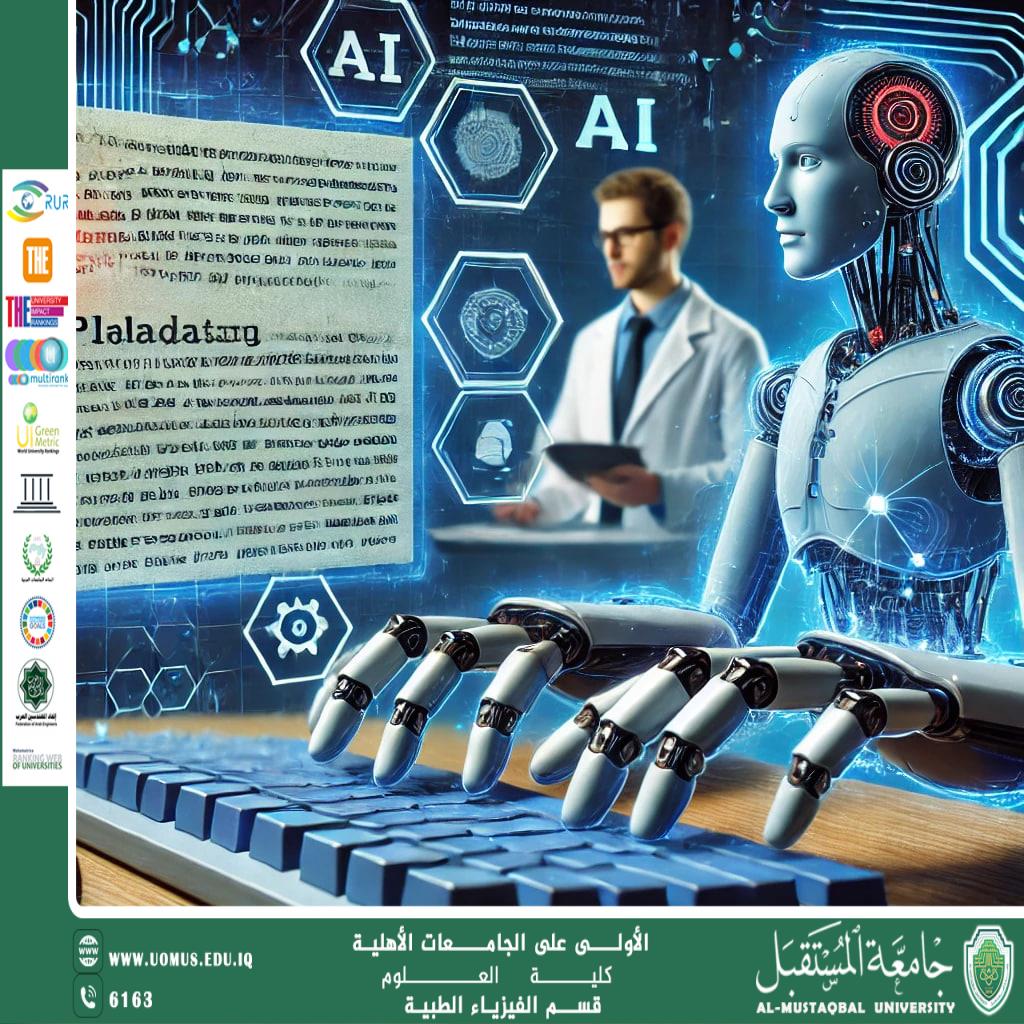
Scientific Plagiarism in the Age of Artificial Intelligence Artical By Noor Firas
With the rapid advancement of artificial intelligence (AI) technologies, new challenges have emerged in the realm of scientific plagiarism. A 2023 survey of 1,600 researchers found that 68% of respondents believe AI makes plagiarism easier and more difficult to detect (natureasia.com).<br /><br />Forms of AI-Enhanced Plagiarism<br />Automated Paraphrasing: AI tools are often used to rephrase content without proper attribution, violating academic integrity (natureasia.com).<br /><br />AI-Generated Texts: Platforms like ChatGPT can produce research content that researchers might use without appropriate citations, leading to intellectual theft (asjp.cerist.dz).<br /><br />Challenges in Detecting Plagiarism<br />As AI models become more sophisticated, identifying plagiarized content has become increasingly difficult. AI-generated texts are now found in 10% of medical research papers, amounting to approximately 150,000 papers annually (blog.ajsrp.com).<br /><br />AI-Based Anti-Plagiarism Tools<br />To counteract this issue, AI-driven plagiarism detection tools have been developed. iThenticate, for example, helps publishers and academic institutions verify content originality before publication (turnitin.me).<br /><br />Ethical Considerations in Research<br />The growing role of AI in academic writing highlights the need to reinforce ethical research practices. Researchers must adhere to ethical standards and properly cite sources, even when utilizing AI tools (aiis.journals.ekb.eg).<br /><br />Conclusion<br />In the AI era, combating scientific plagiarism requires a collaborative effort among researchers, academic institutions, and technology developers to uphold academic integrity and research authenticity.<br />"AL_mustaqbal University is the first university in Iraq"