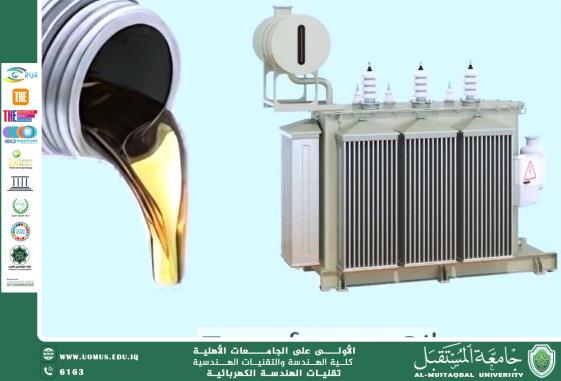
Transformer Oil
<br /><br />Transformer Oil<br />Dr. Ahmad T. Jaiad <br /><br /><br />Transformer oil, also known as insulating oil, is a type of mineral oil used in electrical transformers. Its primary functions include insulation and cooling. The oil prevents electrical discharges, insulates the electrical components of the transformer, and helps dissipate heat generated during the operation of the transformer.<br /><br /><br /><br />some points about transformer oil:<br /><br />1.Insulation: It prevents electrical arcing or short circuits by providing an insulating layer between the internal components of the transformer.<br /> <br />2. Cooling: The oil helps to dissipate heat generated by the transformer’s electrical and mechanical processes. By circulating within the transformer, it absorbs heat and carries it away to prevent overheating.<br /><br />3. Chemical Properties: Transformer oil is usually made from highly refined mineral oils, though in some cases, synthetic oils or biodegradable alternatives are used. It is formulated to have low viscosity, high dielectric strength, and good stability at high temperatures.<br /><br />4.Types: <br /> - Mineral oil: The most common type, derived from petroleum.<br /> -Synthetic oil: Used in some cases for better performance under extreme temperatures.<br /> -Silicon-based oil: Known for its environmental friendliness and stability.<br /> -Vegetable-based oil: A newer, biodegradable option that is gaining traction due to environmental concerns.<br /><br />5. Maintenance: Over time, transformer oil can degrade due to exposure to heat, oxygen, and contaminants. Regular oil testing and maintenance (such as checking for acidity, moisture content, and dielectric strength) are crucial to ensure transformer efficiency and prevent failures.<br />Al mustaqbal university is the first university of iraq<br /><br />