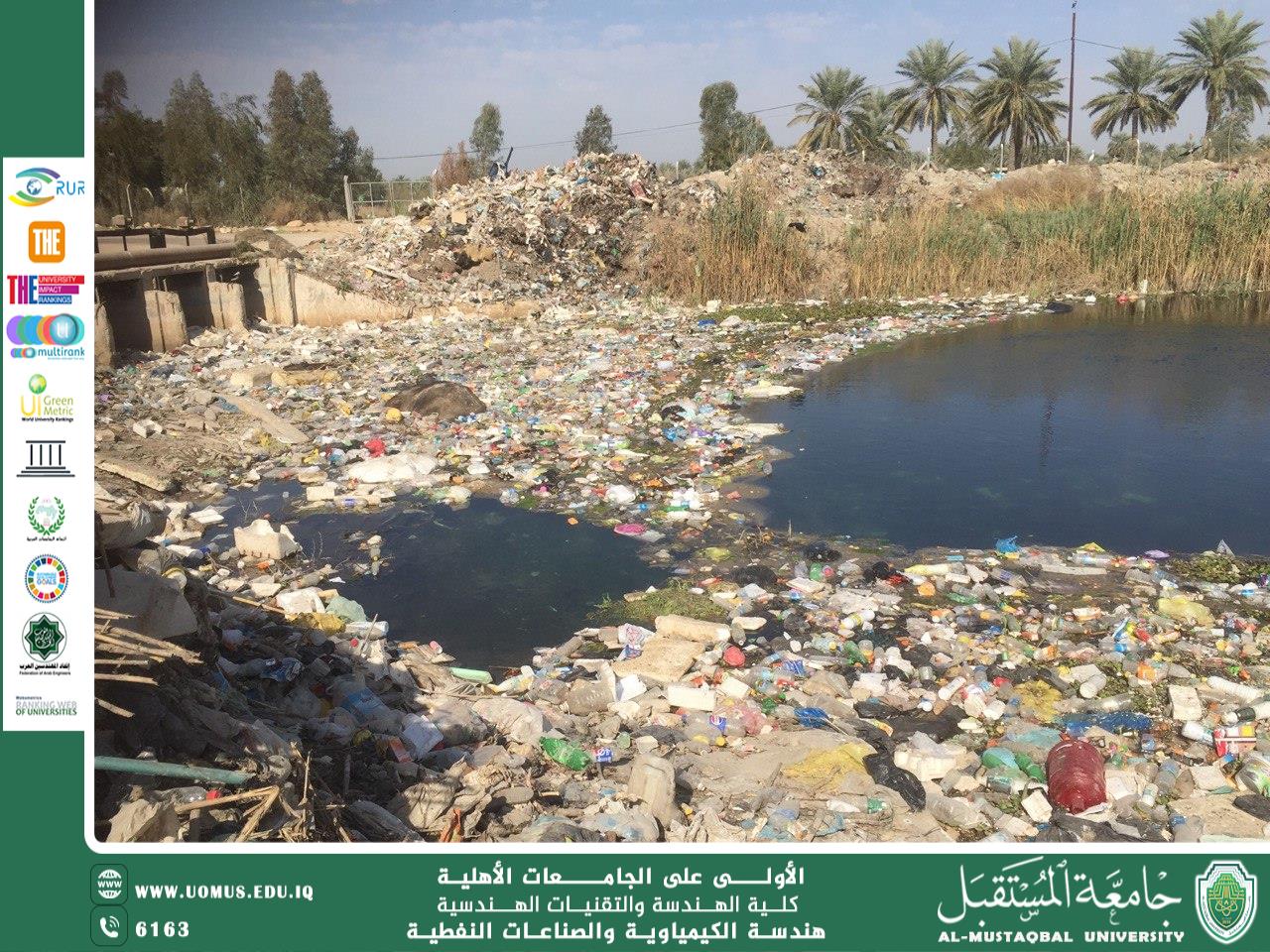
Water pollution by plastic materials and its environmental effects
Water pollution by plastic materials and its <br />environmental effects <br />Completion period of this study: from 22/2/2025 to 15/3/2025. <br /> <br />Abstract: <br />Plastic pollution of water is a prominent global environmental issue. In modern <br />times, plastic has become a major pollutant of fresh and salt water, significantly <br />affecting the ecosystem, human health, and riverine life. In the cities of Al<br />Musayyab and Al-Saddah, the main problem of plastic accumulation in water <br />bodies (such as rivers and ponds) is its negative effects on the environment and the <br />health of living organisms, including humans. This pollution causes deterioration <br />of water quality and destruction of ecological habitats, as well as negative impacts <br />on river life and biodiversity. In some cases, waste is illegally dumped on river <br />banks and pond edges. This not only contributes to water pollution, but also leads <br />to soil and air pollution. This research explores the causes of this problem and its <br />impacts on the environment and public health, and suggests potential solutions to <br />mitigate the problem. Through improved infrastructure, better plastic waste <br />management, public awareness, and law enforcement, this problem can be <br />effectively addressed to improve the overall quality of life for local residents and <br />visitors. <br />Key words: Al-Musayyab and Al-Saddah cities, Plastic pollution, riverine life, <br />SDGs. <br />Introduction:<br /> The accumulation of plastic waste along the banks of rivers, canals and streams, <br />and its failure to remove and improper disposal, such as burning, is a growing <br />environmental problem that has profound impacts on public health and the <br />surrounding ecosystem [1]. Plastic waste management has become one of the <br />greatest challenges in urban areas, where drinking and irrigation water sources <br />such as rivers and canals are often flooded with plastic waste that is improperly <br />disposed of, leading to significant environmental and health risks [2]. This is <br />particularly evident in the cities of Al-Musayyab and Al-Saddah<br /> , <br />where the <br />accumulation of plastic waste along the banks of rivers and streams, along with its <br />illegal burning, poses serious threats to the environment and the well-being of <br />those living and passing through the area. This research aims to explore the <br />underlying causes of this problem and its environmental and health impacts, <br />and propose practical solutions to address it. <br />This study addresses the following Sustainable Development Goals (SDGs)<br /> 1-Goal 6<br /> : Clean water and sanitation<br /> : <br />:<br /> Objective: To ensure availability and sustainable management of clean water <br />and sanitation for all; Water pollution by plastics affects the quality of <br />drinking water and increases the risk of waterborne diseases. Therefore, <br />reducing water plastic pollution contributes to keeping water sources clean <br />and improving public health. <br />2-Goal 12<br /> : Responsible consumption and production<br /> :<br /> Objective: To ensure sustainable consumption and production patterns; <br />Reducing the consumption of non-biodegradable plastics and encouraging <br />recycling or the use of sustainable alternatives contributes to reducing plastic <br />pollution. Sustainable environmental practices can also be promoted by <br />encouraging the reduction of plastic waste. <br />3-Goal 13<br /> : Climate action. Objective: <br />Take urgent action to combat climate change and its effects; Water pollution <br />by plastics affects the environment in general and can contribute to changing <br />the river ecosystem, which exacerbates the effects of climate change. <br />Therefore, reducing plastic pollution contributes to protecting the <br />environment and climate. <br />4-Goal 14<br /> : Life below water<br /> :<br /> Objective: Conserve, protect and use seas, rivers and marine and river <br />resources for sustainable development; Plastics pose a major threat to marine <br />and river life and affect marine and river biodiversity. This objective focuses <br />2 <br />3 <br /> <br />on reducing plastic pollution of seas and rivers to conserve marine and river <br />life. <br />5- Goal 15: Life on land: <br />Objective: Protect, restore and promote sustainable use and management of <br />terrestrial ecosystems; Plastic pollution of water not only affects marine and <br />freshwater environments, but can also reach land through rivers and streams. <br />Reducing plastic pollution of water helps protect terrestrial environments <br />and integrated ecosystems. <br /> <br />These goals contribute to addressing the challenges of water pollution by plastic <br />materials through a set of sustainable environmental policies that aim to preserve <br />the environment and human health. <br />Problem core: <br />The main problem is the accumulation of plastic in water bodies (such as rivers <br />and oceans) and its negative impacts on the environment and the health of living <br />organisms, including humans. This pollution causes deterioration in water quality, <br />destruction of ecological habitats, and negative impacts on marine life and <br />biodiversity. The lack of waste management infrastructure exacerbates the <br />problem, as waste accumulates and causes further environmental degradation. <br />Furthermore, rapid population growth and urbanization have exacerbated the <br />problem, leading to increased waste production and straining disposal systems. <br />The key dimensions of this problem include: <br />1- Accumulation of plastic in the oceans: Many quantities of plastic, such as <br />bags and bottles, accumulate in oceans and rivers, where they remain for <br />years without decomposing, posing a threat to marine life. <br />2- Threats to marine life: Plastics pose a risk to marine organisms that ingest or <br />become entangled in them, leading to injury or death. <br />3- Impact on ecosystems: The effects of plastic pollution in water extend to the <br />terrestrial environment via rivers and waterways, contributing to the <br />destruction of ecosystems and affecting the health of organisms that depend <br />on these environments. <br />4- Difficulty in disposal and recycling: Many plastics cannot be effectively <br />recycled, increasing environmental pollution and making it difficult to <br />address. <br />5- Human health effects: Plastics may contain toxic substances, such as <br />phthalates and Bisphenol-A (BPA), which can leach into water and affect <br />human health when consumed. <br />4 <br /> <br /> (a) <br />(b) <br /> <br /> Figure: Plastic waste accumulation: a) in the Bani Hassan River in Al-Saddah city, b) in a water <br />channel in Musayyab city. <br /> <br /> <br /> <br />5 <br /> <br />Types of plastic pollution in water: <br />1- Microplastics: These are tiny plastic particles (less than 5 millimeters in <br />size) that come from larger plastics breaking down or are intentionally <br />produced for use in products like facial scrubs and cleaning agents [2,3]. <br />They are nearly impossible to remove and pose a significant threat to aquatic <br />organisms. <br />2- Macroplastics: These include larger plastic items such as bottles, bags, <br />fishing nets, and other debris that can be visibly seen in water bodies [4,5]. <br />These plastics tend to break down over time into smaller particles but can <br />persist for hundreds of years. <br /> <br />Causes of water pollution by plastic: <br />Water pollution by plastics, often referred to as “plastic pollution”, is a growing <br />environmental problem with multiple causes. The main causes include: <br />1. Poor waste disposal: Great amounts of plastic waste enter water bodies as a <br />result of poor waste management. Inadequate disposal systems, especially <br />in developing countries, lead to improper disposal of plastic, which often <br />ends up in rivers, lakes, and streams. <br />2. Single-use plastics: Items such as plastic bottles, straws, bags, and <br />packaging are used only once and then discarded. These products are <br />lightweight and easily carried by wind or water to nearby water sources <br />such as ponds and small rivers. <br />3. Microplastics: These are tiny plastic particles (less than 5 mm in size) that <br />result from the decomposition of larger plastics or are intentionally <br />produced for use in products such as cosmetics, cleaning products, and <br />synthetic fabrics. Microplastics easily migrate into water, polluting <br />ecosystems even in remote areas. <br />4. Industrial Waste: Factories and manufacturing plants often dump plastic <br />waste directly into water bodies or through wastewater from landfills. This <br />type of pollution can include large plastics or smaller plastic fibers that leak <br />into the environment. <br />5. Fishing Gear: Lost or discarded fishing nets, lines, and other equipment <br />significantly contribute to ocean plastic pollution. These materials often <br />continue to trap marine life, harming aquatic ecosystems. <br />6. Rainwater Runoff: During heavy rainfall, plastics are washed from streets <br />and urban areas into nearby rivers, lakes, and ponds. Densely populated <br />cities often experience significant plastic runoff due to the accumulation of <br />large amounts of plastic waste in public spaces. <br />6 <br /> <br />7. Waste from Tourism and Recreational Activities: Popular tourist <br />destinations, especially coastal areas, often suffer from plastic waste due to <br />human activities such as beachgoers leaving litter and the widespread use of <br />disposable plastics for convenience. <br />8. Plastic Manufacturing and Packaging: The production of plastic products <br />and packaging materials, particularly for consumer goods, results in waste <br />from production processes. Sometimes, these plastics end up in water <br />bodies if they are not recycled or disposed of properly. <br /> <br />The combined effect of these factors leads to widespread plastic pollution in <br />our aquatic systems, harming aquatic life, disrupting ecosystems, and <br />impacting human health. <br /> <br />Environmental impacts of plastic pollution: <br />1- Harm to river life (illustrated in the figure below): Many rivers and marine <br />animals, such as fish, sea turtles, and birds, mistake plastic debris for food. <br />Ingesting plastic can lead to blockages, malnutrition, and even death. <br />Ingested plastic can also accumulate toxins in an organism's body, leading to <br />long-term health problems [4]. <br />2- Entanglement: Large plastic objects, such as fishing nets and hexagonal <br />fishing rings, can entangle marine animals, restricting their movement, <br />causing injury, or leading to death [3]. This is particularly harmful to marine <br />mammals such as seals and whales, which may become trapped or <br />suffocated. <br />3- Chemical pollutants: Plastic in water can absorb harmful chemicals, such as <br />pesticides, heavy metals, and persistent organic pollutants. These toxic <br />chemicals can leach into the water, affecting the entire food chain [3]. When <br />aquatic organisms ingest plastic, the toxins are passed up the food chain, <br />potentially affecting humans who consume seafood. <br />4- Ecosystem Disruption: Plastic waste can alter natural habitats, such as coral <br />reefs and seabed environments, disrupting the delicate balance of these <br />ecosystems. Plastic can smother coral reefs, block sunlight from reaching <br />organisms that depend on it, and impact biodiversity [4]. <br />5- Spread of invasive species: Plastic can serve as floating platforms for <br />invasive species, which can attach to the waste and carry it to new areas. <br />This can introduce invasive species into sensitive ecosystems, potentially <br />competing with native species and disrupting the local environment [5]. <br />6- Aesthetic and recreational impacts: The presence of plastic waste in water <br />bodies reduces the aesthetic value of natural landscapes, impacting tourism <br />and recreational activities such as boating, fishing, and swimming [2,4]. This <br />7 <br /> <br />can have economic consequences for communities that rely on tourism and <br />recreation. <br />7- Long-term effects: <br />a) Persistence in the Environment: Plastic does not biodegrade; instead, it <br />photodegrades when exposed to sunlight, breaking down into smaller and <br />smaller pieces over time. However, it can take hundreds to thousands of <br />years for plastic to fully degrade, making it a long-term environmental threat <br />[1,4]. <br />b) Impact on Human Health: As microplastics enter the food chain, they may <br />eventually be consumed by humans. Studies have found microplastics in <br />seafood, drinking water, and even in the air, raising concerns about potential <br />long-term health impacts. Although the full extent of the health risks is still <br />under research, plastics may release harmful chemicals that can cause <br />hormonal imbalances, developmental issues, and other health concerns [2]. <br /> <br />Solutions to plastic pollution in water: <br />• Reducing Plastic Production and Consumption: One of the most effective <br />ways to combat plastic pollution is to reduce the production and use of <br />single-use plastics. Encouraging alternatives such as reusable materials, <br />biodegradable options, and better waste management systems can <br />significantly decrease plastic waste entering waterways. <br />• Improved Waste Management: Governments and organizations can improve <br />waste collection and recycling systems, ensuring plastics are properly <br />disposed of and not discarded into the environment. This also involves <br />increasing the efficiency of recycling programs to prevent plastics from <br />reaching landfills and water bodies. <br />• Clean-Up Efforts: Large-scale efforts such as beach clean-ups, river clean<br />ups, and the development of technologies like the rivers Cleanup Project aim <br />to remove plastics from the rivers and waterways. However, these are only <br />short-term solutions and will not address the root cause of plastic pollution. <br />• Public Awareness and Education: Educating the public about the impacts of <br />plastic pollution on water systems and encouraging responsible plastic use <br />and disposal is essential. Consumer awareness can help reduce plastic waste <br />through better choices in packaging and products. <br />• Policy and Regulation: Governments can implement policies such as plastic <br />bans, extended producer responsibility (EPR), and stricter regulations on <br />plastic production and disposal. International agreements to tackle plastic <br />pollution on a global scale are also crucial. <br /> <br />8 <br /> <br />Results: <br />By implementing these solutions, we expect to see a significant reduction in the <br />accumulation and illegal dumping of plastic waste along rivers, ponds, and <br />streams. Improved waste collection systems will result in cleaner water, better air <br />quality, and healthier living conditions for residents. Increased awareness and <br />education will likely change waste disposal behaviors and reduce harmful practices <br />such as waste burning. Furthermore, recycling efforts will help divert plastic waste <br />from landfills into useful products, reducing harmful plastic waste and contributing <br />to a more sustainable environment. <br /> <br /> <br />Conclusions: <br />The problem of improper accumulation of plastic waste along riverbanks, canals, <br />and pond edges in the cities of Al-Musayyab and Al-Saddah is a pressing <br />environmental concern that requires immediate attention. Through improved waste <br />management infrastructure, public awareness campaigns, strict enforcement of <br />environmental regulations, and community engagement, this problem can be <br />effectively addressed. By working together, we can ensure a cleaner and healthier <br />environment for current and future generations. A collaborative approach that <br />includes local authorities and the public is crucial to finding long-term solutions to <br />plastic waste management and achieving environmental sustainability. <br /> <br /> <br /> <br /> <br /> <br /> <br /> <br /> <br /> <br /> <br /> <br /> <br /> <br /> <br />9 <br /> <br />References: <br />1- MacLeod, Matthew, et al. “The global threat from plastic pollution”, <br />Science, 373, 6550, 2021: pp. 61-65. <br />2- Ritchie, H., Samborska, V., and Roser, M., “Plastic pollution”, Our world in <br />data, 2023. <br />3- Li, Penghui, et al., “Characteristics of plastic pollution in the environment: a <br />review”, Bulletin of environmental contamination and toxicology, 107, <br />2021, pp. 577-584. <br />4- Strand, J., Feld, L., Murphy, F., Mackevica, A., & Hartmann, N. B., <br />“Analysis of microplastic particles in Danish drinking water”, Aarhus <br />University, 2018. <br />5- Mintenig, S. M., Int-Veen, I., Löder, M. G., Primpke, S., & Gerdts, G., <br />“Identification of microplastic in effluents of waste water treatment plants <br />using focal plane array-based micro-Fourier-transform infrared imaging”, <br />Water research, 108, 2017, pp. 365-372.