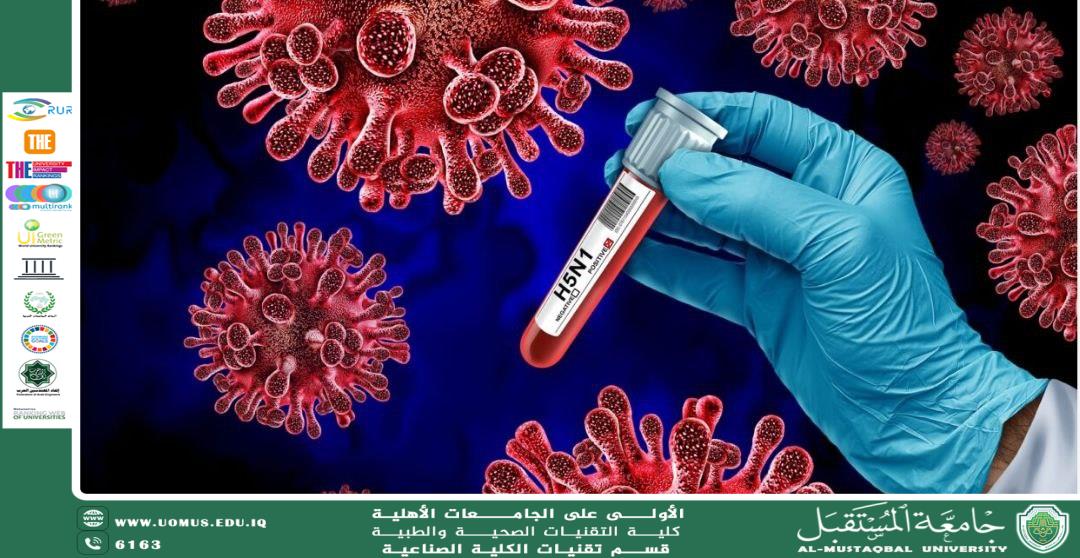
Dr. Younis Abdul-Ridha Al-Khafaji<br />Ph.D. in Virology<br /><br /> Introduction <br /><br />In the face of scientific and technological advancements, viral pandemics continue to pose a global public health challenge. The World Health Organization (WHO) and the Centers for Disease Control and Prevention (CDC) are actively monitoring and tracking viruses that threaten humanity. In recent years, the H5N1 virus (avian influenza) has emerged as one of the primary viruses of concern among scientists and health experts.<br /><br /> What is H5N1? <br /><br />H5N1 is a subtype of the influenza A virus that primarily infects birds, but it is also capable of transmitting to humans, causing severe symptoms that can lead to death. The virus was first identified in China in 1996, and since then, several outbreaks have been recorded across various countries.<br /><br /> Why does H5N1 pose a global threat? <br /><br />- High mortality rate : Statistics show that the mortality rate among individuals infected with the H5N1 virus exceeds 50%, making it one of the deadliest viruses.<br />- Rapid mutation : The virus has the ability to mutate, increasing the likelihood of human-to-human transmission and making it harder to contain.<br />- Pandemic potential : If the virus evolves to become highly transmissible between humans, it could lead to a global pandemic.<br />- Impact on food security : The virus causes significant losses in the poultry industry, affecting the economy and the food supply chain.<br /><br /> Efforts of the World Health Organization and the Centers for Disease Control and Prevention <br /><br />- The WHO monitors emerging viruses and develops strategies to combat their spread.<br />- The CDC is working on developing effective vaccines and treatments to reduce the risk posed by the virus.<br />- Ongoing international collaboration between governments and research institutions aims to monitor the virus's genetic mutations.<br /><br /> Prevention and Precautionary Measures :<br /><br />- Health awareness : Raising awareness about the risks of the virus and how to prevent it.<br />- Vaccination : Developing vaccines against the virus strains and making them available to high-risk groups.<br />- Monitoring migratory birds : Implementing stringent measures to regulate the trade of birds and reduce the virus's spread among domestic poultry.<br />- Improving rapid response : Strengthening emergency epidemic response systems.<br /><br /> conclusion<br /> the H5N1 virus remains one of the most significant global public health challenges. Thanks to ongoing efforts by health organizations, the risks of its spread can be minimized and outbreaks can be effectively managed. However, international collaboration and public awareness remain key factors in addressing this threat.<br /><br />Al-Mustaqbal University is the number one university in Iraq<br />