Mitochondrial Inheritance and Aging
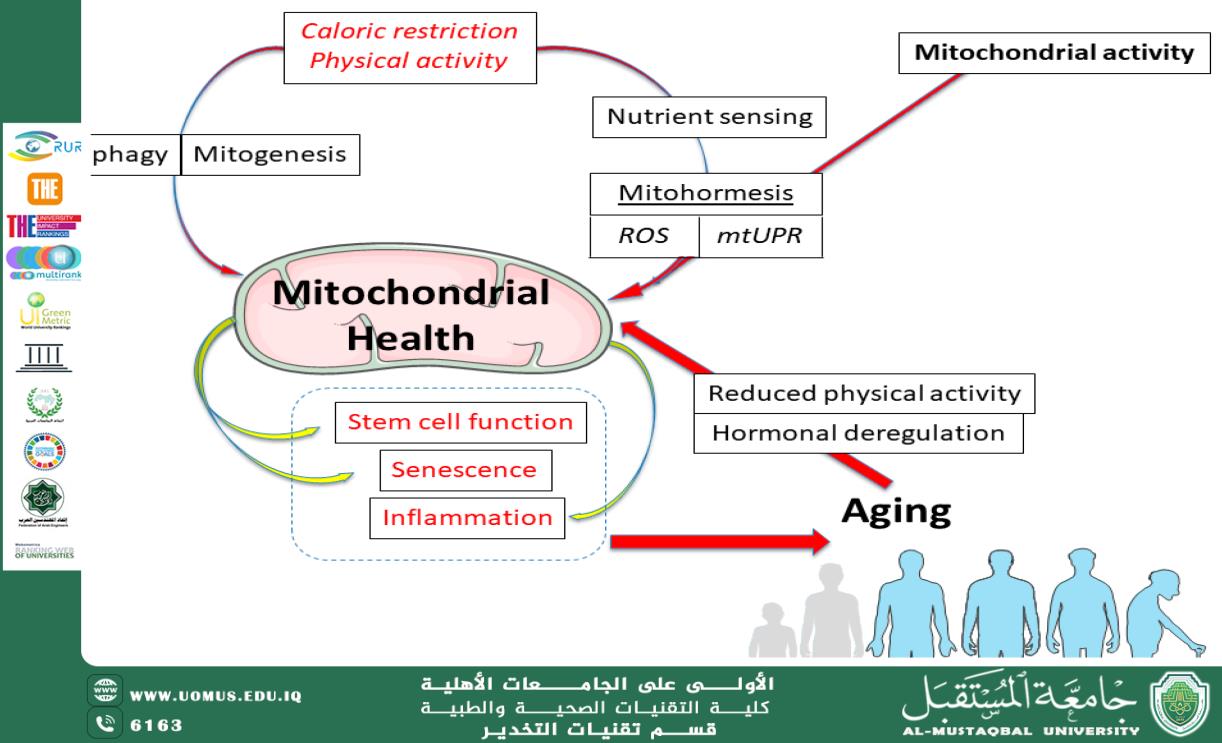
Mitochondria play a critical role in cellular energy production and are uniquely inherited exclusively from the mother. Their contribution to aging has been widely studied, particularly in relation to mitochondrial DNA (mtDNA) mutations, oxidative stress, and cellular metabolism. This review explores the mechanisms of mitochondrial inheritance, their role in aging, and potential therapeutic strategies to mitigate mitochondrial dysfunction.<br />Aging is a complex biological process influenced by genetic, environmental, and metabolic factors. Mitochondria, the powerhouses of the cell, are central to aging due to their involvement in ATP production and reactive oxygen species (ROS) generation. Unlike nuclear DNA, mtDNA is maternally inherited and lacks robust repair mechanisms, making it susceptible to mutations that accumulate over time, potentially contributing to aging and age-related diseases (Wallace, 2013).<br />Mechanisms of Mitochondrial Inheritance<br />Mitochondrial inheritance follows a maternal lineage, meaning offspring inherit their mitochondria exclusively from their mother. This inheritance pattern ensures continuity of mitochondrial function but also means that mutations in mtDNA are passed down through generations. Studies have shown that the selective elimination of paternal mitochondria post-fertilization is mediated by autophagic processes (Sato & Sato, 2017).<br />Mitochondrial DNA Mutations and Aging<br />Accumulation of mutations in mtDNA over time has been linked to cellular aging and degenerative diseases. Defective mitochondria contribute to reduced ATP production and increased ROS, which can cause further DNA damage, leading to a vicious cycle of oxidative stress (Loeb et al., 2005). Moreover, mitochondrial dysfunction is associated with neurodegenerative disorders such as Alzheimer’s and Parkinson’s disease (Lin & Beal, 2006).<br />Role of Mitochondria in Cellular Senescence<br />Mitochondria play a crucial role in cellular senescence by modulating metabolic pathways and apoptosis. Dysfunctional mitochondria lead to increased oxidative damage and inflammation, both of which are hallmarks of aging. Research has shown that enhanced mitophagy, the selective degradation of damaged mitochondria, can delay aging-related decline (Palikaras et al., 2018).<br />Therapeutic Strategies to Combat Mitochondrial Aging<br /> 1. Mitochondrial Replacement Therapy (MRT): MRT involves replacing defective mitochondria with healthy donor mitochondria to prevent inherited mitochondrial diseases (Gorman et al., 2016).<br /> 2. Antioxidant Therapy: Targeting mitochondrial oxidative stress with antioxidants like Coenzyme Q10 and MitoQ has shown promise in reducing aging-related damage (Smith et al., 2016).<br /> 3. Caloric Restriction and Exercise: Studies suggest that caloric restriction and physical activity enhance mitochondrial biogenesis and function, potentially extending lifespan (Lopez-Lluch et al., 2008).<br /><br /><br /><br /><br /><br /><br /><br /><br /><br />References<br /> • Wallace, D. C. (2013). Mitochondrial DNA mutations in disease and aging. Environmental and Molecular Mutagenesis, 54(7), 526-539.<br /> • Sato, M., & Sato, K. (2017). Maternal inheritance of mitochondrial DNA: Degradation of paternal mitochondria by allogeneic organelle autophagy. Autophagy, 13(7), 1247-1248.<br /> • Loeb, L. A., Wallace, D. C., & Martin, G. M. (2005). The mitochondrial theory of aging and its relationship to reactive oxygen species damage and somatic mtDNA mutations. Proceedings of the National Academy of Sciences, 102(52), 18769-18770.<br /> • Lin, M. T., & Beal, M. F. (2006). Mitochondrial dysfunction and oxidative stress in neurodegenerative diseases. Nature, 443(7113), 787-795.<br /> • Palikaras, K., Lionaki, E., & Tavernarakis, N. (2018). Mechanisms of mitophagy in cellular homeostasis, physiology and pathology. Nature Cell Biology, 20(9), 1013-1022.<br /> • Gorman, G. S., et al. (2016). Mitochondrial replacement therapy: From test tube to clinic. Science, 352(6284), 1058-1061.<br /> • Smith, R. A., Murphy, M. P., & Hartley, R. C. (2016). Mitochondria-targeted antioxidants as therapies. Free Radical Biology and Medicine, 100, 75-86.<br /> • Lopez-Lluch, G., et al. (2008). Calorie restriction induces mitochondrial biogenesis and bioenergetic efficiency. Proceedings of the National Academy of Sciences, 105(25), 10243-10248.<br />Prepared By <br />Assistant Professor <br />Aqeel Al Jothery (PhD/UK)<br />Anesthesia Techniques Department<br />College of Health and Medical Technologies<br />ا.م.د.عقيل حنظل طارش<br /><br />Al-Mustaqbal University is the first university in Iraq<br /><br />