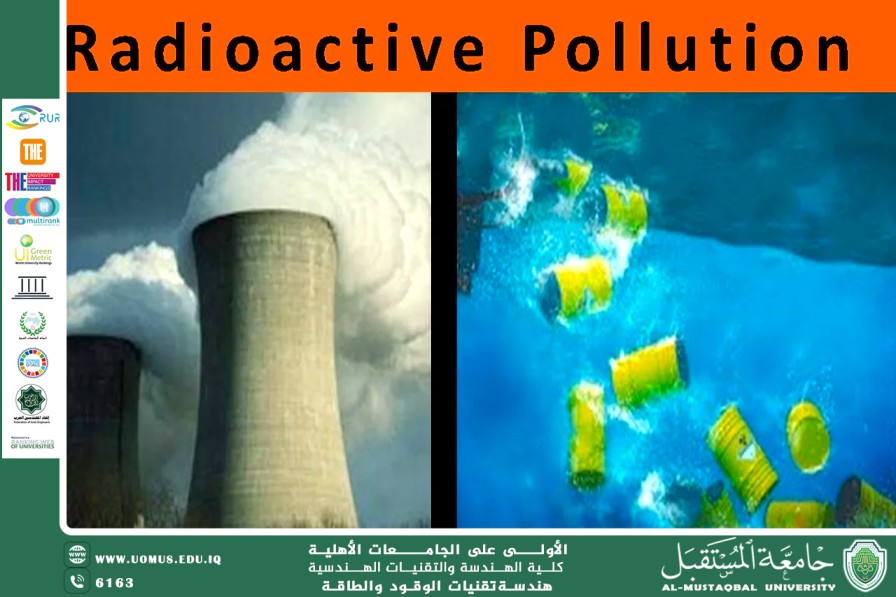
Radioactive Pollution
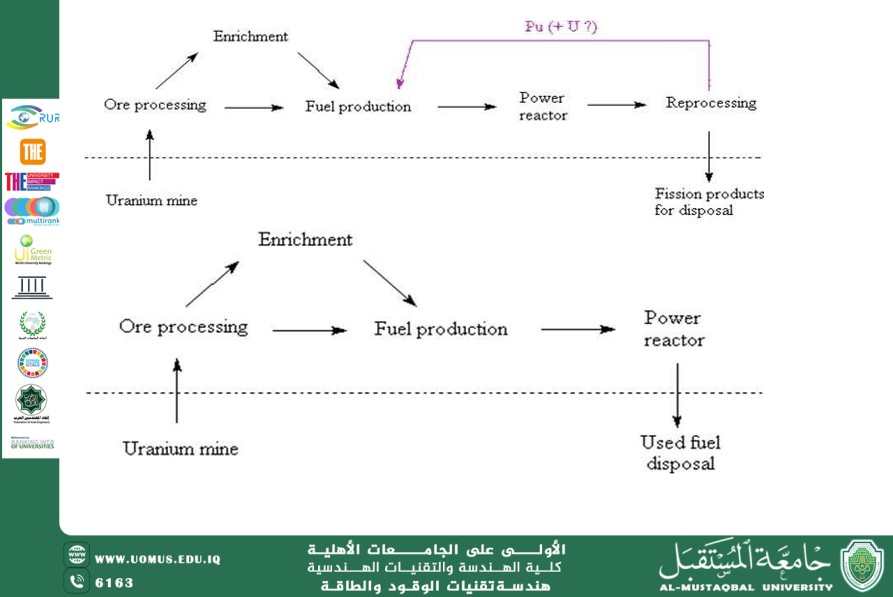
Radioactive Pollution:<br />Dr. Malik Mustafa Mohammed<br />The spontaneous emission of particles and rays by an unstable nucleus is called Radioactivity and such substances are called Radioactive Substances eg. Radium, Uranium, Thorium. Radioactive pollution can be defined as the release of radioactive substances or high-energy particles into the air water, or earth as a result of human activity, either by accident or by design. Sometimes natural sources of radioactivity, such as radon gas emitted from beneath the ground, are considered pollutants when they become a threat to human health.<br /><br />The sources of Radioactive wastes are:<br />1. Natural sources: Solar radiation, Radio nuclides in the earth Crust, Human Internal radiation, environmental Radiations.<br />2. Anthropogenic Sources: The sources of such waste include:<br />a) nuclear weapon testing or detonation.<br />b) the nuclear fuel cycle, including the mining, separation, and production of nuclear materials for use in nuclear power plants or nuclear bombs.<br />c) accidental release of radioactive material from nuclear power plants.<br /><br /><br />Effects of radioactive pollution:<br />The effect of radioactive pollution depends upon:<br /><br /><br />3. Half –life<br />4. Energy releasing capacity<br />5. Rate of diffusion<br />6. Rate of deposition of the contaminant.<br />7. Various atmospheric and climatic conditions such as wind, temperature, rainfall also determine their effects.<br /> <br /><br />Effects of industrial effluents<br /><br />Industries need a wide variety of raw materials and chemicals which are later discharged as effluents. Acids, alkalis, toxic metals, pesticides and other poisonous substances such as cyanide, dyes, oils, detergents, resins, rubbers are a few to mention. Heated effluents that impart thermal loading on receiving waters and effluents containing radioactive materials are also of prime concern. Some of the effluents such as from tanning and meat packing may also contain pathogenic bacteria. The nature and extent of pollution depends on the materials present in the effluent and on the quantity discharged.<br /><br />Nuclear Fuel Cycle:<br /><br />Most nuclear waste comes from the byproducts of the nuclear fuel cycle. The cycle typically is split into three sections: front end, service period, and back end. There can be intermediate stages that include the reprocessing of nuclear waste elements.<br /><br /> <br /><br />Classifications of Nuclear Waste:<br />Nuclear waste is segregated into several classifications.<br />8. Low level waste is not dangerous but sometimes requires shielding during handling.<br />9. Intermediate level waste typically is chemical sludge and other products from reactors.<br />10. High level waste consists of fissionable elements from reactor cores and transuranic wastes.<br />11. Transuranic waste is any waste with transuranic alpha emitting radionuclides that have half-lives longer than 20 years.<br />1. Low Level Waste LLW:<br />● Low level waste is any waste that could be from a high activity area.<br /><br />● 90% volume of waste<br /><br />● It does not necessarily carry any radioactivity.<br /><br />● Split into four categories: A, B, C, and GTCC.<br /><br /><br />2. Intermediate Level Waste ILW:<br />● Intermediate level waste requires shielding when being handled.<br /><br />● 7% volume of waste<br /><br />● Dependent on the amount of activity it can be buried in shallow repositories.<br />● Not recognized in the United States.<br /><br /><br />3. High Level Waste HLW:<br />● High level waste has a large amount of radioactive activity and is thermally hot.<br /><br />● 3% volume of waste<br />● 95% of radioactivity<br /><br />● Current levels of HLW are increasing about 12,000 metric tons per year.<br />● Most HLW consists of Pu-238, 239, 240, 241, 242, Np-237, U-236.<br /> <br /><br />4. Transuranic Waste TRUW:<br />• Transuranic waste consists of all waste that has radionuclides above uranium.<br />• TRUWs typically have longer half-lives than other forms of waste.<br />• Typically, a byproduct of weapons manufacturing.<br />• Only recognized in the United States.<br /><br />Creation of Nuclear Waste<br />● Nuclear waste is generated at all points of the fuel cycle.<br /><br />● Front end waste consists primarily of low-level alpha emission waste.<br /><br />● Service period waste typically includes LLW and ILW such as contaminated reactor housings and waste from daily operation.<br />● Back end waste normally is the most radioactive and includes spent fuel rods and reactor cores.<br />Control of Radioactive pollution:<br />The main objective in managing and disposing of radioactive (or other) waste is to protect people and the environment. This means isolating or diluting the waste so that the rate or concentration of any radionuclides returned to the biosphere is harmless. To achieve this for the more dangerous wastes, the preferred technology to date has been deep and secure burial. Transmutation, long-term retrievable storage, and removal to space have also been suggested.<br />• Nuclear devices should never be exploded in air. If these activities are extremely necessary, they should be exploded underground.<br />• In nuclear reactions, closed-cycle coolant system with gaseous coolants of very high purity may be used to prevent extraneous activation products.<br />• In nuclear and chemical industries, the use of radio-isotopes may be carried under a set of soil or water instead of power or gaseous forms.<br />• In Nuclear mines, wet drilling may be employed along the underground drainage.<br />• Nuclear reactors must be enclosed in broad concrete walls to prevent the radiations that emerge out.<br />• Workers should wear protective garments and glass spectacles should be screened from radiation.<br />• Extreme care should be exercised in the disposal of industrial waste contaminated with radionuclides.<br /><br />Al-Mustaqbal University – The First University in Iraq <br />