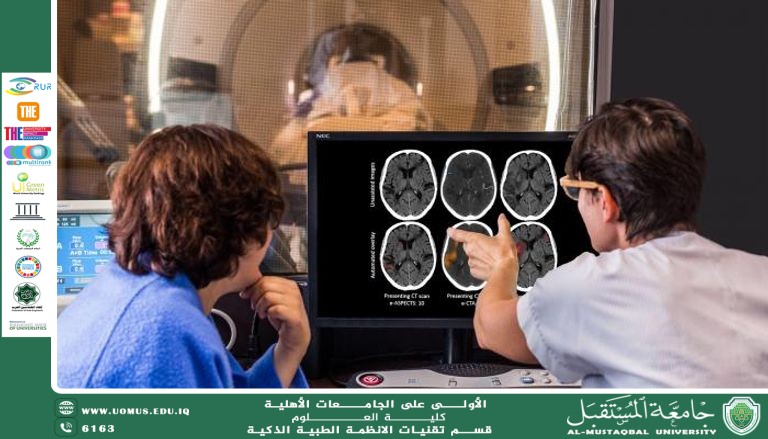

Early Stroke Detection Using Artificial Intelligence( Dr. Maytham Nabil Miqdad).
Strokes are considered emergency situations that require rapid intervention to minimize the resulting damage. In recent years, artificial intelligence has become a powerful tool in early diagnosis, assisting in analyzing brain images and detecting early signs of strokes with greater precision than traditional methods.<br />This technology relies on training AI models on vast amounts of CT and MRI scan images, allowing it to identify abnormal patterns in the brain that may indicate an impending stroke. Additionally, these systems can automatically alert doctors, reducing diagnosis time and helping to start treatment promptly.<br />Another advantage of these systems is their ability to assess the severity of the stroke and predict potential complications, assisting doctors in making more accurate treatment decisions, whether through administering clot-dissolving medications or surgical intervention if necessary. Recent studies suggest that these technologies can significantly reduce mortality rates and improve recovery chances.<br />As AI continues to evolve in this field, these systems are expected to become a key component in emergency rooms, helping save more lives through swift and effective treatment intervention.<br /><br /><br />AL-Mustaqbal University is the first University in Iraq.