
Types of pillars and their effect on load bearing capacity in structures
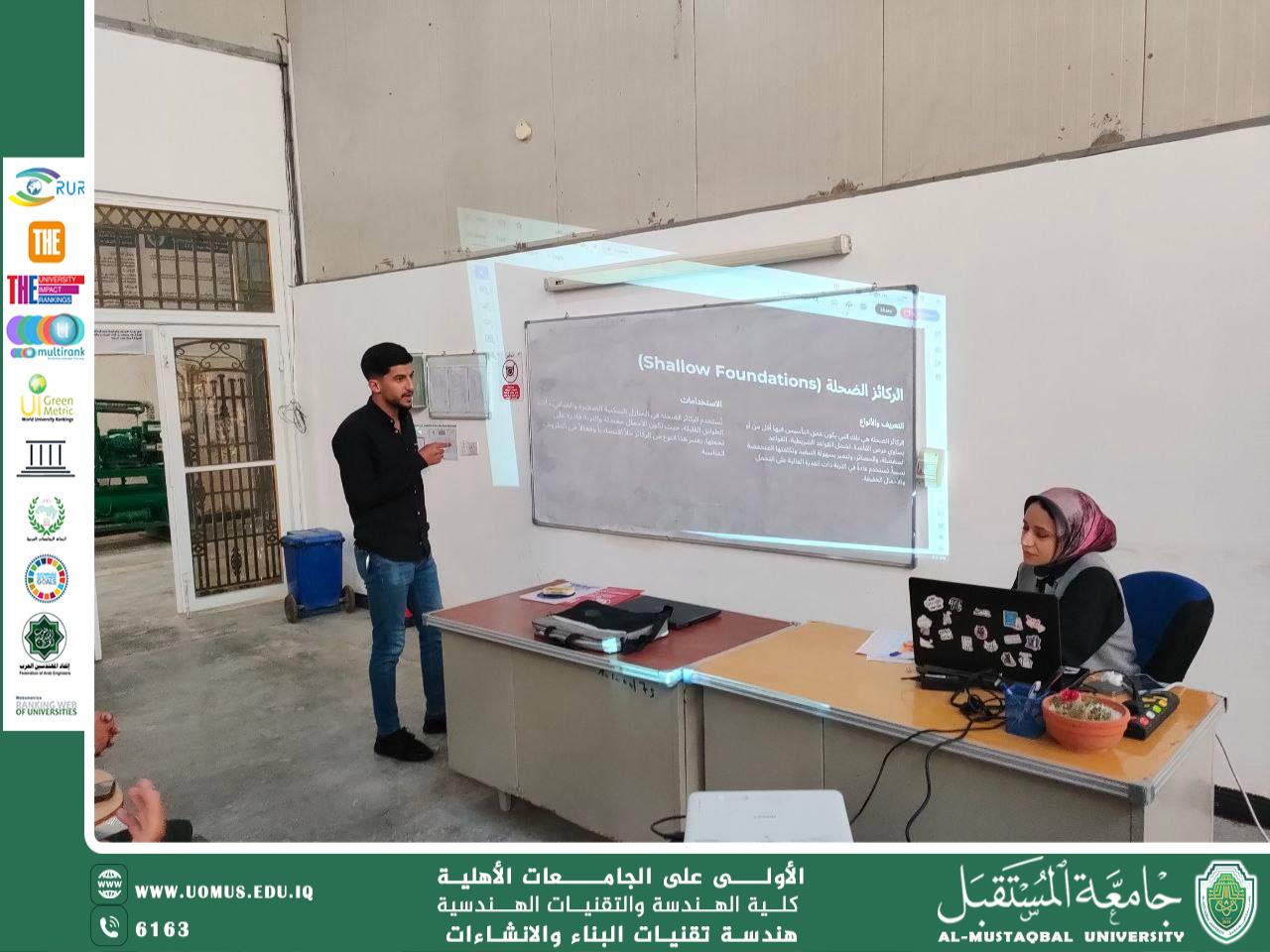
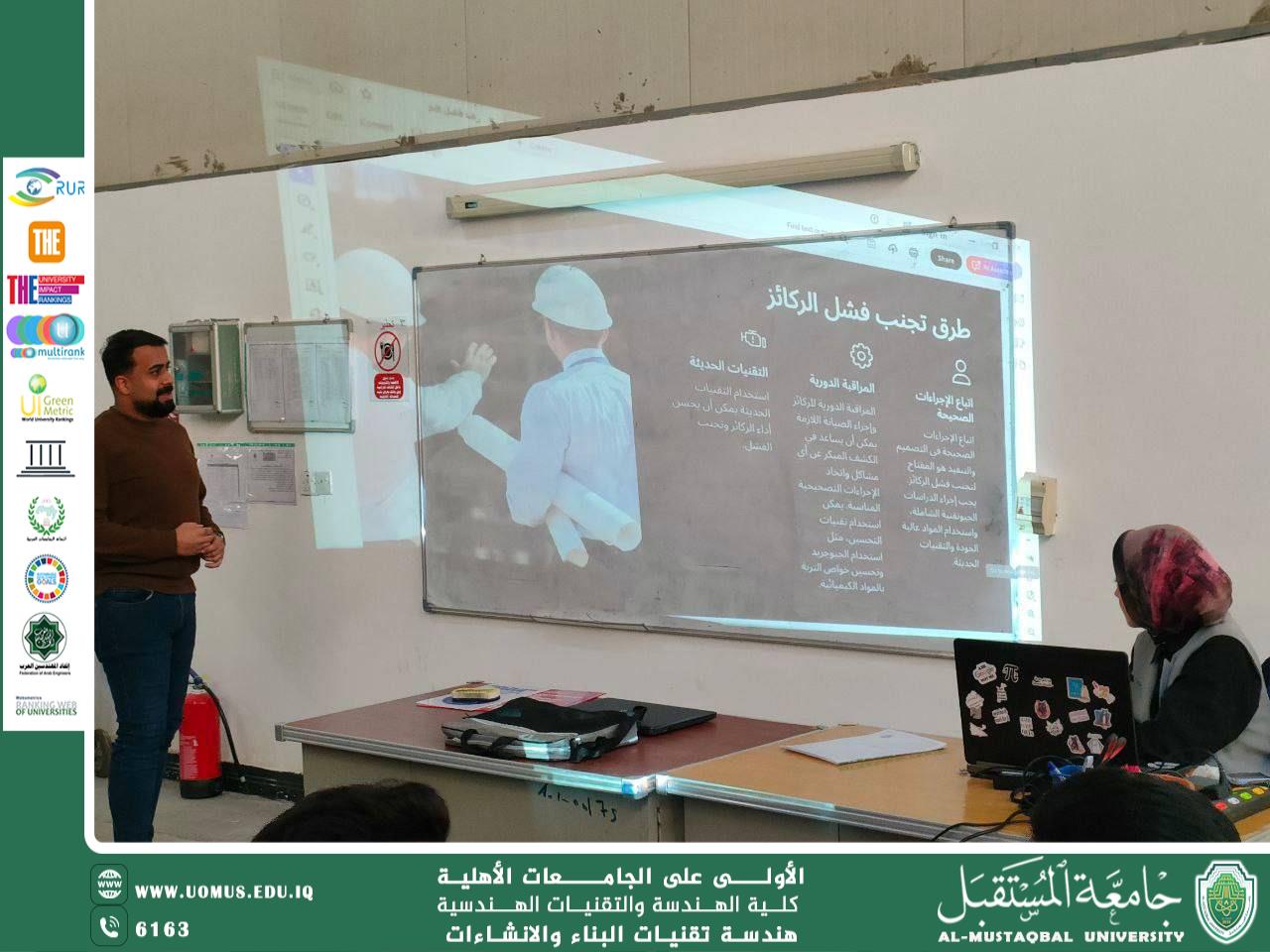
Under the supervision of the Head of the Civil and Construction Engineering Department and in alignment with the fourth goal of the Sustainable Development Goals (Quality Education), Lecturer Noora Fawzi organized an awareness activity titled "Types of Piles and Their Impact on Load Bearing in Structures."<br /><br />Piles are among the most essential structural elements used to transfer loads from buildings to deep soil layers with high load-bearing capacity. They are used when surface soil is weak and incapable of supporting loads directly. Piles vary based on the materials used, construction methods, and load transfer mechanisms.<br /><br />First: Types of Piles<br />Based on Load Transfer Mechanism:<br />Friction Piles: These rely on the friction between the pile surface and the surrounding soil to transfer loads to the ground.<br /><br />End-Bearing Piles: These transfer loads directly to a solid layer of soil or rock, where the base of the pile acts as the main support.<br /><br />Combination Piles: These combine both friction and end-bearing mechanisms to efficiently distribute loads to the soil.<br /><br />Based on Material Composition:<br />Concrete Piles: Commonly used in large structures, they have high load-bearing capacity and excellent resistance to environmental factors.<br /><br />Steel Piles: Known for their ability to penetrate hard soils and can be driven to great depths.<br /><br />Timber Piles: Used in wet soil and shallow water conditions but are less durable compared to other types.<br /><br />Composite Piles: Made from a combination of materials such as steel and concrete to enhance performance.<br /><br />Based on Construction Method:<br />Driven Piles: These are driven into the soil using special equipment without removing the surrounding soil.<br /><br />Bored Piles: The soil is excavated first, and then concrete is poured into the hole, making them suitable for vibration-sensitive areas.<br /><br />Second: The Impact of Piles on Load Bearing in Structures<br />Increased Load Capacity: Piles provide additional support for structures built on weak soil, preventing uneven settlement and enhancing stability.<br /><br />Reduced Differential Settlement: They help distribute loads evenly, minimizing variations in settlement across different parts of the building.<br /><br />Improved Resistance to Lateral Loads: Piles are used in structures exposed to lateral forces such as wind and earthquakes, increasing overall stability.<br /><br />Construction Feasibility on Unstable Soil: Piles enable the construction of large structures on soft soil, coastal areas, and sandy regions.<br /><br />Conclusion<br />Selecting the appropriate type of pile is crucial for ensuring the stability and safety of structures, depending on soil conditions, load types, and engineering requirements. Piles play a vital role in enhancing building performance and infrastructure, making them an indispensable component in structural engineering.<br /><br />University of Al-Mustaqbal – The First University in Iraq