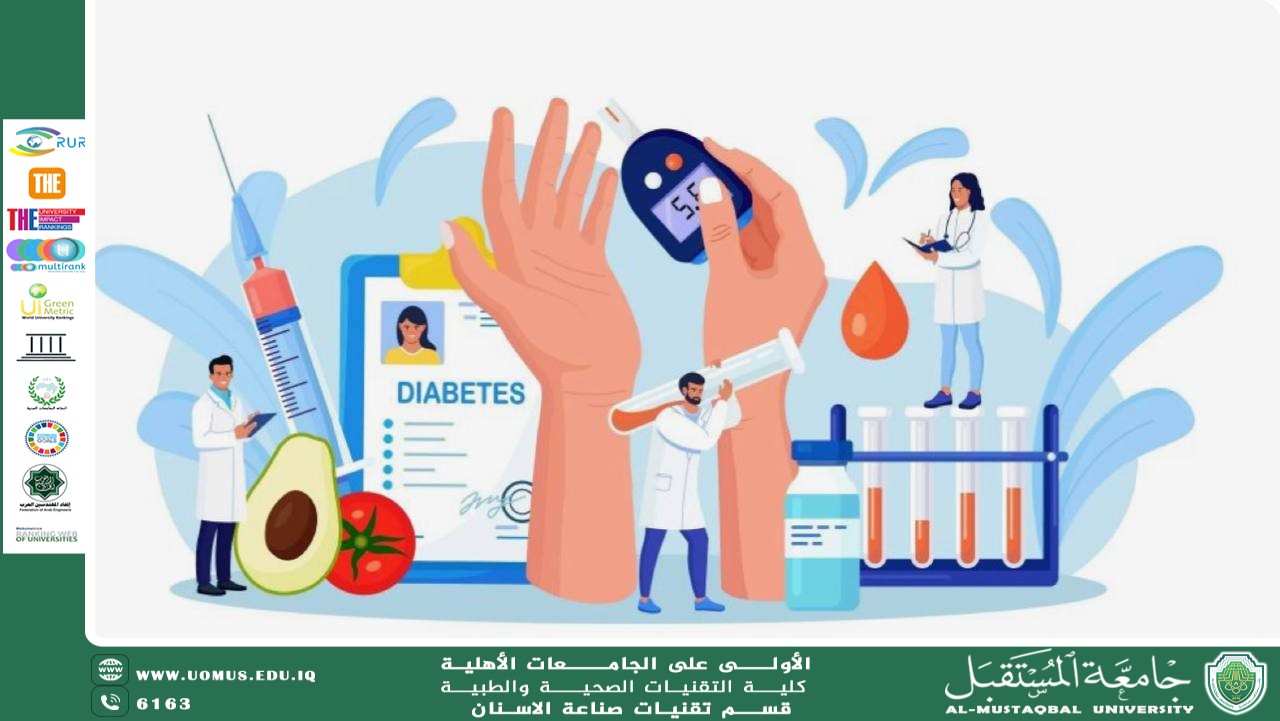
مقاله علمية للدكتوره نور مهند عباس بعنوان Diabetes mellitus
Diabetes mellitus <br /><br />مقاله علمية للدكتوره نور مهند عباس بعنوان Diabetes mellitus <br /> <br />(DM) is a chronic metabolic disorder characterized by high blood glucose levels (hyperglycemia) due to insufficient insulin production, impaired insulin action, or both. It is a major global health concern, affecting millions of people worldwide and increasing the risk of severe complications such as heart disease, kidney failure, and nerve damage.<br /><br />⸻<br /><br />1. Types of Diabetes Mellitus<br /><br />There are several types of diabetes, each with distinct causes and risk factors:<br /><br />1.1 Type 1 Diabetes (T1DM)<br /> • Cause: Autoimmune destruction of insulin-producing beta cells in the pancreas.<br /> • Onset: Commonly diagnosed in children and young adults.<br /> • Treatment: Requires lifelong insulin therapy.<br /><br />1.2 Type 2 Diabetes (T2DM)<br /> • Cause: Insulin resistance and gradual loss of insulin production.<br /> • Onset: More common in adults but increasingly seen in younger individuals due to lifestyle factors.<br /> • Risk Factors: Obesity, sedentary lifestyle, family history, and poor diet.<br /> • Treatment: Lifestyle modifications, oral medications, and sometimes insulin therapy.<br /><br />1.3 Gestational Diabetes Mellitus (GDM)<br /> • Cause: Hormonal changes during pregnancy leading to insulin resistance.<br /> • Onset: Occurs during pregnancy and usually resolves after childbirth, but increases the risk of developing T2DM later.<br /><br />1.4 Other Specific Types<br /> • Maturity-Onset Diabetes of the Young (MODY): A genetic form of diabetes.<br /> • Secondary Diabetes: Caused by conditions such as pancreatitis or the use of certain medications (e.g., corticosteroids).<br /><br />⸻<br /><br />2. Causes and Risk Factors<br /><br />2.1 Genetic Factors<br /> • Family history plays a role in both T1DM and T2DM.<br /> • Certain genetic mutations are linked to specific types of diabetes.<br /><br />2.2 Lifestyle Factors (Mainly in T2DM)<br /> • Unhealthy Diet: High intake of processed foods, sugar, and saturated fats.<br /> • Lack of Physical Activity: Leads to obesity and insulin resistance.<br /> • Obesity: Strongly linked to T2DM, particularly excess abdominal fat.<br /><br />2.3 Autoimmune and Environmental Triggers (Mainly in T1DM)<br /> • Viral infections (e.g., Coxsackievirus, enteroviruses) may trigger an autoimmune attack on pancreatic beta cells.<br /><br />⸻<br /><br />3. Symptoms of Diabetes<br /><br />Common symptoms of diabetes include:<br /> • Increased thirst (polydipsia)<br /> • Frequent urination (polyuria)<br /> • Unexplained weight loss (more common in T1DM)<br /> • Extreme fatigue<br /> • Blurred vision<br /> • Slow healing of wounds<br />AL-Mustaqbal University is the first university in Iraq