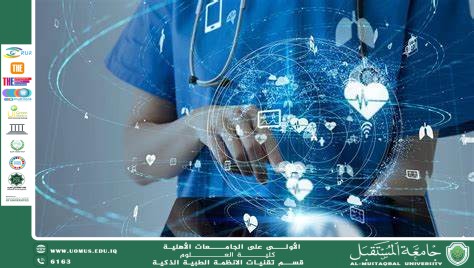
Digital Medicine: How It Is Reshaping the Future of Healthcare(Asst. Lecture. Qusay Munir Diab).
Digital medicine is one of the fastest-evolving fields in modern times, revolutionizing how healthcare is delivered. Through smart technologies and digital systems, doctors can enhance diagnosis accuracy, improve treatment efficiency, and elevate the patient experience.<br />Digital medicine technologies include wearable devices that monitor vital signs such as heart rate and blood sugar levels. Electronic health records also facilitate information exchange between healthcare providers, improving diagnostic accuracy and treatment speed.<br />One of the most significant advancements in digital medicine is AI-powered applications that analyze medical scans, predict disease progression, and recommend appropriate treatments. Additionally, telemedicine technology allows patients to consult doctors remotely via video calls, saving time and costs.<br />Furthermore, robotic-assisted surgery, health apps, and big data analytics contribute to enhancing medical efficiency. For example, patients can now use smartphone apps to schedule appointments, receive instant medical consultations, and track their medications with smart reminder systems.<br />However, digital medicine faces challenges such as privacy concerns, the need for training healthcare professionals on modern technologies, and ensuring high-speed internet access in all regions. Yet, with ongoing innovation, digital medicine is set to become the cornerstone of future healthcare systems.<br />Al-Mustaqbal University is the first one university in Iraq.