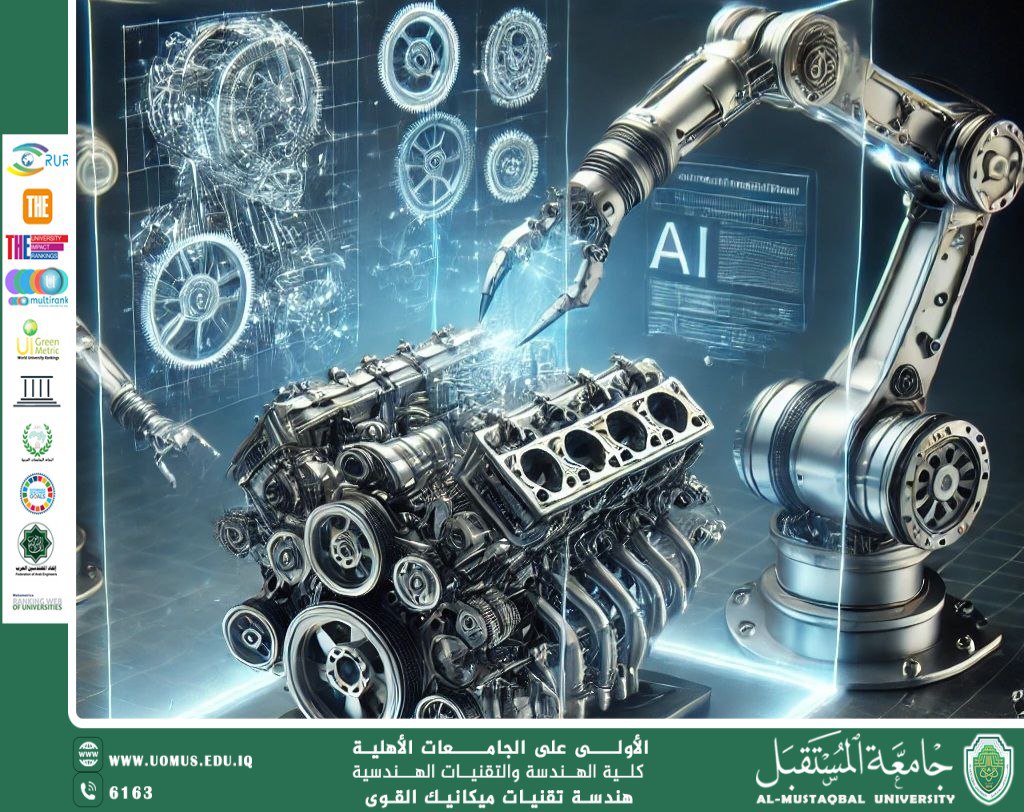
The Role of Artificial Intelligence in Mechanical Engineering
<br />Artificial Intelligence (AI) has transformed various sectors, and mechanical engineering is no exception. The integration of AI into mechanical engineering is revolutionizing traditional practices, enhancing efficiency, and driving innovation across several domains, from design and manufacturing to maintenance and optimization.<br /><br />1. AI in Product Design and Development<br /><br />One of the most significant areas where AI plays a role in mechanical engineering is in product design. Traditionally, designing mechanical systems required immense amounts of time and effort, often involving multiple iterations and prototyping. AI tools, particularly generative design algorithms, have streamlined this process. These tools use machine learning to generate optimal designs based on specific parameters such as weight, material properties, and environmental conditions. The AI system learns from the designer’s input and produces innovative design solutions that would otherwise be difficult to conceive manually.<br /><br />Additionally, AI-based simulation software can predict the behavior of mechanical systems under different conditions, allowing engineers to conduct virtual testing. This reduces the need for physical prototypes, cutting costs and accelerating the development process.<br /><br />2. AI in Manufacturing and Automation<br /><br />AI’s influence on manufacturing has been profound, especially with the rise of Industry 4.0, which integrates smart manufacturing technologies. In this domain, AI systems are used to improve production processes, enhance precision, and reduce waste.<br /><br />Robotics, powered by AI, plays a crucial role in automation. Machines equipped with AI algorithms can perform complex tasks with high accuracy, such as assembly, welding, and material handling. These robots continuously learn and adapt, improving their performance over time. They can also collaborate with human workers in a safe, efficient manner, contributing to a more flexible production environment.<br /><br />AI-driven predictive maintenance is another crucial application in manufacturing. By continuously monitoring the performance of machines and analyzing data from sensors, AI systems can predict when a machine is likely to fail. This allows for proactive maintenance, reducing downtime and minimizing the risk of costly breakdowns.<br /><br />3. AI in Materials Science<br /><br />AI has also made significant strides in materials science, an integral part of mechanical engineering. Identifying the right material for a specific application can be a complex task. Machine learning algorithms are now being used to analyze vast databases of material properties and predict the performance of different materials under various conditions.<br /><br />AI aids in discovering new materials by analyzing patterns and relationships that might not be immediately apparent to human researchers. This has opened new frontiers in the development of lightweight, durable, and sustainable materials, essential for industries such as aerospace, automotive, and energy.<br /><br />4. AI in Optimization and Control Systems<br /><br />In mechanical engineering, optimization is crucial for designing efficient systems, whether it’s reducing fuel consumption in vehicles or minimizing energy usage in industrial processes. AI plays a significant role in optimization algorithms by evaluating multiple design variables and conditions to find the most efficient solution.<br /><br />In control systems, AI helps optimize the performance of machines and systems. For instance, AI can optimize the performance of HVAC systems by adjusting parameters in real-time, depending on external weather conditions and internal occupancy. Similarly, AI algorithms are used in vehicle control systems to enhance driving efficiency, improve fuel economy, and ensure safety.<br /><br />5. AI in Predictive Analytics for Maintenance and Repair <br />As machinery becomes more complex, the importance of predictive maintenance grows. AI enables predictive analytics by utilizing historical and real-time data to forecast equipment failures before they occur. By detecting anomalies and patterns, AI systems can anticipate when and where a mechanical system may fail, allowing engineers to perform maintenance activities just in time, reducing downtime, and avoiding costly repairs.<br /><br />Machine learning algorithms continuously analyze data from sensors and provide real-time insights, enabling engineers to make more informed decisions about repairs or replacements. This leads to greater asset longevity and optimal system performance.<br /><br />6. AI in Quality Control<br /><br />Quality control is vital in mechanical engineering to ensure that products meet the desired standards and specifications. AI-powered image recognition systems have advanced to the point where they can automatically detect defects in products during the manufacturing process. By using computer vision and deep learning techniques, AI systems can identify even the smallest imperfections that human inspectors might miss. This enhances the consistency and reliability of products, reduces human error, and increases the overall efficiency of the quality control process.<br /><br />7. The Future of AI in Mechanical Engineering<br /><br />The future of AI in mechanical engineering looks promising. As AI technologies continue to evolve, they will become even more deeply integrated into every facet of mechanical engineering, from the conceptualization of ideas to the implementation and optimization of systems. With advances in AI, engineers will be able to work more efficiently, create smarter products, and drive sustainability efforts in industries such as manufacturing, transportation, and energy.<br /><br />In conclusion, AI has established itself as a transformative force in mechanical engineering, offering innovative solutions to long-standing challenges. Its potential to enhance product design, optimize manufacturing processes, improve predictive maintenance, and drive efficiency will continue to shape the future of the discipline. As AI evolves, so too will its role in advancing mechanical engineering, ultimately leading to smarter, more sustainable, and efficient systems.<br /><br />M.Sc Abrar Abdulkareem<br />