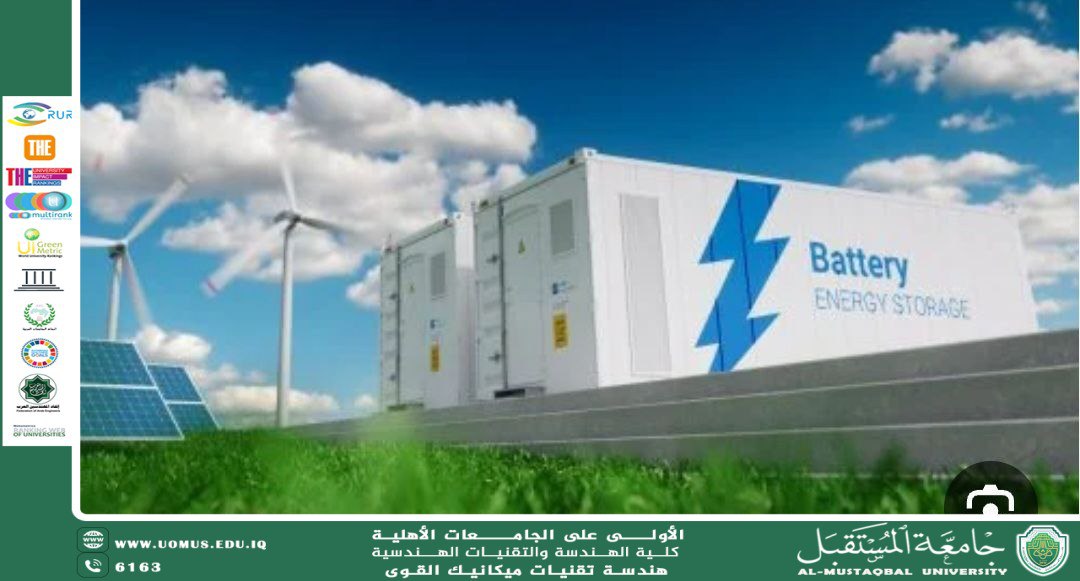
Technologies of Energy Storage and Their Role in Enhancing Renewable Energy Efficiency
<br />Introduction<br /><br />With the growing shift towards renewable energy sources, the need for efficient energy storage technologies has become more critical than ever. Energy storage systems play a key role in stabilizing power grids, ensuring a continuous energy supply, and enhancing the overall efficiency of renewable energy sources such as solar and wind power. This article explores various energy storage technologies, their challenges, and the future of innovation in this field.<br /><br />Types of Energy Storage Technologies<br /><br />Energy storage technologies can be categorized into different types based on their working principles. Below are the main types of energy storage systems:<br /><br />1. Electrochemical Storage<br /><br />Electrochemical energy storage systems, commonly known as batteries, store energy through chemical reactions. The most widely used battery technologies include:<br /><br />Lithium-ion batteries: High energy density, commonly used in electric vehicles and portable electronics.<br /><br />Solid-state batteries: Offer better safety and longer lifespan compared to conventional batteries.<br /><br />Flow batteries: Suitable for large-scale energy storage, with a long cycle life.<br /><br />2. Mechanical Storage<br /><br />Mechanical energy storage systems store energy in the form of kinetic or potential energy. Examples include:<br /><br />Pumped hydro storage: Uses excess electricity to pump water to a higher elevation, which is then released to generate power when needed.<br /><br />Compressed air energy storage (CAES): Stores energy by compressing air in underground reservoirs and releasing it to drive turbines.<br /><br />Flywheel energy storage: Stores rotational energy in a spinning rotor, capable of providing quick bursts of power.<br /><br />3. Thermal Energy Storage<br /><br />Thermal energy storage (TES) systems store heat or cold for later use, improving the efficiency of renewable energy sources. The main types include:<br /><br />Molten salt storage: Used in concentrated solar power (CSP) plants to store heat for electricity generation at night.<br /><br />Phase change materials (PCMs): Absorb and release heat during phase transitions, such as melting and solidification.<br /><br />Cryogenic energy storage: Stores energy by liquefying air or gases, later used to generate electricity.<br /><br />4. Chemical Energy Storage<br /><br />Chemical energy storage systems store energy in the form of chemical bonds and release it when needed. The key technologies include:<br /><br />Hydrogen storage: Hydrogen can be stored in compressed, liquid, or solid forms and used in fuel cells.<br /><br />Synthetic fuels: Convert surplus electricity into synthetic hydrocarbons that can be burned when needed.<br /><br />Challenges of Energy Storage Technologies<br /><br />Despite their potential, energy storage technologies face several challenges that hinder widespread adoption:<br /><br />High initial costs: Many storage systems require significant investment in materials and infrastructure.<br /><br />Efficiency losses: Energy is lost during storage and retrieval, reducing overall system efficiency.<br /><br />Material limitations: The availability and sustainability of materials like lithium and rare earth elements pose challenges.<br /><br />Integration with power grids: Effective management is needed to balance supply and demand in renewable energy systems.<br /><br />Innovations and Future Developments in Energy Storage<br /><br />Researchers and engineers are constantly working on improving energy storage technologies. Some promising innovations include:<br /><br />Next-generation battery materials: Development of graphene-based and sodium-ion batteries for cost reduction and better performance.<br /><br />Artificial intelligence (AI) in energy storage: AI-driven algorithms optimize battery charging and discharging for improved efficiency.<br /><br />Integration with smart grids: Smart grids use real-time data to optimize energy distribution and storage utilization.<br /><br />Hybrid storage systems: Combining different storage technologies to achieve higher efficiency and reliability.<br /><br />Conclusion<br />Energy storage technologies are essential for the widespread adoption of renewable energy sources, ensuring a stable and reliable energy supply. While challenges remain, ongoing research and technological advancements continue to enhance efficiency and affordability. As innovations in storage solutions progress, they will play a crucial role in shaping a sustainable and resilient energy future.<br /><br />Teeb Basim