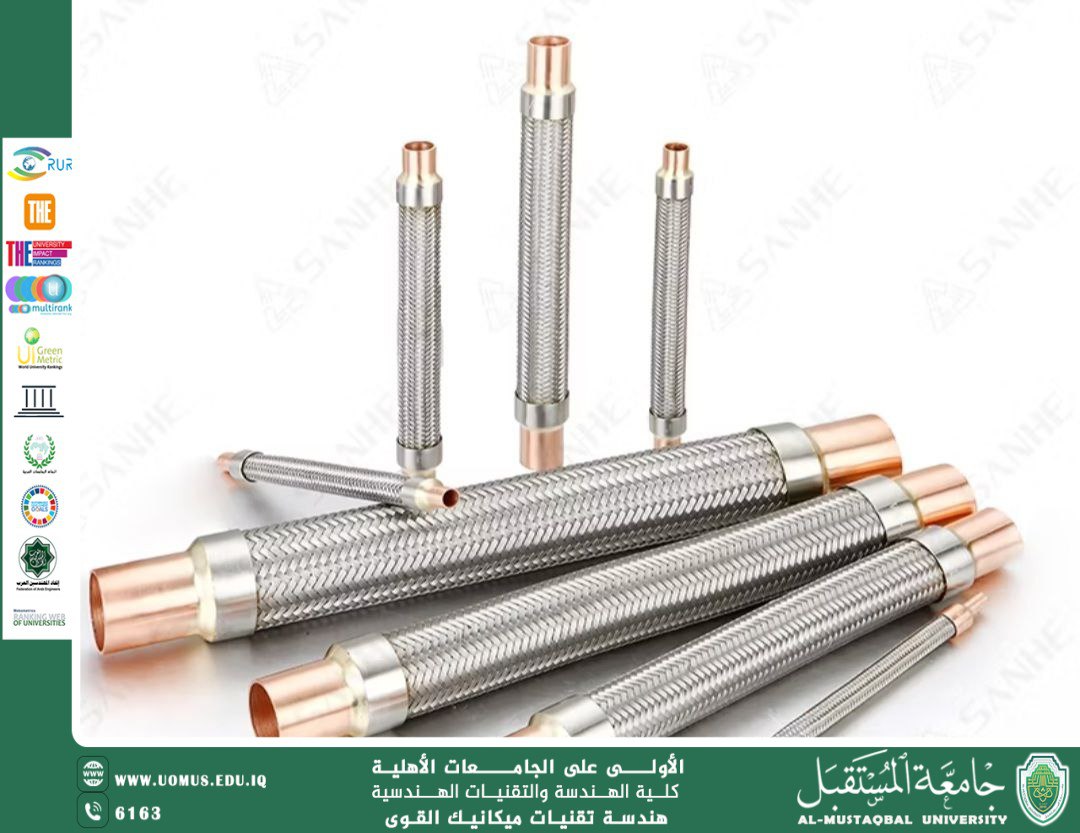
Dynamic Vibration Absorber:
<br />Introduction<br /><br />A Dynamic Vibration Absorber (DVA) is a mechanical device used to reduce unwanted vibrations in structures and machinery. It works by attaching an auxiliary mass-spring-damper system to the primary vibrating system, effectively counteracting vibrations and improving stability. This technique is widely employed in engineering applications such as aerospace, automotive, and civil structures to enhance performance and longevity.<br /><br />Working Principle<br /><br />A DVA functions based on the principle of tuned mass damping. When a system experiences vibrations due to an external force, the absorber is tuned to the same frequency as the disturbance. The absorber’s motion creates a counteracting force, reducing the amplitude of vibrations in the primary system. The key components of a DVA include:<br /><br />Mass – A secondary mass attached to the primary structure.<br /><br />Spring – Provides restoring force and determines the natural frequency.<br /><br />Damper – Controls energy dissipation and reduces excessive oscillations.<br /><br />Types of Dynamic Vibration Absorbers<br /><br />There are several types of DVAs, each designed for specific applications:<br /><br />Tuned Mass Damper (TMD) – Used in buildings and bridges to mitigate structural oscillations.<br /><br />Tuned Liquid Column Damper (TLCD) – Uses liquid motion within a column to counteract vibrations.<br /><br />Pendulum Absorber – Common in aerospace applications where rotational movement is involved.<br /><br />Applications<br /><br />DVAs are utilized in various industries to enhance efficiency and safety:<br /><br />Automotive Industry: Reduces engine and chassis vibrations for smoother rides.<br /><br />Aerospace Engineering: Minimizes vibrations in aircraft wings and fuselage.<br /><br />Civil Engineering: Enhances stability in skyscrapers and bridges during wind and seismic events.<br /><br />Manufacturing Equipment: Improves precision by reducing unwanted machine vibrations.<br /><br />Advantages and Limitations<br /><br />Advantages:<br /><br />Enhances structural durability and performance.<br /><br />Reduces noise and mechanical fatigue.<br /><br />Energy-efficient and passive operation.<br /><br />Limitations:<br /><br />Requires precise tuning for optimal effectiveness.<br /><br />May not be suitable for broad-frequency vibrations.<br /><br />Additional weight and space constraints in certain applications.<br /><br />Conclusion<br /><br />Dynamic Vibration Absorbers are essential in modern engineering for controlling vibrations and improving the efficiency of mechanical systems. With advancements in materials and design, DVAs continue to evolve, offering innovative solutions to vibration-related challenges in various industries.<br /><br />Teeb Basim