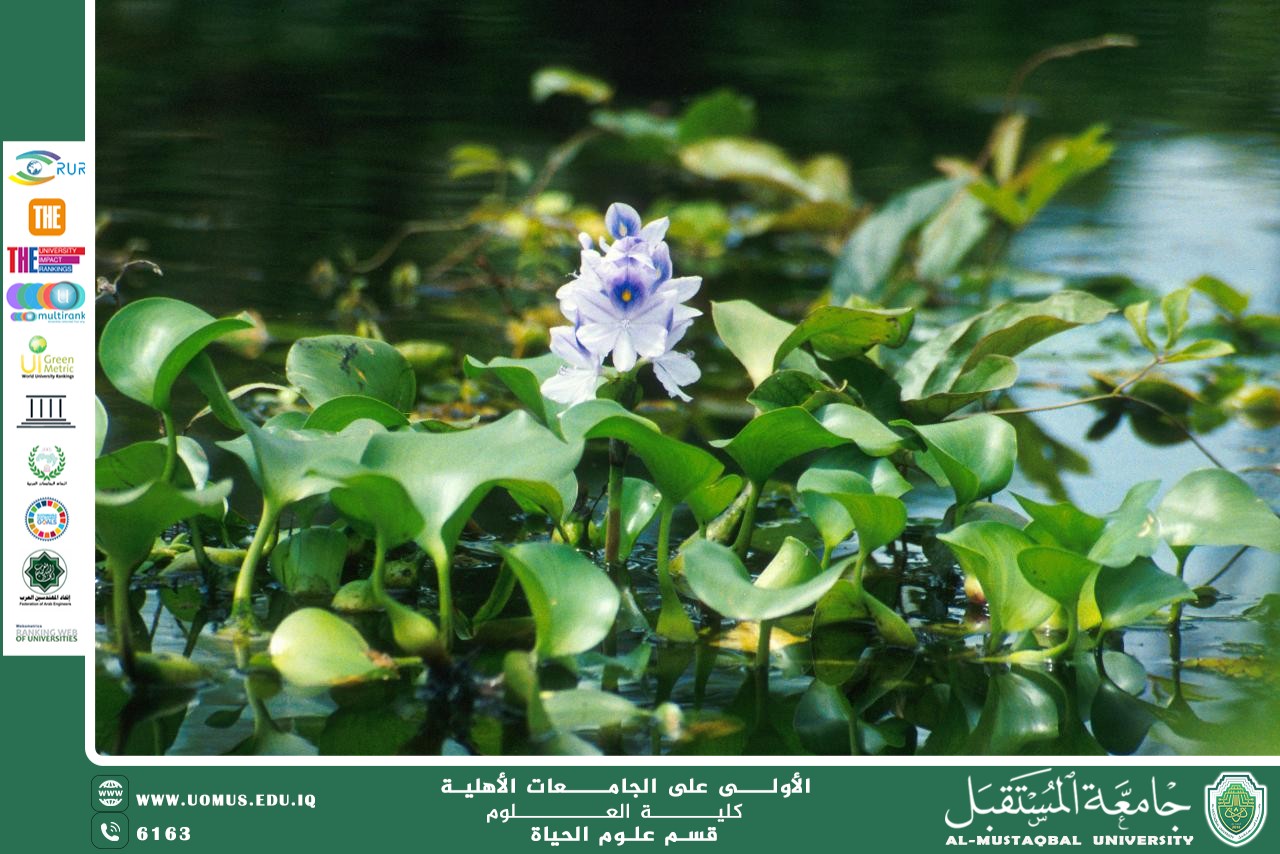
A scientific article by Ms. Nour Al-Huda Azmi Hassan entitled "Aquatic Plants"
Aquatic plants are plants that grow in or near bodies of water, such as rivers, lakes, ponds, swamps, and oceans. These plants have special characteristics that adapt to their aquatic environments, whether fresh or salty. These plants are of great importance in the natural environment because they contribute to maintaining ecological balance.<br /><br />Types of Aquatic Plants:<br />Floating Plants:<br /><br />These plants float on the surface of the water and do not require soil to grow.<br />They do not have deep roots, but rather have few or no roots, the purpose of which is to anchor the plant in the water.<br />Examples:<br />Duckweed<br />Water Lily<br />Water Moss<br />Submerged Plants:<br /><br />Grow completely below the surface of the water, with their roots deep in the bottom of the water body.<br />These plants are completely submerged in the water.<br />Examples:<br />Elodea<br />Aquatic plants such as water lettuce.<br />Emergent plants:<br /><br />These plants grow in shallow water where the roots are submerged, but the leaves and stems remain above the surface.<br />These plants play an important role in soil conservation and protection against erosion.<br />Examples:<br />Reeds<br />Papyrus<br />Water lilies.<br />Marine plants:<br /><br />These plants grow in the salt waters of seas and oceans.<br />Seagrasses are among the most well-known plants living in the sea and play a significant ecological role.<br />Examples:<br />Seagrass<br />Seaweeds such as kelp.<br />Adaptions for aquatic plants:<br />Leaves and roots:<br /><br />Floating plants have broad leaves to absorb sufficient light and provide oxygen to the plant. Submerged plants contain aerial tissue or air cells to aid in buoyancy and oxygen absorption.<br />Roots:<br /><br />In shore plants, the roots are submerged in the water, while the upper parts of the plant remain above water.<br />Reproduction:<br /><br />Some aquatic plants reproduce asexually, such as by branching or propagating by roots.<br />Other plants produce beautiful flowers or fruits below or on the surface of the water, attracting insects and birds and aiding in pollination.<br />Environmental Benefits of Aquatic Plants:<br />Water Purification:<br /><br />Aquatic plants purify water of pollutants by absorbing excess nutrients such as nitrogen and phosphorus, helping to prevent algal blooms that can harm the environment.<br />Coastal Protection:<br /><br />Marine plants, such as seagrasses, help protect coastlines from erosion and reduce the force of waves on beaches.<br />Habitat for Animals:<br /><br />Aquatic plants provide vital habitats for many marine and terrestrial organisms, such as fish, birds, insects, and frogs.<br />Oxygen Production:<br /><br />Aquatic plants photosynthesize, absorbing carbon dioxide and releasing oxygen into the water, improving water quality and sustaining aquatic life.<br />Examples of aquatic plants:<br />Water Lily:<br /><br />A floating plant that spreads on the water surface, with beautifully colored flowers and a fragrant scent. Its roots are deep in the water.<br />Reeds:<br /><br />Coastal plants that grow in shallow waters and provide shelter for many organisms.<br />Seagrass:<br /><br />Grows in salt water and is one of the most important marine plants. It helps protect beaches from erosion and provides food for many marine organisms.<br />Duckweed:<br /><br />A very small floating plant that covers the water surface. It is one of the fastest-growing plants and is used to purify water.<br />Seaweed:<br /><br />Grows in oceans and is a major source of food and energy for many marine organisms.<br /><br />Al-Mustaqbal University is the First university in Iraq.<br />