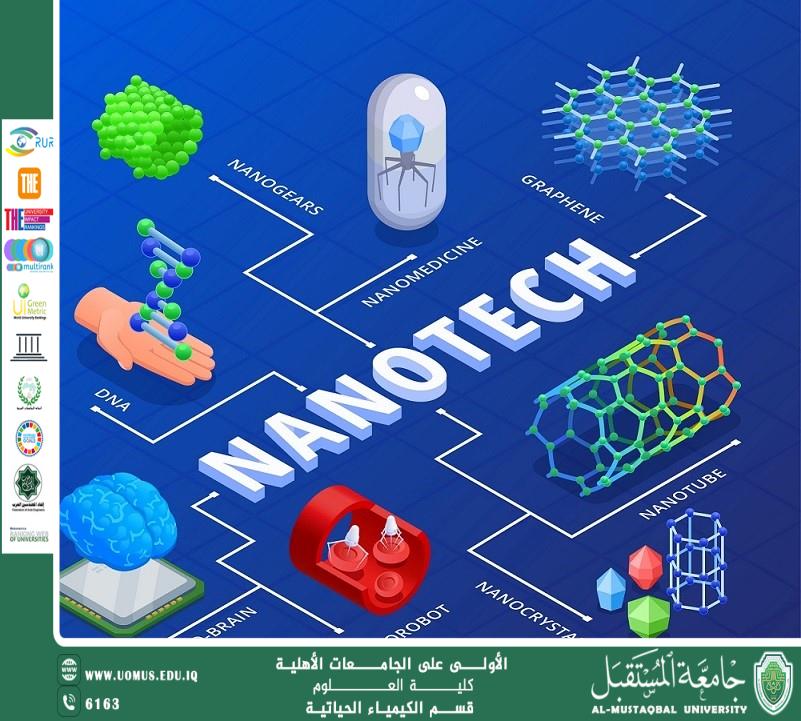

A scientific article by Prof. Dr. Nasser Abdul Hassan Nasser titled(Artificial Intelligence and Biochemical Sciences: New Horizons in Technological Sustainability through Nanotechnology)
Sustainability through Nanotechnology<br />With the rapid development of science and technology, artificial intelligence (AI) and biochemical sciences emerge as powerful tools that can change the course of history. These fields represent a convergence of basic and applied sciences, leading to technological innovations in areas such as healthcare, environmental protection, and sustainable agriculture. The integration of nanotechnology with these disciplines is one of the promising solutions to address the challenges of the modern world by creating innovative sustainability in a rapidly changing environment.<br />Artificial Intelligence: The Digital Revolution that Understands Life<br />Artificial intelligence is a field focused on developing systems that mimic human abilities to learn and think. In biochemical sciences, AI can be used to analyze biological data and interact with molecules more quickly and accurately than humans can achieve. AI can help identify complex relationships between genes, proteins, and enzymes, contributing to faster discovery of treatments for incurable diseases.<br />Biochemical Sciences: A Tool to Understand Life at the Molecular Level<br />Biochemical science is the study of chemical processes within living organisms. By analyzing biological molecules such as proteins, DNA, and amino acids, this field opens the door to understanding how human health can be improved, developing new therapeutic technologies, and even enhancing the quality of our daily lives. This science has advanced significantly due to modern applications such as artificial intelligence and nanotechnology.<br />Nanotechnology: Engineering at an Invisible Level<br />Nanotechnology is a technology that allows us to manipulate materials at the level of atoms and molecules, enabling the creation of extremely small materials and devices with unique and new properties. In biochemical sciences, these techniques are used to develop molecules that can interact precisely with tissues and cells, such as in gene therapy or targeted drug delivery directly to diseased cells. Nanotechnology is also used to improve agricultural techniques and irrigation by developing materials that can enhance soil and increase crop production sustainably.<br />The Integration of AI and Nanotechnology: Innovative Solutions<br />When AI meets nanotechnology, new horizons of innovation open up in various fields. For example:<br />• Healthcare: AI can analyze genetic data to suggest appropriate treatments using nanomolecules targeted at diseases such as cancer. Nanotechnology is used here to improve drug delivery to target cells without affecting healthy tissues.<br />• Environment: Nanotechnology can be used to design materials capable of absorbing pollution or reducing carbon dioxide emissions, while AI helps improve strategies for resource conservation and predicting climate changes.<br />• Agriculture: Nanotechnology is employed to enhance agricultural crops efficiently, where nanomaterials improve plant resistance to diseases or assist in reducing water usage.<br />Innovative Sustainability: How These Technologies Are Changing the World<br />Today’s world faces major challenges such as climate change, environmental pollution, and biodiversity loss. However, integrating AI with nanotechnology opens the door to finding innovative solutions to these challenges. Through the use of these technologies, we can:<br />• Enhance energy sustainability: Develop nanomaterials that help store energy more efficiently or convert solar energy into usable power more effectively.<br />• Reduce pollution: Use nanomaterials for water purification or removing toxins from soil and air.<br />• Achieve food security: Develop innovative agricultural techniques that increase crop yield while reducing the need for chemical fertilizers and pesticides, helping protect the environment.<br />Future Horizons: A World Adapting to Innovation<br />With the advancement of research in AI, biochemical sciences, and nanotechnology, we are expected to see radical transformations across many sectors. In the near future, we may be able to treat genetic diseases using nanotechnology with unprecedented precision, or improve environmental quality through techniques that reduce pollution and recycle materials innovatively. By integrating these technologies with advanced scientific research, it will be possible to achieve a balance between human needs and preserving the planet for future generations.<br />The integration of AI with biochemical sciences and nanotechnology represents an unprecedented opportunity to develop innovative and effective solutions to global challenges. While there are many challenges that we may face in applying these technologies, the opportunities they offer bring us closer to achieving true sustainability. The future holds immense potential, and the more we leverage these technological tools, the closer we get to a healthier, more sustainable, and innovative world.<br />Al-Mustaqbal University, the first university in Iraq