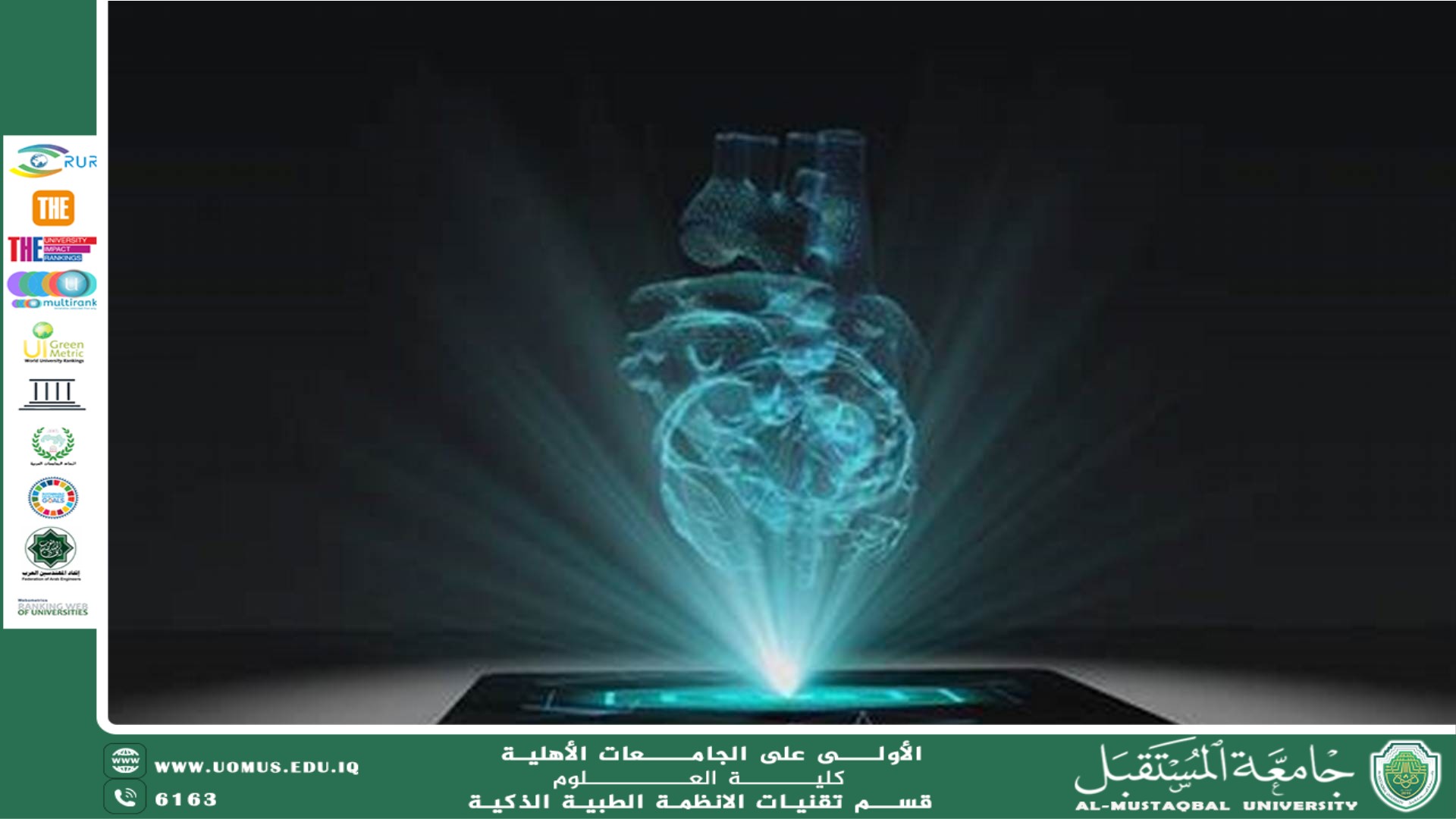
Using Hologram Technologies in Medical Teaching and Virtual Anatomy( Dr. Maytham Nabil Miqdad).
Hologram technologies are one of the most prominent technological developments that offer innovative applications in medical education, especially in teaching human anatomy. These technologies allow the creation of interactive 3D models, enabling students to study human organs and complex systems in a visual and simplified way.<br />By using holograms, students can study the details of the human body in three dimensions, enhancing their understanding of anatomical structures and the vital functions of organs. They can interact with the holographic models, changing viewing angles or zooming in on specific parts, allowing them to examine organs in ways that were previously not possible with traditional methods like cadavers or diagrams.<br />These technologies also contribute to simulating surgical procedures, allowing students to practice their surgical skills in a safe and realistic environment. This enhances their readiness to handle complex surgical cases in the future.<br />Holograms are also an effective way to provide remote medical training, allowing students from various parts of the world to access advanced educational content in anatomy and surgery, thus enhancing the quality of medical education and reducing the need for training in traditional settings.<br /><br />Al-Mustaqbal University is the first University in Iraq.<br />