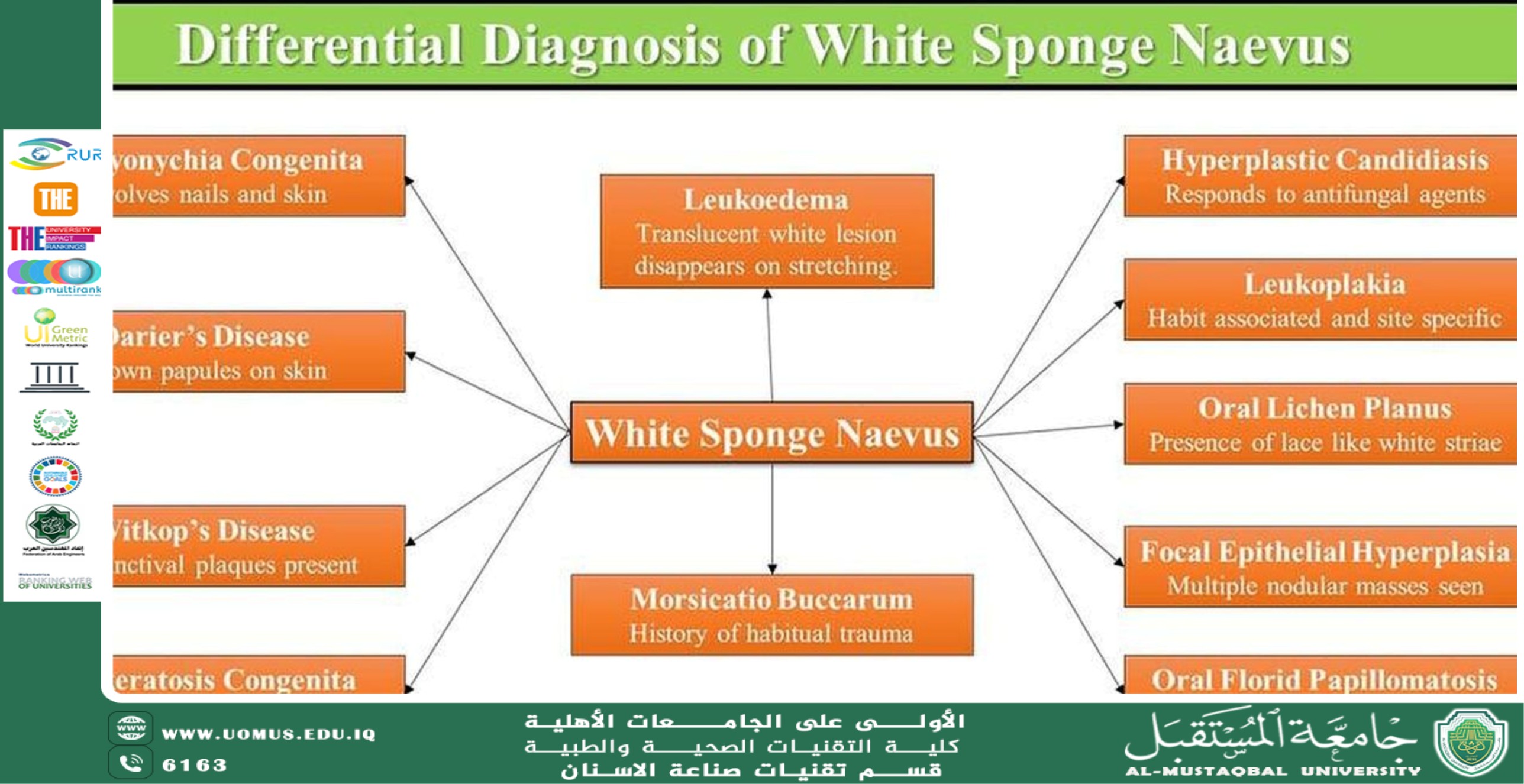
White Sponge Nevus
The diagnosis of WSN is primarily clinical, based on its characteristic appearance and familial history. A biopsy may be performed in uncertain cases to confirm the diagnosis, revealing histopathological features such as:<br />• Thickened epithelium with parakeratosis and acanthosis.<br />• Intracellular edema within the epithelium.<br />• Eosinophilic perinuclear condensation in epithelial cells.<br />Genetic testing can identify mutations in KRT4 or KRT13 but is rarely needed for routine diagnosis.<br />________________________________________<br />Management<br />WSN is a benign and asymptomatic condition that does not require treatment. However, if irritation occurs or if secondary infections are suspected, symptomatic management may include:<br />• Good oral hygiene to prevent superimposed infections.<br />• Antifungal agents if secondary candidiasis is present.<br />Patient education is crucial to alleviate concerns about the condition’s benign nature.<br />________________________________________<br />Prognosis<br />White sponge nevus is a lifelong condition with an excellent prognosis. It does not increase the risk of malignancy and typically does not impact the individual’s quality of life.<br />________________________________________<br />Conclusion<br />White sponge nevus is a rare genetic condition that manifests as white, spongy plaques in the oral cavity. Recognizing its clinical and histopathological features is essential for distinguishing it from other white lesions. As it is benign and asymptomatic, treatment is rarely required, and patient reassurance remains the cornerstone of management.<br />Prof.Dr. Muna S Merza<br /><br /><br />AL-Mustaqbal University is the first university in Iraq<br />