A scientific article DR. Nilofer Ewadh entitled(congenital esotropia).
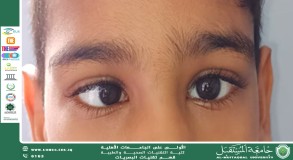
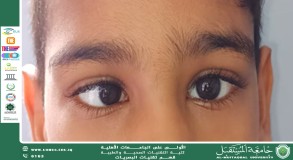
Congenital esotropia is a type of strabismus (eye misalignment) that is present at birth or develops very early in life, usually within the first 6 months. In this condition, one or both eyes turn inward toward the nose, causing the person to appear cross-eyed. Causes of Congenital Esotropia: While the exact cause of congenital esotropia is often unclear, it is believed to involve a combination of genetic and environmental factors. In some cases, there may be an inherited tendency for eye misalignment, especially if there is a family history of strabismus or other vision disorders. Specific causes may include: Muscle imbalance: One of the most common causes is an imbalance in the muscles that control eye movement. This can result in the eyes not being able to move in unison, Neurological factors: Abnormal development of the nerve pathways responsible for coordinating eye movements can contribute to misalignment, Other associated conditions: Sometimes congenital esotropia is associated with other medical conditions, such as cerebral palsy or certain genetic syndromes, though this is less common. Symptoms of Congenital Esotropia: Visible eye turn: The most obvious sign is a constant inward turn (crossed eyes) of one or both eyes.<br />Abnormal head posture: To compensate for the misalignment, children may tilt their head or turn it in a way that helps them align their vision better , Limited binocular vision: The child may have difficulty using both eyes together to create depth perception (stereopsis) , Suppression of one eye: In some cases, the brain may ignore the image from one eye to avoid double vision (diplopia), which can result in amblyopia (lazy eye) , Difficulty with focusing: Children might have trouble focusing on objects and may appear less engaged with visual stimuli , No eye coordination: The misaligned eye may not track moving objects or align with the other eye. Diagnosis of Congenital Esotropia: Cycloplegic refraction: This involves dilating the pupil and measuring the refractive error of each eye to rule out other causes of misalignment, such as a high prescription. Treatment of Congenital Esotropia: Strabismus surgery: Surgery on the eye muscles is often the most effective treatment. The goal is to adjust the tension of the muscles that control eye movement to realign the eyes. Surgery is typically performed when the child is around 6 months to a year old. Glasses: Refractive correction: Glasses may be prescribed if there is an underlying refractive error (nearsightedness, farsightedness, or astigmatism) that is contributing to the eye misalignment. Amblyopia Treatment: Occlusion therapy (patching): If one eye becomes lazy (amblyopic), it may be necessary to patch the stronger eye for periods of time to force the weaker eye to work harder. This is especially important in younger children, as the brain is still developing and more likely to respond to treatment.<br /><br />“Al-Mustaqbal University is the top-ranked among private universities.”<br />