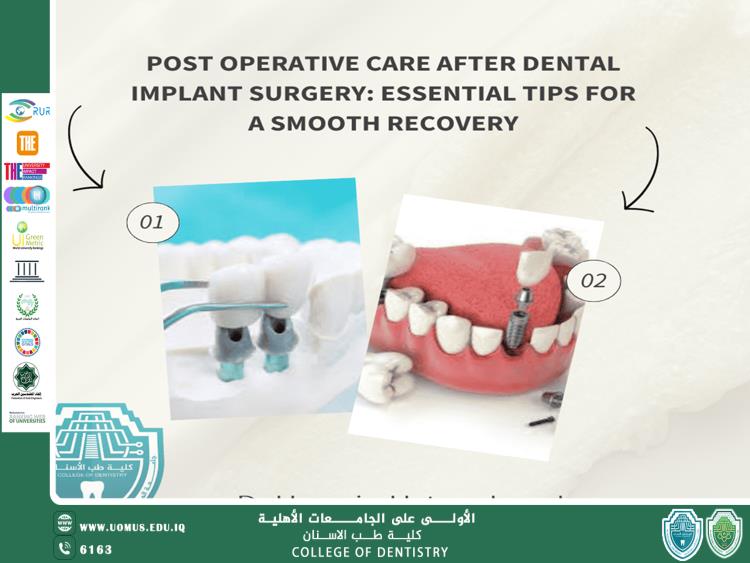
A New Scientific Article by Dr. Hussein Hatem Muallah Titled "Post-Surgical Care Following Dental Implant Surgery"
Post-Operative Care After Dental Implant Surgery: Essential Tips for a Smooth Recovery<br /><br />Dental implant surgery is one of the most effective treatments for replacing missing teeth and restoring a confident smile. While the procedure itself has a high success rate, the recovery phase plays a crucial role in ensuring optimal results. Proper post-operative care helps prevent complications and promotes faster healing. In this article, we will discuss essential tips and steps to follow after dental implant surgery to ensure a smooth and successful recovery.<br /><br />1. Caring for the Surgical Site<br /><br />After dental implant surgery, it is normal to experience some pain, swelling, and minor bleeding. To minimize these symptoms:<br /><br />Apply cold compresses to the outside of your face for 10-15 minutes every hour during the first 24 hours to reduce swelling.<br /><br />Avoid touching the implant site with your fingers or tongue to prevent irritation.<br /><br />Refrain from vigorous rinsing for the first 24 hours to prevent disturbing the blood clot and causing bleeding.<br /><br /><br />2. Managing Pain and Swelling<br /><br />Take prescribed pain relievers, such as ibuprofen or acetaminophen, as directed by your dentist.<br /><br />If swelling persists beyond three days or increases significantly, contact your dentist immediately.<br /><br /><br />3. Avoiding Certain Foods and Drinks<br /><br />During the initial healing period, it is important to follow a diet that promotes recovery:<br /><br />Eat soft foods like yogurt, mashed potatoes, and soups to avoid putting pressure on the implant site.<br /><br />Avoid hard, crunchy, or spicy foods that may irritate the surgical area.<br /><br />Stay away from hot beverages, alcohol, and smoking, as they can interfere with the healing process.<br /><br /><br />4. Maintaining Oral Hygiene<br /><br />Gently brush your teeth with a soft-bristled toothbrush, avoiding direct contact with the implant site for the first few days.<br /><br />Use an antibacterial mouthwash as prescribed by your dentist to reduce the risk of infection.<br /><br />Avoid using dental floss near the implant area until your dentist advises it is safe to do so.<br /><br /><br />5. Avoiding Harmful Habits<br /><br />Do not smoke, as it slows down healing and increases the risk of implant failure.<br /><br />Refrain from habits such as grinding your teeth or chewing gum until your dentist approves.<br /><br /><br />6. Attending Follow-Up Appointments<br /><br />Keep up with scheduled dental check-ups so your dentist can monitor the healing process and ensure the implant is integrating properly.<br /><br />Contact your dentist immediately if you experience severe pain, excessive bleeding, or signs of infection, such as pus or a bad taste in your mouth.<br /><br /><br />Conclusion<br /><br />Recovering after dental implant surgery requires careful attention and commitment to post-operative care. By following these essential tips, you can minimize complications, promote faster healing, and ensure the long-term success of your dental implants. With proper care, your implants will provide you with a strong, natural-looking smile for years to come. <br />Future University The First University in Iraq<br /><br /><br />