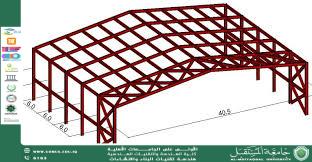
Steel Structures vs. Concrete Structures: A Comparison of Structural Systems
Introduction<br />When designing any building or facility, engineers and architects face a crucial decision:<br />Should the structural system be steel or concrete?<br />Each system has its own characteristics, advantages, and challenges, and it significantly affects the building’s performance, cost, construction time, and even architectural aesthetics.<br /><br />1. Definition of the Systems<br />● Steel Structure<br />A structural system that relies on steel elements—such as columns, beams, and trusses—as the main load-bearing components.<br /><br />● Concrete Structure<br />A system that uses reinforced concrete (concrete combined with steel rebar) to form structural elements like foundations, columns, slabs, and load-bearing walls.<br /><br />2. Comparative Table<br />Aspect Steel Structure Concrete Structure<br />Weight Much lighter, reducing foundation loads Heavier, requiring deeper and larger foundations<br />Construction Time Faster, especially in prefab and industrial projects Slower due to casting and curing time<br />Design Flexibility Highly flexible; easier to modify and create large openings Less flexible; modifications after construction are difficult<br />Cost Higher initial cost, but saves time and labor Lower initial cost, but long construction time may increase overall cost<br />Durability Good seismic resistance, but sensitive to corrosion and fire Better fire and moisture resistance, but may crack over time<br />Maintenance Requires periodic maintenance (anti-rust paint, protection) Less maintenance, but structural repairs can be complex<br />Common Applications Factories, ports, towers, large halls Residential buildings, schools, hospitals, concrete bridges<br />3. When to Choose Each System?<br />✅ Steel Structure is Preferred When:<br />Time is a critical factor (e.g., commercial projects).<br /><br />Large spans or unconventional architectural designs are needed.<br /><br />Site conditions limit concrete usage (e.g., remote areas or weak soil).<br /><br />✅ Concrete Structure is Preferred When:<br />The goal is cost-effective multi-story buildings.<br /><br />Better thermal and acoustic insulation is needed.<br /><br />Project schedule allows longer construction time.<br /><br />4. Hybrid Systems<br />In many modern projects, both systems are combined to take advantage of their strengths. For example:<br /><br />Steel used for roofing and trusses.<br /><br />Concrete used for foundations and walls.<br /><br />Conclusion<br />There is no one-size-fits-all answer when choosing between steel and concrete structures. The decision depends on multiple factors, including project type, budget, location, timeline, and architectural design.<br />A successful engineer is one who can evaluate these variables and choose the system that offers the best balance of quality, cost, and efficiency.<br /><br />