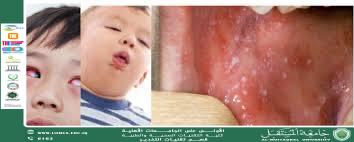
Measles
Measles is a childhood infection caused by a virus. Once quite common, measles can now almost always be prevented with a vaccine.<br />Also called rubeola, measles spreads easily and can be serious and even fatal for small children.<br />Measles causes a red, blotchy rash that usually appears first on the face and behind the ears, then spreads downward to the chest and back and finally to the feet.<br /><br />signs and symptoms <br /><br />appear around 10 to 14 days after exposure to the virus. Signs and symptoms of measles typically include:<br />Fever<br />Dry cough<br />Runny nose<br />Sore throat<br />Inflamed eyes (conjunctivitis)<br />Tiny white spots with bluish-white centers on a red background found inside the mouth on the inner lining of the cheek — also called Koplik's spots<br />A skin rash made up of large, flat blotches that often flow into one another<br />The infection occurs in stages over 2 to 3 weeks.<br />Infection and incubation. For the first 10 to 14 days after infection, the measles virus spreads in the body. There are no signs or symptoms of measles during this time.<br />Nonspecific signs and symptoms.Measles typically begins with a mild to moderate fever, often with a persistent cough, a runny nose, inflamed eyes (conjunctivitis) and a sore throat. This relatively mild illness may last 2 to 3 days.<br />Acute illness and rash. The rash is made up of small red spots, some of which are slightly raised. Spots and bumps in tight clusters give the skin a splotchy red appearance. The face breaks out first.<br />Over the next few days, the rash spreads down the arms, chest and back, then over the thighs, lower legs and feet. At the same time, the fever rises sharply, often as high as 104 to 105.8 F (40 to 41 C).<br />Recovery. The measles rash may last about seven days. The rash gradually fades first from the face and last from the thighs and feet. As other symptoms of the illness go away, the cough and darkening or peeling of the skin where the rash was may stay for about 10 days.<br /><br />Causes<br /><br />Measles is a highly contagious illness. This means it's very easily spread to others. Measles is caused by a virus found in the nose and throat of an infected child or adult. When someone with measles coughs, sneezes or talks, infectious droplets spray into the air, where other people can breathe them in. The infectious droplets can hang in the air for about an hour.<br />The infectious droplets may also land on a surface, where they can live and spread for several hours. You can get the measles virus by putting your fingers in your mouth or nose or rubbing your eyes after touching the infected surface.<br />Measles is highly contagious from about four days before to four days after the rash appears. About 90% of people who haven't had measles or been vaccinated against measles will become infected when exposed to someone with the measles virus<br /><br />Risk factors<br /><br />Risk factors for measles include:<br />Being unvaccinated. If you haven't had the measles vaccine, you're much more likely to get measles.<br />Traveling internationally. If you travel to countries where measles is more common, you're at higher risk of catching measles.<br />Having a vitamin A deficiency. If you don't have enough vitamin A in your diet, you're more likely to have more-severe symptoms and complications of measles.<br /><br />Complications<br /><br />Complications of measles may include:<br />Diarrhea and vomiting. Diarrhea and vomiting can result in losing too much water from the body (dehydration).<br />Ear infection. One of the most common complications of measles is a bacterial ear infection.<br />Bronchitis, laryngitis or croup. Measles may lead to irritation and swelling (inflammation) of the airways (croup). It can also lead to inflammation of the inner walls that line the main air passageways of the lungs (bronchitis). Measles can also cause inflammation of the voice box (laryngitis).<br />Pneumonia. Measles can commonly cause an infection in the lungs (pneumonia). People with weakened immune systems can develop an especially dangerous type of pneumonia that sometimes can lead to death.<br />Encephalitis. About 1 in 1,000 people with measles can develop a complication called encephalitis. Encephalitis is irritation and swelling (inflammation) of the brain. The condition can be especially dangerous for people with weakened immune systems. Encephalitis may occur right after measles, or it might not occur until months later. Encephalitis can cause permanent brain damage.<br />Pregnancy problems. If you're pregnant, you need to take special care to avoid measles because the disease can cause premature birth, low birth weight and fetal death.<br /><br />Prevention<br /><br />Measles vaccine in children<br />The measles vaccine is usually given as a combined measles-mumps-rubella (MMR) vaccine. This vaccine may also include the chickenpox (varicella) vaccine — measles-mumps-rubella-varicella (MMRV) vaccine. Health care providers recommend that children receive the MMR vaccine between 12 and 15 months of age, and again between 4 and 6 years of age — before entering school.<br />The MMR vaccine's two doses are 97% effective in preventing measles and protecting against it for life. In the small number of people who get measles after being vaccinated, the symptoms are generally mild.<br />Keep in mind:<br />If you'll be traveling internationally outside the U.S. when your child is 6 to 11 months old, talk with your child's health care provider about getting the measles vaccine earlier.<br />If your child or teenager didn't get the two doses of the vaccine at the recommended times, your child may need two doses of the vaccine four weeks apart.<br />Babies born to women who have received the vaccine or who are already immune because they had measles are usually protected from measles for about 6 months after birth. If a child requires protection from measles before 12 months of age — for example, for foreign travel — the vaccine can be given as early as 6 months of age. But children who are vaccinated early still need to be vaccinated at the recommended ages later.<br />Providing a child with the MMR vaccine as a combination of recommended vaccines can prevent a child's delay in protection against infection from measles, mumps and rubella — and with fewer shots. The combination vaccine is as safe and effective as the vaccines given separately. Side effects are generally mild and may include a sore arm where the shot was given and fever.<br />Measles vaccine in adults<br />Preventing measles during an outbreak or known infection<br />If someone in your household has measles, take these precautions to protect family and friends without immunity:<br />Isolate. Because measles is highly contagious from about four days before to four days after the rash appears, people with measles should stay home and not return to activities where they interact with other people during this period.<br />People who aren't vaccinated — siblings, for example — should also stay away from the infected person.<br />Vaccinate. Be sure that anyone who's at risk of getting measles who hasn't been fully vaccinated receives the measles vaccine as soon as possible. This includes infants older than 6 months and anyone born in 1957 or later who doesn't have proof of immunity.<br />When measles starts to spread in a community, health departments in the area may suggest other precautions. Second shots for children may be moved up, and earlier vaccination of infants discussed with families. But if you have had two shots of the MMR vaccine, it isn’t recommended that you get a third dose during an outbreak.<br /><br />دانيه عادل بيعي <br />Al-Mustaqbal University is the first university in Iraq<br /><br />