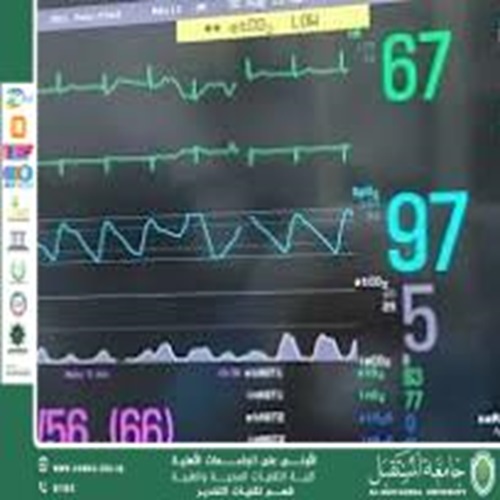
Capnograph Device A Respiratory Monitoring Tool
Capnography is a medical technique that involves continuously monitoring the amount of carbon dioxide (CO2) in a patient's exhaled breath. It provides valuable insights into a patient's respiratory status and can be used to detect and manage various respiratory conditions.<br /><br /><br /><br /><br /><br /><br /><br /><br /><br />The Capnograph Device<br />A capnograph device is a medical instrument that measures the concentration of CO2 in exhaled breath. It typically consists of a sensor that is placed in the breathing circuit of a patient, such as an endotracheal tube or a face mask. The sensor measures the amount of infrared light absorbed by CO2 molecules, which is proportional to the CO2 concentration. This information is then displayed on a monitor as a waveform and a numerical value.<br />Location of the Capnograph Device<br />Capnograph devices are commonly used in various healthcare settings, including:<br /> 1) Anesthesia: During surgical procedures, capnography is used to monitor a patient's respiratory status and ensure adequate ventilation.<br /> 2) Critical care: In intensive care units, capnography is used to monitor patients with severe respiratory conditions, such as pneumonia or acute respiratory distress syndrome (ARDS).<br /> 3) Emergency medicine: In emergency departments, capnography can be used to assess the effectiveness of cardiopulmonary resuscitation (CPR) and to confirm the placement of endotracheal tubes.<br /> 4) Prehospital care: Emergency medical services (EMS) personnel often use capnography to assess patients with respiratory distress and to monitor the effectiveness of interventions.<br />Advantages of Capnography<br /><br />Capnography offers several advantages over other methods of respiratory monitoring, such as pulse oximetry:<br /> 1) Early detection of respiratory problems: Capnography can detect subtle changes in ventilation before oxygen saturation decreases, providing an early warning of respiratory distress.<br /> 2) Confirmation of endotracheal tube placement: Capnography is considered the gold standard for confirming the placement of endotracheal tubes.<br /> 3) Assessment of CPR effectiveness: Capnography can be used to assess the effectiveness of CPR by monitoring the CO2 levels in the exhaled breath.<br /> 4) Monitoring of ventilation: Capnography provides continuous monitoring of ventilation, allowing for timely adjustments to ventilator settings.<br /> 5) Non-invasive monitoring: Capnography is a non-invasive technique, making it safe and comfortable for patients.<br /> 6) End-tidal CO2 - EtCO2 is a noninvasive technique which represents the partial pressure or maximal concentration of CO2 at the end of exhalation. Normal value is 35-45 mmHg<br />Predicted Aspects Behind the Knowledge Offered by Capnography<br />Capnography is a valuable tool that provides real-time information about a patient's respiratory status. This information can be used to make informed decisions about patient care, such as adjusting ventilator settings or initiating other interventions.in conclusion <br /> • Capnography is a non-invasive procedure.<br /> • It is safe for most patients.<br /> • It is a valuable tool for monitoring the respiratory status of patients on mechanical ventilation.<br />م م نهى نوماس شاطي <br /><br />Al-Mustaqbal University is the first university in Iraq<br /><br />