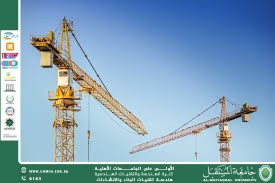
Challenges Faced by Engineers in Developing Infrastructure in Modern Cities
Introduction: Infrastructure is a vital foundation for the success of any modern city, as it ensures the continuity of daily life and facilitates economic and social activities. As cities develop and their populations grow, the demand for advanced and efficient infrastructure increases. However, due to rapid urban growth, economic changes, and technological advancements, engineers face significant challenges in developing and improving this infrastructure. In this article, we will discuss the main challenges engineers face in developing infrastructure in modern cities.<br /><br />1. Population Growth and Urbanization: One of the biggest challenges engineers face is the increasing population in modern cities. With the continuous rise in population, it becomes difficult to provide essential services such as water, sewage, electricity, roads, and public transportation effectively. Urban expansion also puts pressure on existing systems, requiring the development of new and robust infrastructure that accommodates this growth.<br /><br />Challenge: Designing and building new infrastructure that fits the growing population while ensuring the provision of all basic services.<br /><br />2. Funding and Budgeting: One of the most significant challenges engineers face in developing infrastructure is determining appropriate budgets for infrastructure projects. Large-scale projects often require substantial investments, especially in major cities that need to update and expand road networks, bridges, public utilities, and environmental systems.<br /><br />Challenge: Budget constraints often require engineers to find innovative solutions for project funding, such as public-private partnerships or using modern technologies to reduce costs.<br /><br />3. Technology and Innovation: Modern technologies are crucial tools for improving infrastructure in modern cities. From smart technologies like the Internet of Things (IoT) to artificial intelligence and machine learning, these technologies can enhance the efficiency of managing networks and utilities. However, integrating these technologies requires advanced engineering skills, as well as overcoming challenges in applying these innovations to traditional infrastructure systems.<br /><br />Challenge: Introducing modern technologies requires continuous training for engineers and providing innovative solutions that integrate cutting-edge technology with existing systems.<br /><br />4. Sustainability and Environmental Protection: With current environmental challenges, it has become essential to consider sustainability and environmental protection in infrastructure projects. This requires the use of eco-friendly materials and techniques and providing sustainable solutions for energy and water, while minimizing environmental impact in the design and implementation of projects.<br /><br />Challenge: Engineers need to think of infrastructure solutions that balance urban expansion with environmental preservation, which requires the application of sustainable construction practices and renewable energy technologies.<br /><br />5. Climate Change and Natural Disasters: Climate change is one of the major challenges affecting infrastructure development. Factors such as rising temperatures, flooding, hurricanes, and earthquakes can rapidly destroy or degrade infrastructure. Therefore, the engineering design of modern cities must be flexible and able to adapt to climate changes and natural disasters.<br /><br />Challenge: Engineering designs must withstand changing climate conditions and natural disasters, such as improving drainage systems and resilient roads.<br /><br />6. Safety and Security: Ensuring the safety and security of infrastructure is one of the important aspects that engineers focus on. This includes ensuring the stability of buildings, bridges, tunnels, and public transportation systems, which requires continuous hazard assessment and the implementation of necessary preventive measures.<br /><br />Challenge: Engineers need to analyze data accurately and use mathematical and engineering models to identify potential risks, ensuring complete safety of the infrastructure.<br /><br />7. Mobility and Transportation: Transportation systems are essential elements that modern cities need to address adequately. With population growth, managing traffic and improving public transportation is one of the major challenges engineers face in modern cities.<br /><br />Challenge: Improving public transportation and developing smart transportation systems require innovative designs for routes, the use of electric vehicles, and the application of modern traffic management techniques.<br /><br />8. Collaboration Between Different Parties: Developing infrastructure in modern cities requires collaboration between various stakeholders, such as local governments, private companies, and local communities. Coordinating between these parties can be complex and time-consuming.<br /><br />Challenge: Managing infrastructure projects requires effective coordination between different parties to ensure that the project proceeds on time and within the budget.<br /><br />Conclusion: Developing infrastructure in modern cities faces multiple and complex challenges that require high engineering skills and strategic planning. By overcoming these challenges using innovative techniques, engineers can develop sustainable and efficient infrastructure capable of meeting the needs of modern cities and the growing population. As the complexity of this field increases, research and technological advancements in civil engineering remain essential tools for transforming cities into modern and safe urban environments.<br /><br /><br /><br /><br />