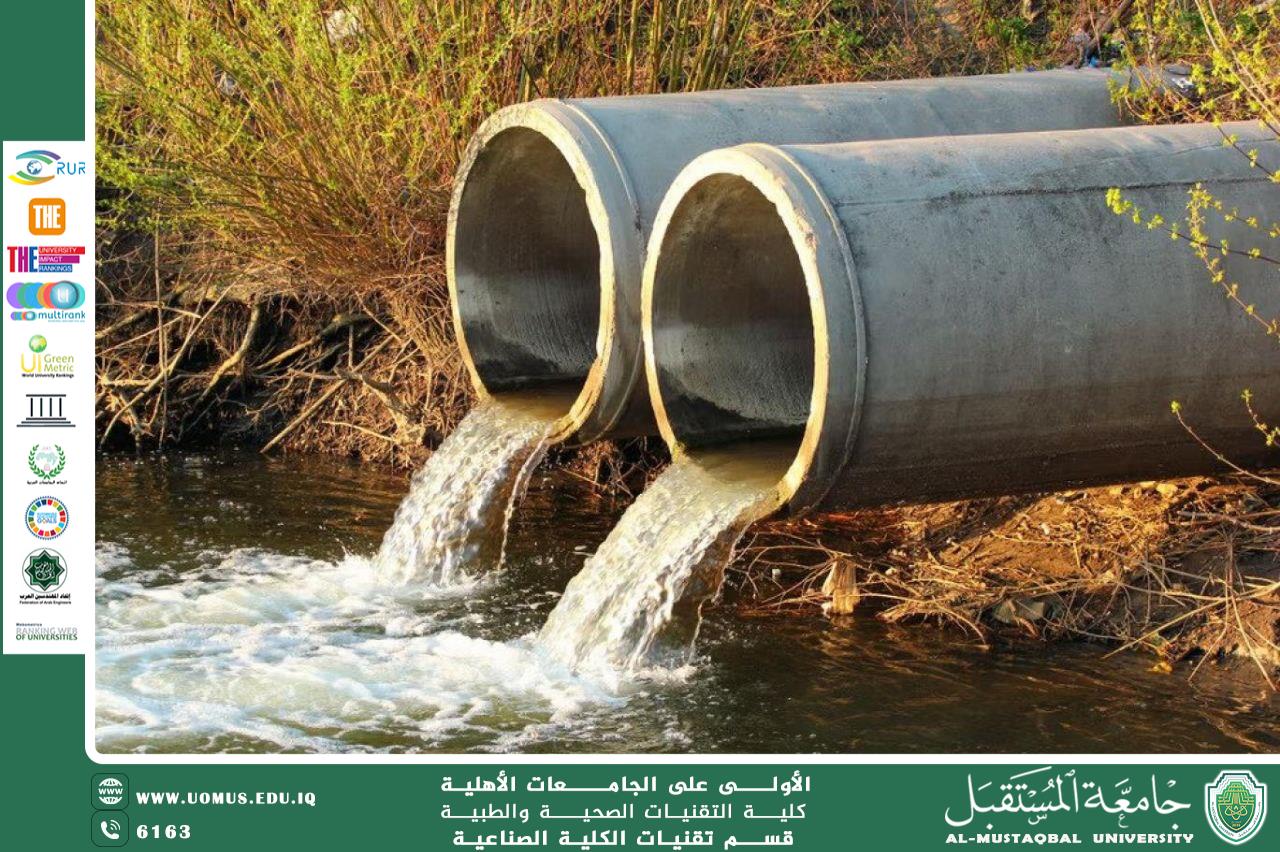
Sustainable Development in Wastewater Treatment
Asst. Lecturer Zainab Ali Mohsen Al-Khafaji<br />M.Sc. in Life Sciences / Environmental Science<br /><br />Introduction<br />Wastewater is one of the most impactful sources of environmental and societal pollution if not treated effectively. Traditionally, treatment focused on pollutant removal without considering the potential for reuse or resource recovery. With the evolution of the concept of sustainable development, it has become essential to develop treatment systems that not only dispose of waste but also contribute to protecting natural resources and achieving water security.<br />Principles of Sustainable Development in Wastewater Treatment<br /><br />Sustainable development is based on three main dimensions:<br />Environmental: Reducing the environmental impact of treated water by using technologies that minimize carbon emissions and energy consumption.<br /><br />Economic: Lowering long-term operational costs through water reuse and secondary products like fertilizers and energy.<br />Social: Ensuring the availability of safe and potable water, achieving social equity, and improving quality of life.<br />Sustainable Treatment Technologies<br />Decentralized Biological Treatment Systems: Suitable for rural areas; cost-effective and environmentally friendly.<br />Sludge-to-Energy Recovery: Using anaerobic digestion to produce methane gas.<br />Tertiary Treatment and Reuse: Enabling the use of water in agriculture, industry, and even potable applications under certain conditions.<br />Smart Control Systems: Reducing waste and increasing operational efficiency using Internet of Things (IoT) technologies.<br /><br />Achieved Benefits<br />Reducing freshwater consumption through reuse.<br />Improving public health and reducing waterborne diseases.<br />Supporting the circular economy by converting "waste" into resources.<br />Enhancing food security by using treated water for irrigation.<br />Challenges and Difficulties<br />Weak funding and institutional support.<br />Lack of community awareness about the importance of water reuse.<br />Limited technical capacities in some developing countries.<br />Resistance from some communities to using treated water due to negative perceptions.<br /><br />Conclusion<br />Managing wastewater is an increasing environmental challenge, especially with population growth and urban expansion. Sustainable development seeks to provide integrated solutions for wastewater treatment that balance environmental, economic, and social dimensions. This article aims to highlight the importance of integrating sustainability principles into treatment processes, presenting modern technologies, achieved benefits, and associated challenges.<br />Sustainable wastewater treatment is an urgent necessity, not an option. To ensure the success of this vision, it is essential to:<br />Enhance partnerships between the public and private sectors.<br />Invest in green infrastructure.<br />Raise community awareness through education and media.<br />Support scientific research and development to update technologies.<br /><br />Al-Mustaqbal University, the first in Iraq<br/><br/><a href=https://www.linkedin.com/company/college-of-health-medical-techniques/posts/ target=_blank>linkedin College of Health and Medical Techniques</a>