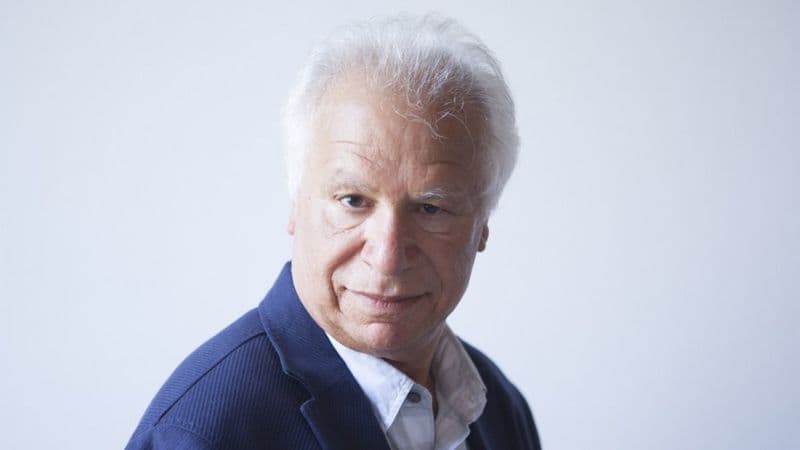
Murid Barghuti
Murid Barghuti<br />AL Mustaqbal University College<br />Asst Lect: Mohammed Salim<br /><br />Murīd al-Barghūti born July 8, 1944, in Deir Ghassana, near Ramallah, he was Palestinian poet and writer Barghouti grew up in Ramallah as a bigger one for his brother. Barghouti went to study at Cairo University of Cairo in Egypt. He was just finishing his last year in college when the Six-Day War of 1967 started. By the end of the war, Israel had occupied Gaza, and Barghouti, like many Palestinians living abroad, was prevented from returning to his homeland. After the war Barghouti first went to work as a teacher at the Industrial College in Kuwait. At the same time, he began to pursue his interest in literature and poetry, and his writings were soon published in the journals al-Adab, Mawaqif, in Beirut and al-Katib, "attaleea" and "Al Ahram" in Cairo. In 1968, he became acquainted with the Palestinian cartoonist Naji al-Ali, who at that time was also working in Kuwait.<br />He was written the famous novel in his work" I Saw Ramallah" it published by Bloomsbury in 2004 in a translation by Ahdaf Soueif that first won him a readership in English. Later, Edward Said saw it as one of the finest existential accounts of Palestinian displacement reflecting on crossing the bridge from Jordan to his West Bank birthplace in 1996 after 30 years exile a visit under Israeli control that he refused to call a return - he described a condition of permanent up rootedness. A student in Cairo when the 1967 Arab-Israeli war broke out, he was prevented, like many others, from returning to the Israeli-occupied West Bank.<br /> I Saw Ramallah shows the widespread presence of colonialism in different countries. The literature of exile produced by various diasporas like African and Middle Eastern focus on the issue of imperialism. Despite the very common idea that imperialism must be defeated. The writer of I Saw Ramallah, Mourid Barghouti, tries to detach himself from the organized parties in Palestine. He explicitly questions the malfunction democracy in Palestine and their leaders and tries to see the problem of Palestine apart from what the propaganda of supporters advertises. That is why in his interview with the English newspaper Guardian, Barghouti keeps distance from the current leaders of Palestine and the corruption in Palestine's elections. <br /><br />