A scientific article by Prof. Dr. Nasser Abdul Hassan Nasser titled Smart Materials Chemistry and Its Role in a Sustainable Future
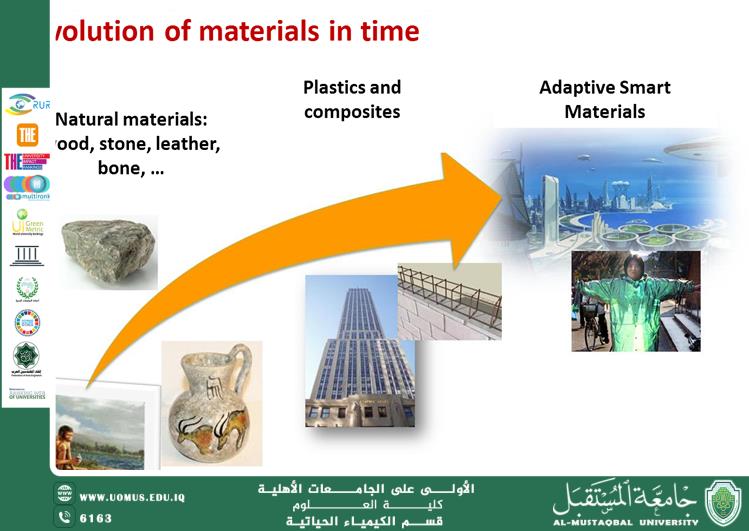
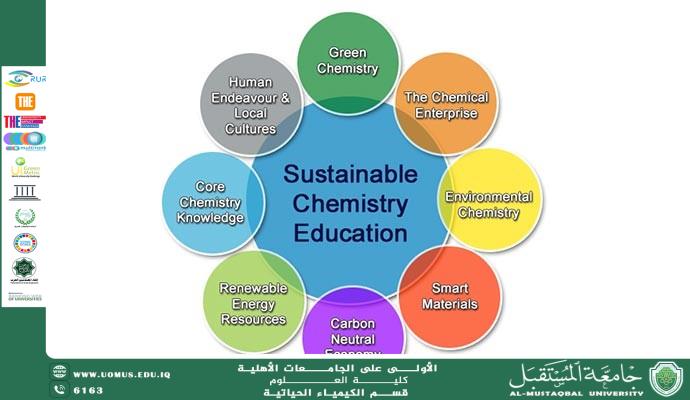
Introduction<br />In the face of increasing environmental and economic challenges, developing new materials and technologies that support sustainability has become essential. Among these innovations, “smart materials” have emerged as one of the pillars of the future. These are materials with the ability to respond to their surrounding environment in a controlled or predictable manner.<br />At the core of these materials lies advanced molecular design and precise chemistry, making them powerful tools for balancing technological progress with environmental preservation.<br /><br />What Are Smart Materials?<br />Smart materials are materials that change their physical or chemical properties in response to external stimuli such as:<br />• Temperature<br />• Light<br />• Pressure<br />• pH level<br />• Electric or magnetic fields<br />These materials include:<br />• Smart polymers<br />• Responsive hydrogels<br />• Shape-memory materials<br />• Liquid crystals<br /> <br />The Role of Smart Materials Chemistry in Sustainability<br />1. Smart Agriculture<br />Smart polymers are used to:<br />• Release fertilizers or pesticides gradually, based on the actual needs of the plant.<br />• Create intelligent soil substitutes that retain and release water during drought conditions.<br />2. Renewable Energy<br />Smart materials contribute to:<br />• Developing flexible solar cells based on light-responsive polymers.<br />• Creating thermal energy storage materials used in buildings to reduce energy consumption.<br />3. Biomedical Applications<br />• Targeted drug delivery systems that release medication only when they reach the appropriate area (e.g., changes in pH or temperature).<br />• Implantable devices that adapt to changing biological conditions inside the body.<br />4. Environmental Protection and Water Purification<br />• Smart hydrogels capable of absorbing heavy metals and toxins from water.<br />• Environmental filters that adjust their pores based on pollutant concentrations.<br />5. Construction and Architecture<br />• Smart paints that reflect or absorb heat depending on the climate.<br />• Window glass that automatically adjusts its transparency to control lighting and save energy.<br /><br />Challenges and Future Outlook<br />Despite their vast potential, smart materials face some challenges:<br />• High cost of some advanced materials<br />• The need to improve stability and response control<br />• Issues with recycling and safe disposal after use<br />Nonetheless, these materials are considered a cornerstone of green chemistry, which aims to develop intelligent solutions that serve both humans and the environment.<br /><br />Smart materials chemistry represents the perfect intersection between scientific innovation and environmental responsibility. Thanks to these materials, we can envision a world where materials are designed to think, act, and adapt to their surroundings. With continued research and development, smart materials are set to become an essential part of a smarter—and more sustainable—future.<br /><br />