A scientific article by Prof. Dr. Nasser Abdul Hassan Nasser titledToward a Circular Economy: How Polymer Chemistry Contributes to Sustainable Recycling
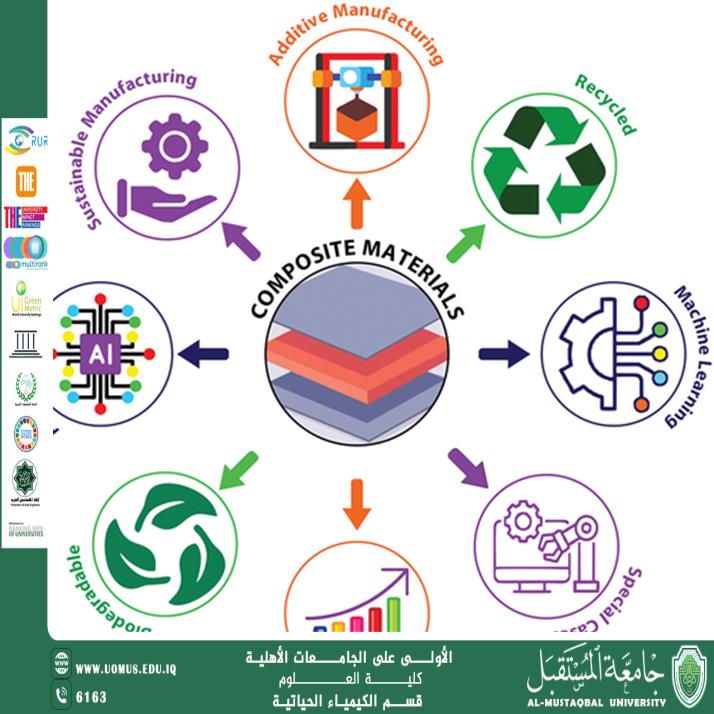
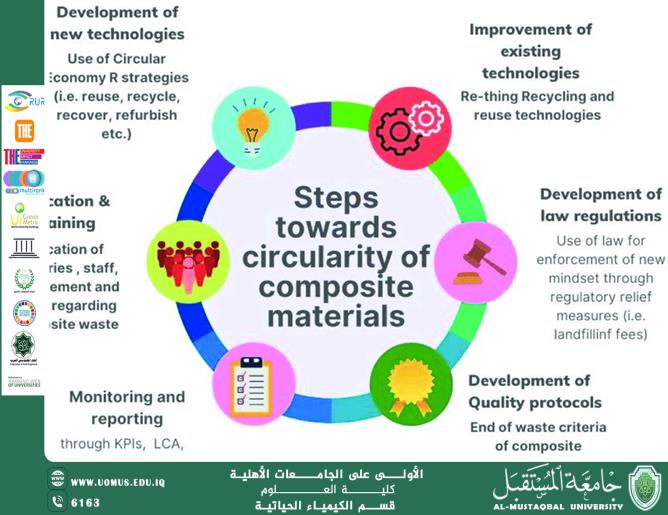
As the consumption of natural resources increases and waste accumulates, it has become essential to shift from the traditional linear economy model—"produce–use–dispose"—to a more efficient and sustainable model known as the circular economy.<br />In this context, polymer chemistry plays a crucial role in developing solutions that enable efficient recycling of plastic materials, helping to reduce environmental impact and support long-term economic sustainability.<br /><br />What Is the Circular Economy?<br />The circular economy is a system of production and consumption aimed at minimizing waste and maximizing resource use by promoting:<br />• Recycling<br />• Reuse<br />• Repair<br />• Innovation in product design<br />In this system, waste is no longer seen as a burden, but rather as a resource that can be reintegrated into the production cycle.<br /><br />The Role of Polymers in the Circular Economy<br />1. Developing Easily Recyclable Polymers<br />• Advances in polymer chemistry have led to the development of materials with molecular structures that allow for thermal or chemical recycling without significant loss of properties.<br />• Example: Polymers that can be broken down into their basic building blocks (monomers) and reused in new production.<br />2. Biodegradable Polymers<br />• These are smart alternatives for single-use products like packaging.<br />• They decompose through environmental or biological processes without leaving permanent pollutants.<br />3. Enhancing Mechanical Recycling<br />• Chemical additives are used to improve the characteristics of recycled plastics, such as strength, flexibility, and heat resistance.<br />• This allows for recycled plastics to be reused in more advanced applications, not just low-quality products.<br /><br />Real-World Applications of Sustainable Polymers<br />• Recycling PET water bottles into fabrics, carpets, or even new containers.<br />• Designing biodegradable packaging materials that break down naturally in soil or water.<br />• Converting plastic waste into fuel or chemical feedstock using advanced thermal and chemical cracking techniques.<br /><br />Challenges and Opportunities<br />Despite progress, the field still faces challenges:<br />• Mixing different types of plastics complicates recycling.<br />• High cost of chemical recycling technologies.<br />• Insufficient waste management infrastructure in some regions.<br />On the other hand, there are enormous opportunities in:<br />• Scientific research to develop smarter, more sustainable polymers.<br />• Policy-making to encourage recycling and reduce single-use plastics.<br />• Investment in infrastructure to support the circular economy model.<br /><br />Polymer chemistry plays a fundamental role in shaping a more sustainable future by supporting the goals of the circular economy. Every advancement in this field is a step toward reducing waste, conserving resources, and protecting our planet for future generations. Turning waste into resources is no longer an option—it’s an environmental and economic necessity built on science and innovation.<br /><br />