

Health awareness is a pillar of sustainable development.
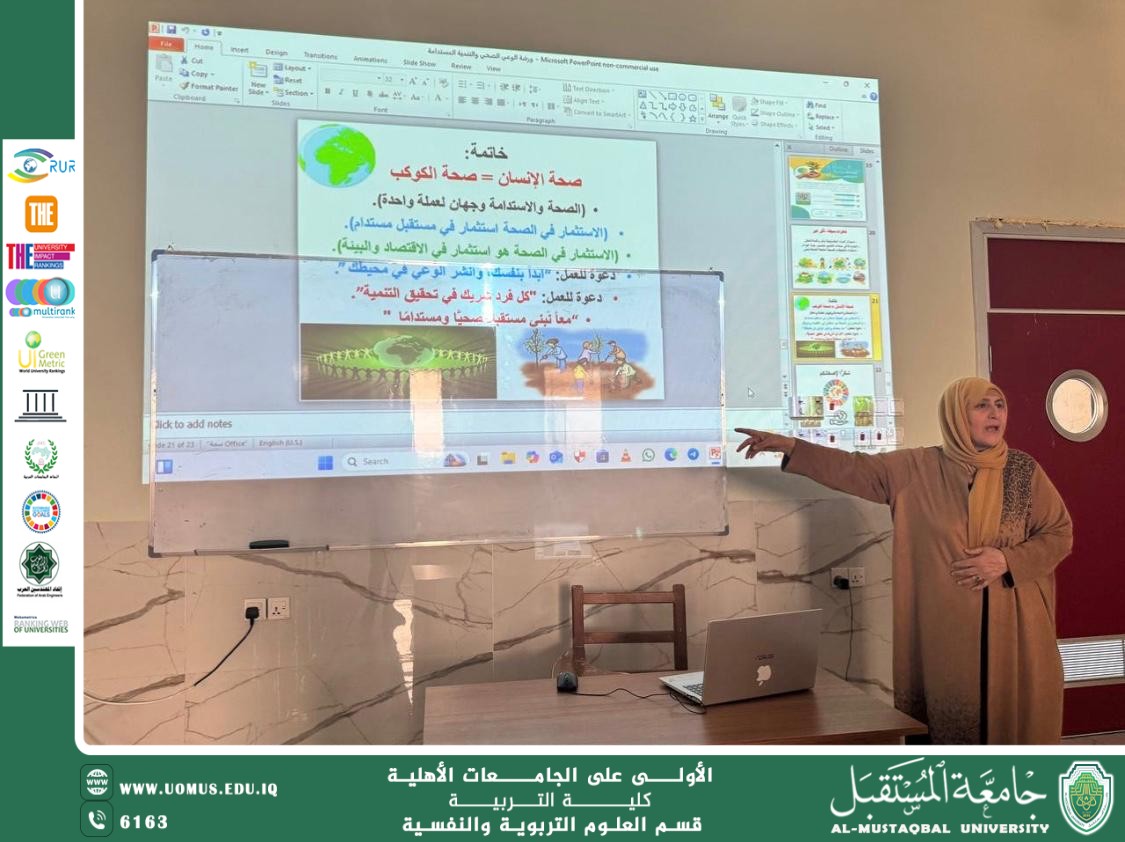
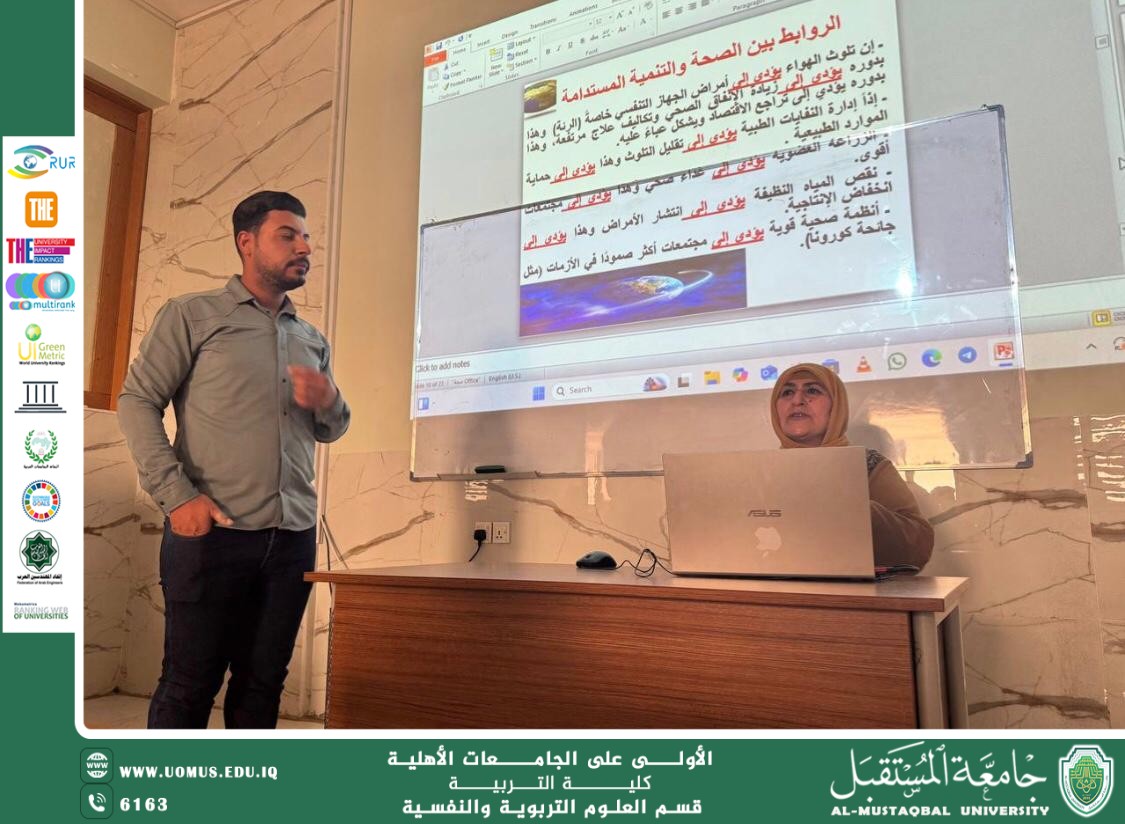
The College of Education, Department of Educational and Psychological Sciences, organized a workshop entitled “Health Awareness as a Pillar of Sustainable Development” to achieve the Sustainable Development Goals, which include Goal 2 (Zero Hunger), Goal 3 (Good Health and Well-being), Goal 4 (Quality Education), Goal 6 (Clean Water and Sanitation), Goal 7 (Affordable and Clean Energy), Goal 13 (Climate Action), and Goal 17 (Partnerships for the Goals). The workshop was held on Tuesday, April 22, 2025, at 9:00 AM in the Humanitarian Building, Hall 309. The workshop was delivered by Professor Dr. Thanaa Bahaa El-Din Abdullah, who addressed the definition of health in its physical, mental, psychological, spiritual, social, and societal dimensions, and their impact and influence on each other. She also addressed the definition of sustainable development: meeting the needs of the present without compromising the ability of future generations, and its three dimensions: economic: inclusive growth, Social: Equity in services (health, education). Environmental: Protection of natural resources. Health awareness is defined as the set of knowledge and practices that protect the individual and society from disease. Examples: balanced nutrition, the importance of regular checkups, knowledge of preventive health practices (nutrition, physical activity, vaccinations), as well as the role of health education in reducing disease and preventing chronic diseases such as diabetes, heart disease, and high blood pressure, as well as the importance of early detection of diseases. She also pointed to the links and integration between health and sustainable development, for example: the lack of clean water leads to the spread of diseases, which leads to decreased productivity. Organic farming leads to healthy food, which leads to stronger communities. “There is no development without health, and no health without a clean environment.” She also pointed to some successful initiatives and global models, for example: Norway: a health system that relies on renewable energy by 98%. Rwanda: malaria vaccination campaigns reduced deaths by 60%. The role of individuals includes: following a healthy lifestyle (balanced nutrition, exercise), adopting sustainable habits such as reducing waste, recycling, and rationalizing consumption, as well as participating in health awareness campaigns and volunteering. The role of governments and society (Partnership for the Future) includes: governments: enacting laws to reduce industrial pollution. Health institutions: Providing free awareness programs. In short, human health equals planetary health. Investing in health is an investment in a sustainable future, and investing in health is an investment in the economy and the environment. In conclusion: "Together we build a healthy and sustainable future." The workshop was attended by Professor Dr. Abdul Salam Jawdat, Head of the Department of Educational and Psychological Sciences, and Assistant Professor Dr. Ahmed Fakher Al-Hamdani, Professor of Computer Science.<br /><br /><br /><br />( ALMUSTAQBAL University is the first university in Iraq )