
An Article " From Scratch to Canvas: A Journey in Teaching Color to Students from Non-Artistic Backgrounds " By Assistant Lecturer Musa Diaa
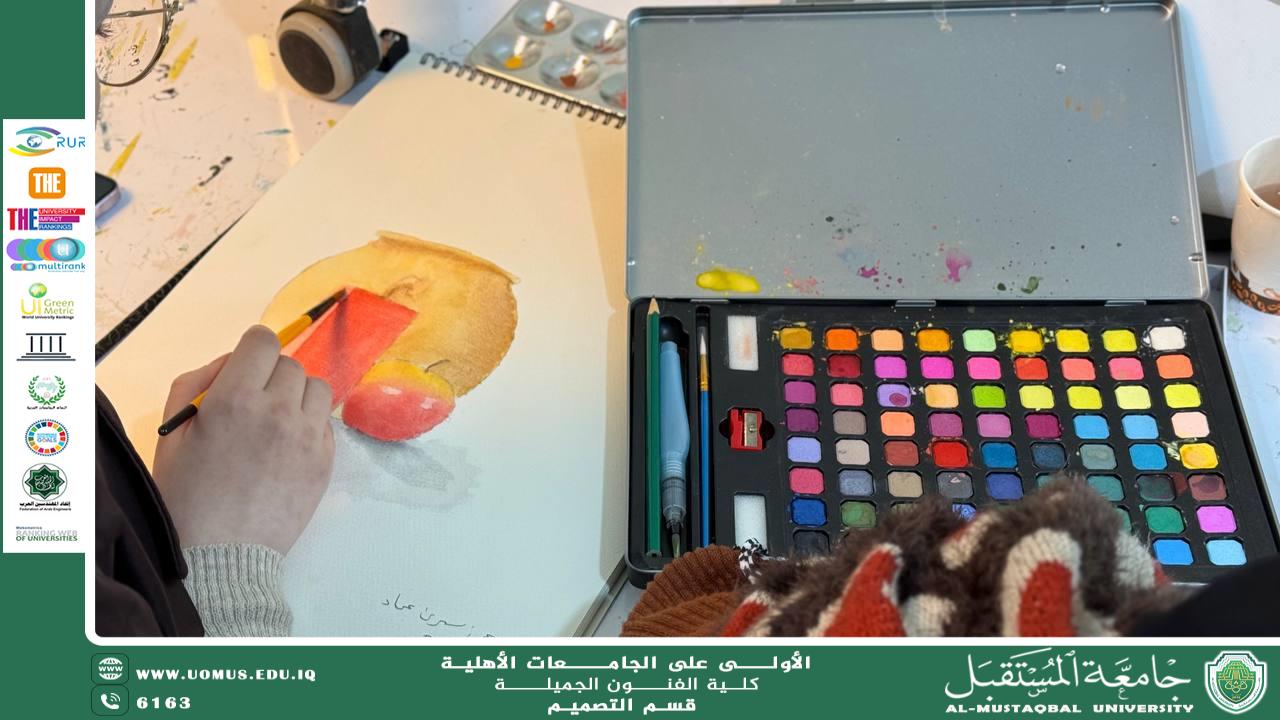
In a world where paths of knowledge intertwine and disciplines converge, educational experiences that merge art with non-artistic fields become fertile grounds for discovering hidden potentials among students. Through my experience teaching the "Practical Colors" course to first-year students—many of whom came from scientific and academic backgrounds unrelated to art—I encountered profound lessons about human capacity for learning, openness, and transformation.<br /><br />From our very first meeting, it was clear that most of these students had never engaged with color, neither as an expressive medium nor as a tool of visual communication. For some, the paintbrush was an unfamiliar object, and the paint palette, a mysterious world. What impressed me most, however, was their curiosity and growing passion despite initial hesitation. In each small painting, I witnessed sincere attempts—even if rudimentary—to capture a fleeting aesthetic moment or an idea taking shape in their minds.<br /><br />During the first few weeks, the students struggled to distinguish between color values, gradients, and color relationships. Yet, through repetition and encouragement, a new awareness began to emerge. Their artworks gradually reflected a growing understanding of composition and the expressive power of color. It was important for me not to approach them merely as beginner artists, but as inquisitive minds striving to express themselves through an unfamiliar language.<br /><br />Little by little, the classroom bloomed with differences. Each student developed a distinct approach to handling color spaces. Some gravitated toward abstraction, others toward imitating nature, while others explored color harmonies freely and passionately. Through trial and error, they created works filled with sincerity, spontaneity, and wonder.<br /><br />One of the most impactful moments of this journey was the exhibition and documentation of their work. I firmly believed in the importance of documenting—not merely for preservation, but as a way to honor effort, motivate students, and nurture a sense of belonging to the artistic world. I collected the standout pieces, photographed them, and created a special archive, with the hope that one day they would be displayed in a small exhibition within the department, bearing witness to those formative first steps.<br /><br />Success in this course was not measured solely by visual aesthetics but by the student's ability to interact with color, understand it, and express through it. Amid countless exercises and unfinished canvases, genuine sparks appeared—evidence that some of these students might one day carve out a place for themselves in the world of design or visual arts.<br /><br />Teaching art to non-artists is not a burden; it is a rare opportunity to ignite aesthetic awareness, expand creative horizons, and plant seeds of visual appreciation. As an instructor, I found myself learning as much as I was teaching, drawing new inspiration from their spontaneous beginnings, reminding me of my own first moments of discovery.<br />Achieved Sustainable Development Goals (SDGs) from this article:<br />Quality Education (Goal 4)<br />By offering an interactive and innovative educational experience that fosters students' creativity and develops new skills.<br />Decent Work and Economic Growth (Goal 8)<br />Through developing artistic skills that may open future career paths in design and visual arts.<br />Industry, Innovation, and Infrastructure (Goal 9)<br />By encouraging students to engage in creative thinking and artistic experimentation, thereby promoting a culture of innovation.<br /><br />Al-Mustaqbal University the first university of Iraq .<br /><br />