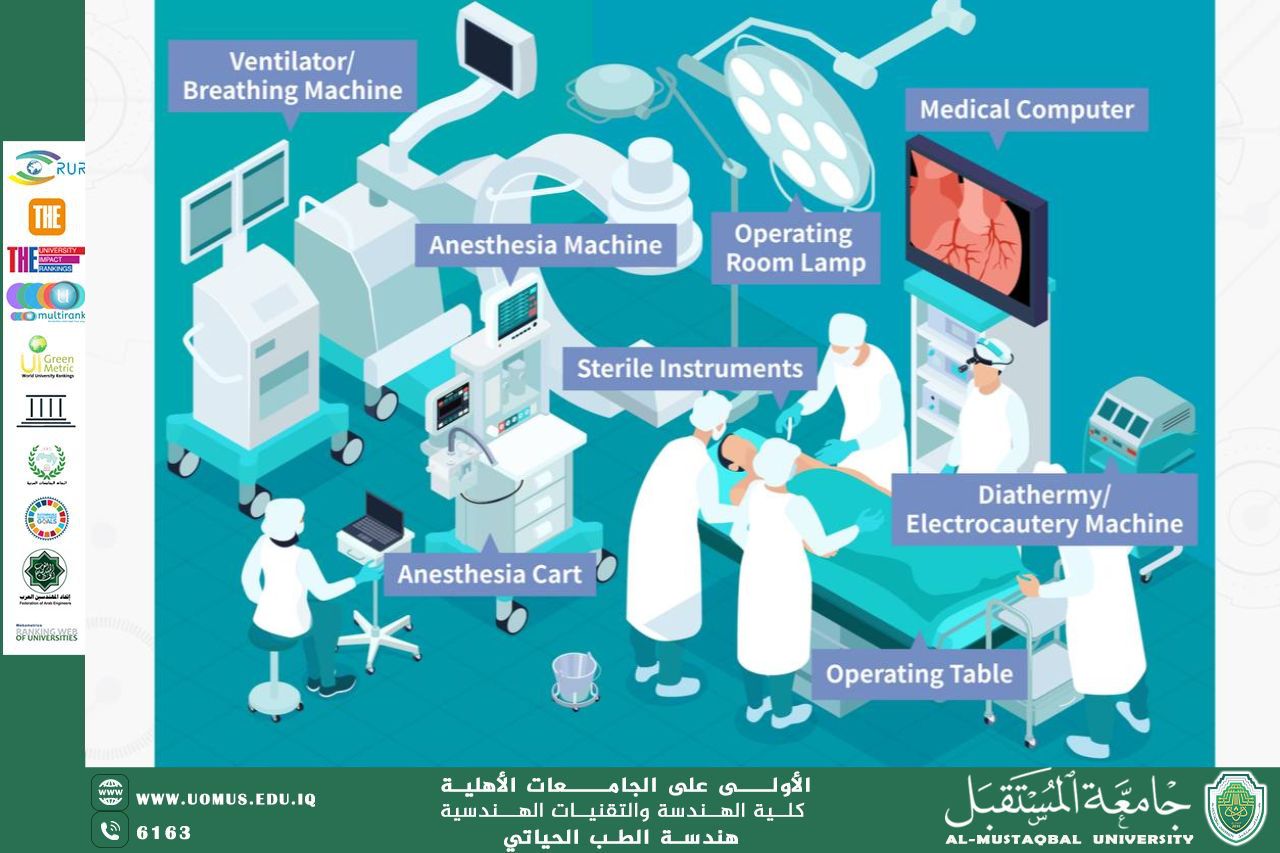
مقالة بعنوان "TYPES OF OPERATING ROOM EQUIPMENT"للمهندس محمد عبد الكريم رزوقي
TYPES OF OPERATING ROOM EQUIPMENT<br /><br />Operating rooms are designed for surgeons and surgical staff to perform surgical procedures that require time, patience, focus, and safety. Various pieces of equipment are required for use in the operating room.<br /><br />Surgical Lights – High-quality surgical lighting is essential for performing intricate procedures in the operating room. Surgical lights are designed to provide bright white light to illuminate the surgical site and eliminate shadows, all while keeping the surgical staff cool. LED lights or halogen lights are two types of surgical lights. Surgical lighting is transitioning away from incandescent technology to LED technology due to the many benefits of LED: pure white color, less heat in the surgical field, more accurate color rendition, and improved shadow control.3<br /><br />Operating Tables – Operating tables, also known as surgical tables, are essential to any operating room. A patient lies on the operating table during a surgical procedure. The purpose of the table is to keep the patient in place while the surgical team is operating, and may aid in moving parts of the patient’s body using surgical table accessories. General operating tables are designed to perform a wide range of procedures while others are designed for specific procedures, for example orthopedic tables.<br /><br />Surgical Booms – Surgical Booms, also known as equipment booms or equipment management systems (EMS), are designed to constrain the electrical cords from various pieces of equipment in the OR that can lead to tripping hazards for staff. By removing the clutter from various cords, surgical booms increase the amount of working space in the operating room. Booms also provide housing for various pieces of equipment and allow that equipment to be positioned to best meet the patient and surgical team's needs. Booms are suspended from the ceiling and move easily throughout the operating room. Booms come in various designs. The design chosen by the facility may depend on the space requirements of the OR.<br /><br />Surgical Displays – Minimally invasive surgery requires surgeons and surgical team members to visualize intricate patient anatomy on surgical displays. They also provide visualization of the procedure to all team members. Surgical displays, including wall displays and large format displays, mount to surgical light arms, equipment columns, or a wall and are used to display a close-up, crisp view of the surgical site. Newer surgical displays may offer high-definition or 4K visualization.<br /><br />Operating Room Integration Systems – OR Integration is the connection of image and video in the operating room to improve workflow, procedure guidance and peer collaboration. By allowing OR equipment to communicate with each other via technology, OR integration allows OR staff to coordinate and collaborate real-time. Additionally, integration allows for remote control of multiple pieces of equipment and may decrease traffic near the surgical field. Further in room traffic may be achieved as reduction integration allows for remote viewing and communication by those that may otherwise enter the surgical site. This traffic reduction may decrease the risk of surgical site infections.<br /><br />Blanket Warmers – Blanket warmers, also known as warming cabinets, are used to store and warm intravenous (IV) fluid, linens, and blankets. Keeping fluids and linens warm for patient use help to decrease the risk of hypothermia. Maintaining normal body temperature during surgery can be challenging. This technology not only provides comfort but serves to assist in the maintenance of normal body temperature. Normal body temperature has been linked to improved patient outcomes. Blanket warmers may have one, two or three chambers and may be mobile or stationary.<br /><br />Scrub Sinks – Washing hands and forearms with a surgical scrub before performing a procedure is vital to prevent infection in the surgical environment. Scrub sinks are used by OR staff to “scrub in” before a surgery. Hand washing remains one of the most important ways to prevent the transfer of bacteria.