A scientific article by Prof. Dr. Nasser Abdul Hassan Nasser titledThe Role of Organotin Complexes in Drug Design and Development
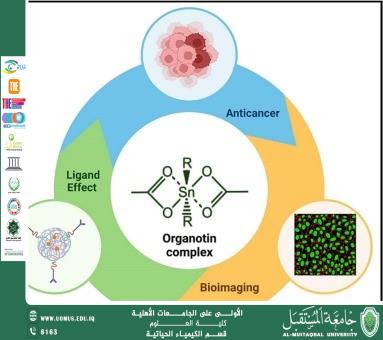
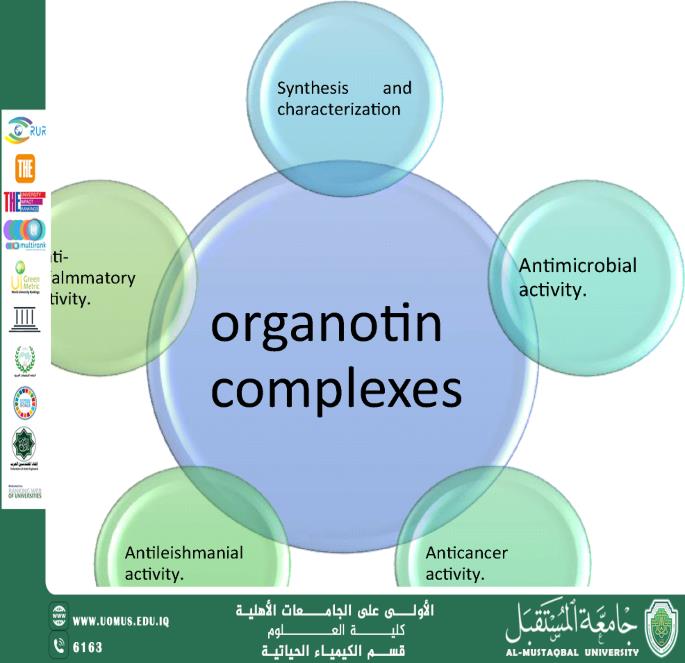
Organotin compounds, which are metal-containing organic compounds, have garnered significant attention in the field of medicinal chemistry due to their unique properties. These complexes, particularly Triorganotin (IV) derivatives, have shown promising biological activities, including antimicrobial, anticancer, and anti-inflammatory effects. The study and application of organotin complexes in drug design have thus become a growing area of research, offering potential for the development of novel therapeutic agents.<br /><br />Organotin Complexes: Structure and Properties<br />Organotin complexes consist of a tin atom bonded to three organic groups, typically alkyl or aryl groups. The most common form in pharmaceutical applications is Triorganotin (IV), where tin is bonded to three carbon-containing groups and typically coordinated to a ligand, such as an antibiotic or a biologically active molecule.<br />These complexes have distinctive physicochemical properties, including high lipophilicity, which allows them to easily penetrate biological membranes. Additionally, their metal center can interact with various biomolecules, including proteins and nucleic acids, leading to potential therapeutic benefits.<br /><br />Applications of Organotin Complexes in Drug Design<br />1. Antimicrobial Activity:<br />Organotin complexes have been widely studied for their antimicrobial activity, particularly in fighting bacteria and fungi. Their ability to inhibit microbial growth is attributed to the tin ion’s interaction with cellular structures, disrupting normal metabolic processes.<br />2. Anticancer Properties:<br />Triorganotin compounds have demonstrated significant anticancer effects. They are believed to work by interacting with DNA and enzymes involved in cell division, potentially preventing the proliferation of cancer cells. Research has shown that organotin-based drugs may overcome certain limitations associated with conventional chemotherapy.<br />3. Anti-inflammatory Effects:<br />The anti-inflammatory potential of organotin complexes has also been investigated, with some compounds showing effectiveness in reducing inflammation by modulating immune responses and inhibiting inflammatory pathways.<br />4. Coordination with Antibiotics:<br />Organotin complexes are often synthesized by coordinating the tin atom with antibiotics such as Ampicillin. This combination enhances the biological activity of both the organotin component and the antibiotic, leading to more effective antimicrobial agents.<br /><br />Synthesis and Characterization of Organotin Complexes<br />The synthesis of organotin complexes typically involves the reaction of tin halides with organic ligands. This process can be tailored to produce complexes with desired biological activities. Once synthesized, these complexes undergo extensive characterization techniques, including UV-Vis spectroscopy, FTIR, NMR, and mass spectrometry. These methods help confirm the structure, purity, and stability of the complexes, ensuring they meet the required standards for pharmacological testing.<br /><br />Challenges and Future Directions<br />Despite the promising potential of organotin complexes in drug design, there are several challenges to overcome. One of the primary concerns is the toxicity of some organotin compounds, especially in high doses. Extensive studies on the safety profiles and pharmacokinetics of these complexes are necessary to determine their viability as therapeutic agents.<br />Moreover, the development of more selective and less toxic organotin-based drugs is crucial. Advances in nanotechnology and targeted drug delivery systems may provide solutions to enhance the efficacy and reduce the side effects of these compounds.<br />Organotin complexes hold significant promise in the field of drug design and development due to their diverse biological activities. With ongoing research and development, these compounds may pave the way for the creation of new and more effective therapeutic agents, particularly in the fields of antimicrobial, anticancer, and anti-inflammatory treatments. As we continue to refine our understanding of these compounds and their mechanisms, the potential for organotin-based drugs in clinical applications becomes increasingly evident.<br /><br />Al-Mustaqbal University is The First University in Iraq.<br /><br />