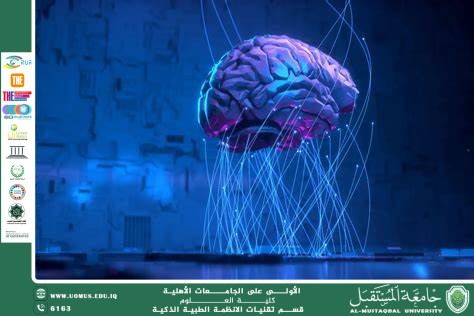
Brain-Computer Interfaces in Medical Rehabilitation(Najat Hameed Jassem).
Brain-computer interfaces (BCIs) are pioneering innovations used in medical rehabilitation to assist patients with neurological injuries or severe motor impairments. These systems read electrical signals from the brain and translate them into commands that control external devices like prosthetics or wheelchairs, enabling patients to regain some motor functions and interact with their environment in new ways. BCI technologies are currently used in neurorehabilitation centers to support stroke survivors or individuals with quadriplegia in improving muscle responses. They are also applied in interactive training through virtual reality environments. Despite technical challenges such as accuracy and latency, recent research shows great promise for these technologies in enhancing patient independence, improving quality of life, and fostering better integration into society.<br /><br />Al-Mustaqbal University is the first University in Iraq.<br />