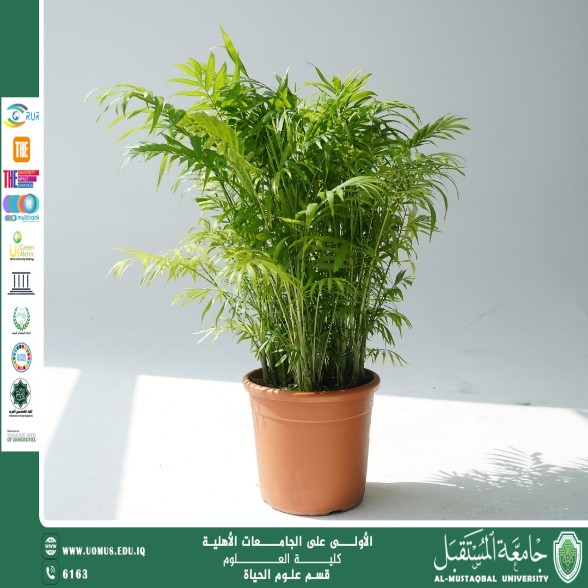
A scientific article by the lecturer (Assistant Professor Zainab Nazim Aziz) entitled “Areca Palm”
The Areca Palm is one of the most popular indoor plants in the world of ornamental decoration, thanks to its long, glossy leaves and attractive tropical appearance. This plant belongs to the Arecaceae family and is also known as the "Areca Palm" or "Gold Palm." It is a favorite for adding a green and vibrant touch to homes and offices.<br />Native Habitat<br />The Areca Palm is native to Southeast Asia, and is found in areas such as India, Sri Lanka, and the islands of the Indian Ocean. It is grown in tropical and temperate regions and prefers warm, humid locations.<br />Appearance and Characteristics<br />The Areca Palm is characterized by its thin, drooping, feather-like leaves, which are mostly green in color, giving it the appearance of a small palm tree. The plant can reach 1.5 to 2 meters in height indoors under ideal growing conditions. The Areca Palm is a slender, vertically growing plant with evergreen leaves that provide tropical beauty in any setting. Growing Conditions and Care<br />Light: Areca oleander prefers bright, indirect light, so it's best to place it near a bright window but not in direct sunlight.<br />Watering: Water the plant when the soil is slightly dry, taking care not to overwater it. It's important to avoid water accumulating at the bottom of the pot to prevent root rot.<br />Soil: Areca oleander requires well-drained soil. A mixture of general soil and some sand can be used to improve drainage.<br />Temperature: This plant prefers warm temperatures between 18 and 24°C. Avoid exposure to cold drafts.<br />Humidity: Areca oleander prefers high humidity, so it's best to mist its leaves with water occasionally or place it in a humid environment, such as a room with a humidifier.<br />Propagation Methods<br />Areca oleander is usually propagated by seed or by propagating cuttings. Although areca oleander can be grown from seed, this takes longer than cuttings. Cuttings are usually taken from young stems. Common Problems<br />Areca plants may experience some problems, such as:<br />Yellowing leaves: This may be due to overwatering or insufficient nutrition.<br />Loss of lower leaves: This is normal as the plant grows, but if it occurs suddenly, it may be due to dry soil or a lack of moisture.<br />Insects: Areca plants may be attacked by insects such as aphids or mites. This problem can be dealt with using natural insecticides or washing the leaves with soap and water.<br />Uses<br />Areca plants add a touch of tropical beauty to any space. They are also used to improve indoor air quality thanks to their ability to absorb pollutants and release oxygen. They can also be grown in tropical gardens or warm climates.<br /><br />Al-Mustaqbal University is the first university in Iraq.