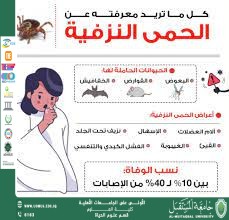
A scientific article by lecturer M.M. Ali Kumait Hamad entitled "The Impact of Environmental and Climate Changes on the Spread of Viral Hemorrhagic Fever"
Viral hemorrhagic fevers (VHFs) are a group of serious diseases caused by several families of viruses, such as Ebola, Marburg, Lassa, and Crimean-Congo hemorrhagic fever. These viruses are often transmitted by animals or insects and cause symptoms including fever, bleeding, and vascular disturbances, and can be fatal in some cases.<br />Climate and environmental changes contribute to the increased spread of these diseases through several mechanisms, including:<br />- Expansion of vector ranges: Rising temperatures and changing rainfall patterns expand the range of vector vectors such as mosquitoes and ticks, increasing the chances of viruses being transmitted to new areas.<br />- Increased human-animal interaction: Environmental changes such as deforestation and urbanization push wild animals, which may be virus carriers, closer to human population centers, increasing the likelihood of disease transmission to humans.<br />- Melting permafrost: Melting permafrost in polar regions due to global warming may release ancient viruses that were previously frozen, posing the risk of new or resurgent diseases.<br />- Migration and population displacement: Natural disasters linked to climate change, such as floods and droughts, lead to population displacement, facilitating the spread of diseases to new areas due to changing patterns of human and environmental interactions.<br />To reduce the spread of viral hemorrhagic fevers,<br />• Vector monitoring and control: Implement effective vector control programs, such as spraying pesticides and cleaning breeding sites.<br />• Health infrastructure strengthening: Improve diagnostic and treatment capacities in at-risk areas.<br />• Community awareness: Disseminate information on prevention methods and the importance of avoiding exposure to wildlife or insect bites.<br />• Research and development: Invest in the development of effective vaccines and treatments for these diseases.<br />• International cooperation: Strengthen coordination among countries to monitor epidemics and respond rapidly to disease outbreaks.<br /><br />Al-Mustaqbal University is the first university in Iraq.