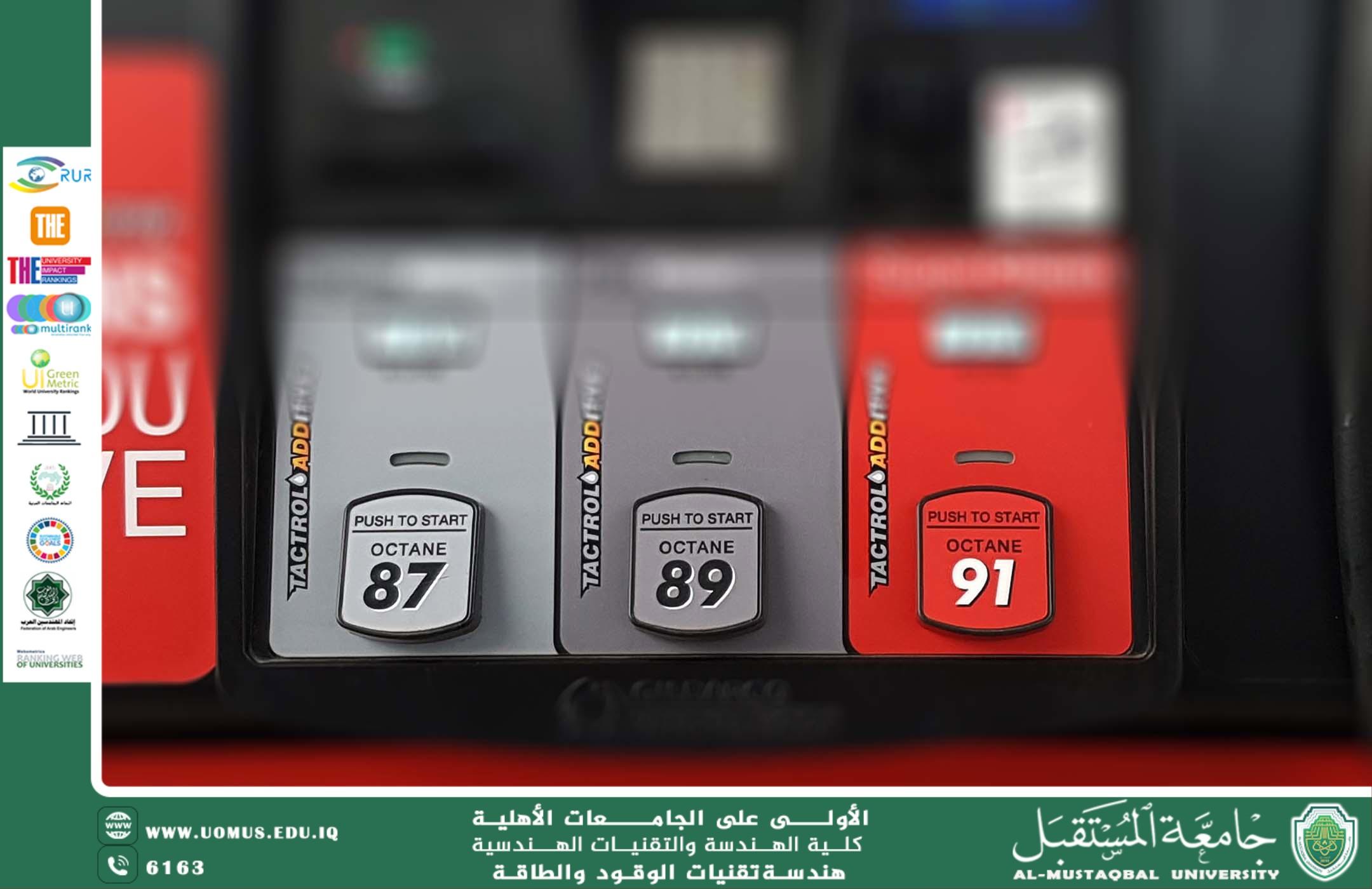

the Octane Number of Benzene
SDG 7 Affordable and Clean Energy<br />SDG 11 Sustainable Cities and Communities<br />SDG 12 Responsible Consumption and Production<br />the Octane Number of Benzene<br />Dr. Malik Mustafa Mohammed<br />Introduction<br />The octane number is a critical parameter used to measure the anti-knock properties of a fuel in spark-ignition internal combustion engines. It indicates the fuel's resistance to premature combustion (knocking). Benzene (C₆H₆), an aromatic hydrocarbon, has been studied for its combustion characteristics, including its octane rating. <br /><br />Octane Number of Benzene <br />Benzene has a Research Octane Number (RON) of approximately 101, which is relatively high compared to many straight-chain hydrocarbons. However, its Motor Octane Number (MON) is lower, around 90-93, leading to an Anti-Knock Index (AKI) or (RON+MON)/2of about 95-97. <br /><br />Factors Affecting Benzene’s Octane Number<br />1. Aromatic Structure – Benzene’s stable ring structure resists auto-ignition, contributing to its high RON. <br />2. Low Cetane Tendency – Unlike diesel fuels (where cetane number matters), benzene resists compression ignition, making it suitable for gasoline engines. <br />3. Combustion Characteristics – Benzene burns smoothly but can produce knocking under high compression if mixed improperly. <br /><br />Challenges with Benzene as a Fuel Component <br />- Toxicity & Carcinogenicity – Benzene is a known carcinogen, leading to strict regulations on its use in fuels. <br />- Environmental Concerns – Benzene emissions contribute to air pollution and smog formation. <br />- Material Compatibility – It can degrade rubber and plastic components in fuel systems. <br /><br />Comparison with Other Hydrocarbons<br />| Compound | RON | MON | AKI (Pump Rating) | <br />|---------------|------|------|-------------------| <br />| Benzene | 101 | 90-93| 95-97 | <br />| Toluene | 120 | 109 | ~114 | <br />| Isooctane | 100 | 100 | 100 (Reference) | <br />| n-Heptane | 0 | 0 | 0 (Reference) | <br /><br />Conclusion<br />Benzene has a high octane number, making it theoretically useful for improving gasoline’s anti-knock properties. However, due to its toxicity and environmental hazards, its use as a fuel additive is heavily restricted. Modern gasoline blends use safer alternatives like toluene, ethanol, and ethers (MTBE, ETBE) to achieve high octane ratings without benzene’s risks. <br /><br />Recommendations <br />- Avoid using benzene in fuels due to health and environmental concerns. <br />- Explore safer high-octane alternatives for fuel formulation. <br />- Follow regulatory guidelines (e.g., EPA, EU standards) limiting benzene content in gasoline. <br /><br />References <br />- ASTM D2699 (RON Test Method) <br />- EPA Fuel Standards <br />- Engineering & Combustion Studies on Aromatic Hydrocarbons <br />Al-Mustaqbal University The First University in Iraq<br /><br />