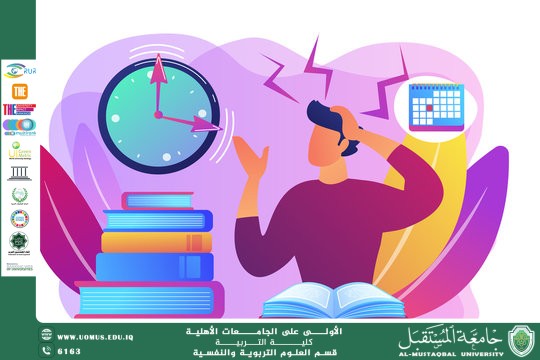
Exam anxiety and how to deal with it
Prepared by: Prof. Dr. Thanaa Baha El-Din Abdullah<br />This article provides practical steps, supported by psychological research, to enable university students to face exams with confidence.<br />Exams are a common part of academic life, but for many students, they cause severe stress and anxiety. Exam anxiety, characterized by excessive worry, physical symptoms (such as sweating, rapid heartbeat), and difficulty concentrating, can hinder performance. Understanding its causes and adopting coping strategies can transform this challenge into a manageable experience.<br />Exam anxiety results from several factors:<br />- Fear of failure: Pressure to meet expectations (from self, family, or peers).<br />- Poor preparation: Haphazard studying or lack of a study plan.<br />- Perfectionism: Unrealistic standards leading to self-doubt.<br />- Comparison: Comparing yourself to others.<br />Effective strategies for dealing with exam anxiety:<br /><br />First: Prepare systematically:<br />- Create a realistic study schedule with breaks.<br />- Use active learning techniques, such as summarization and practice tests.<br /><br />Second: Practice relaxation techniques:<br />- Deep breathing: Inhale for four seconds, hold your breath, then exhale for six seconds.<br />- Meditation or mindfulness apps, such as Headspace<br /><br />Third: Reframe negative thoughts:<br />- Replace "I will fail" with "I will do my best."<br />- Challenge catastrophic thoughts by focusing on past successes.<br /><br />Fourth: Take care of your physical health:<br />- Get seven to eight hours of sleep to enhance information retention.<br />- Eat balanced meals and drink water regularly.<br /><br />Fifth: Seek support:<br />- Discuss your concerns with teachers, friends, or counselors.<br />- Join study groups for collaborative learning.<br /><br />Sixth: During the exam:<br />- Read the questions quickly and allocate your time wisely.<br />- Start with easy questions to boost confidence.<br />Seventh: Seek professional help: If anxiety persists, consult a therapist to learn cognitive behavioral therapy techniques.<br />As the above shows, exam anxiety is common but manageable. By combining preparation, self-care, and positive thinking, students can reduce stress and perform effectively on exams. Remember that exams measure knowledge, not self-worth.<br /><br />Sources:<br />1. American Psychological Association (2023) Managing Test Anxiety. (APA)<br />2. D. Burns, (1999) The Feeling Good Book. Penguin Books.<br />3. National Health Service (2022) Stress in Students (NHS UK).<br />4. A. Burns, (2015) Anxiety and Phobia Workbook. New Harbinger<br /><br />(ALMUSTAQBAL University is the first university in Iraq)<br />