
A group counseling program to overcome exam anxiety for university students
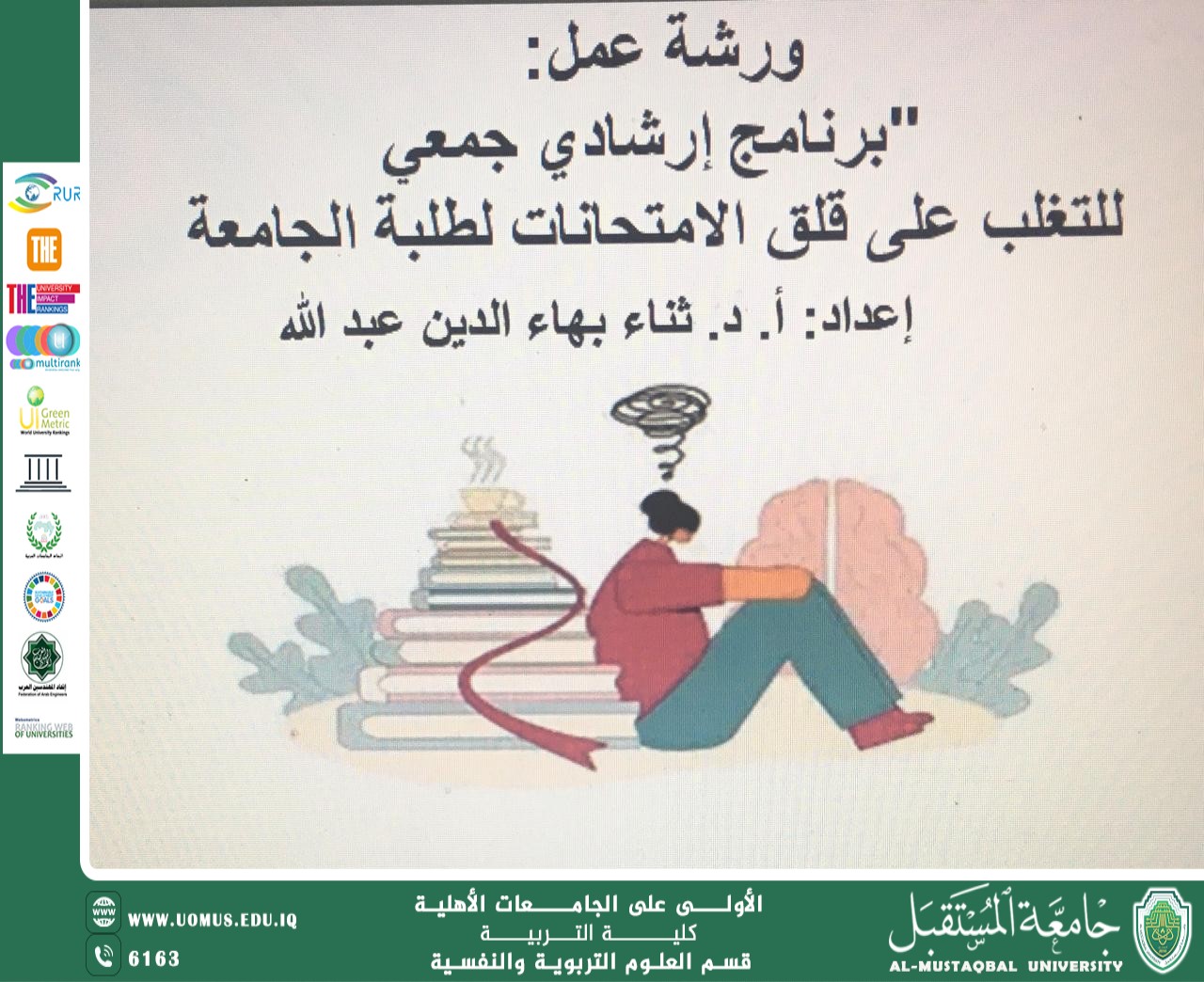
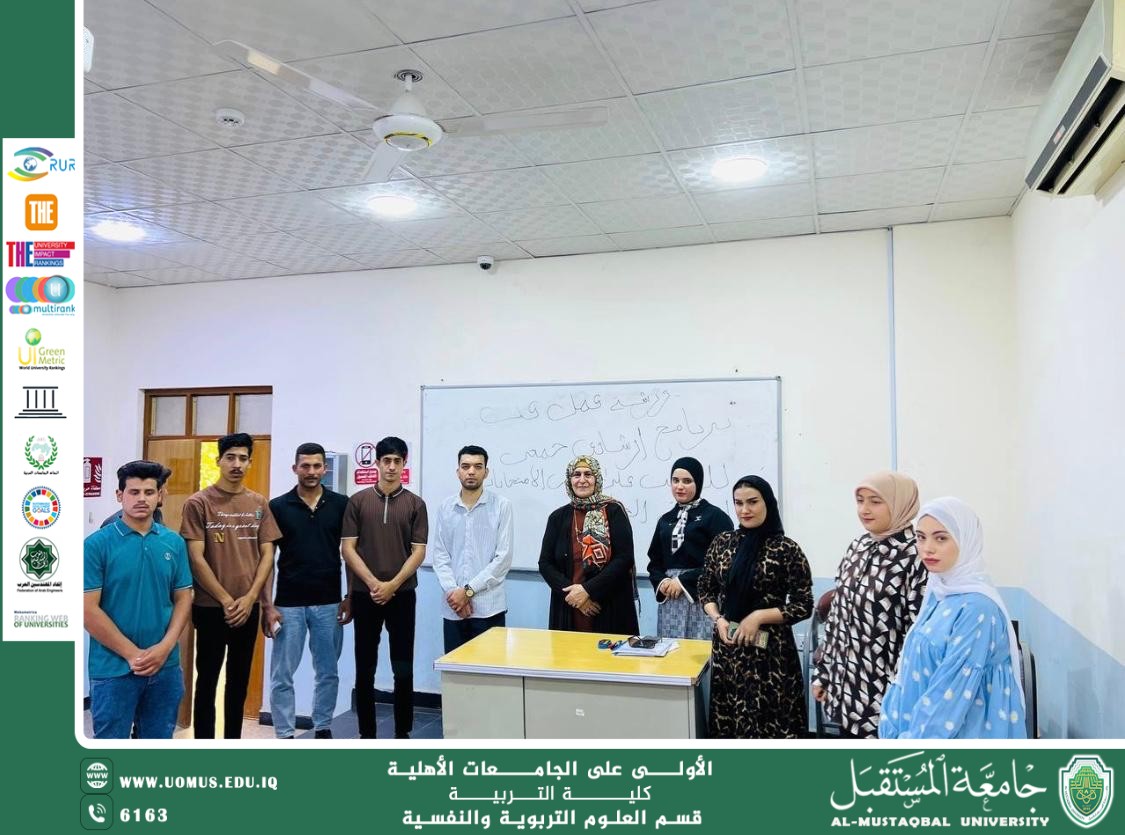
The College of Education, the Psychological Counseling and Educational Guidance Unit, organized a workshop for students of the Department of Educational and Psychological Sciences entitled “A Collective Counseling Program to Overcome Exam Anxiety for University Students” with the aim of achieving the Sustainable Development Goals, which included the fourth goal (Quality Education). The workshop was held on Thursday, May 8, 2025, at 9:00 AM in the Engineering Building, Hall 105. The workshop was delivered by Professor Dr. Thanaa Bahaa El-Din Abdullah, a specialist in counseling and psychotherapy, and head of the Psychological Counseling and Educational Guidance Unit at the College. The workshop covered three main topics: “Exam Anxiety and How to Deal with It,” “Anxiety Management Techniques and Effective Study Techniques,” and “Effective Counseling Strategies for Managing Exam Anxiety,” given their role in alleviating exam anxiety and the psychological, physical, and mental tensions associated with it. It also shed light on the concept of exam anxiety, its accompanying symptoms, and how to deal with it. The workshop presented practical steps supported by psychological research, to enable University students were able to face exams with confidence. The most important scientific techniques for managing anxiety and improving the quality of study were presented: Part One: Anxiety Management Techniques: Such as deep breathing, meditation, and cognitive behavioral therapy, explaining their benefits and how to apply them practically as exercises, as they were implemented in the workshop. The workshop also highlighted the importance of physical movement and healthy eating. Effective study techniques were also explained: spaced repetition, active recall, the Pomodoro Technique, and mind mapping. The workshop also highlighted the importance of sleep to enhance the consolidation of information in memory. Students were also given some effective strategies for dealing with exam anxiety, including:<br />First: Prepare systematically:<br />- Set a realistic study schedule with breaks.<br />- Use active learning techniques, such as summarization and practice tests.<br />Second: Practice relaxation techniques:<br />- Deep breathing: Inhale for four seconds, hold your breath, and exhale for six seconds.<br />- Meditation or mindfulness apps, such as Headspace.<br />Third: Reframe negative thoughts:<br />- Replace "I'll fail" with "I'll do my best."<br />- Challenge catastrophic thoughts by focusing on past successes.<br />Fourth: Take care of your physical health:<br />- Get seven to eight hours of sleep to enhance information retention.<br />- Eat balanced meals and drink water regularly.<br />Fifth: Seek support:<br />- Discuss your concerns with teachers, friends, or counselors.<br />- Join study groups for collaborative learning.<br />Sixth: During the exam:<br />- Read the questions quickly and allocate your time wisely.<br />- Start with easy questions to boost confidence.<br /><br />The workshop was attended by Professor Abdul Salam Jawdat, Head of the Department of Educational and Psychological Sciences.<br />At the conclusion of the workshop, it was clear that exam anxiety is common but manageable. By combining preparation, self-care, and positive thinking, students can reduce stress and perform effectively on exams.<br /><br /><br /><br />(ALMUSTAQBAL University is the first university in Iraq)