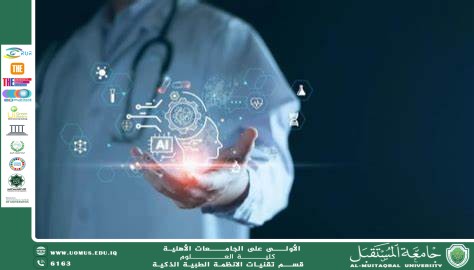
How Are Intelligent Assistants Transforming the Future of Medical Diagnosis?(Qusai Munir Diab).
<br />With the rapid advancement of artificial intelligence technologies, intelligent assistants are playing a pivotal role in reshaping the future of medical diagnosis. These tools enable healthcare professionals to improve diagnostic accuracy and accelerate the delivery of patient care. They rely on advanced techniques such as machine learning, deep learning, and big data analytics, making them capable of processing vast amounts of medical information with high efficiency.<br /><br />One of the most significant advantages of intelligent assistants lies in their ability to analyze massive volumes of medical data in a short time. For instance, AI can interpret X-rays and MRI scans to detect diseases like cancer in their early stages, which enhances treatment outcomes and reduces human error.<br /><br />These intelligent systems also contribute to differential diagnosis by analyzing symptoms and clinical data and comparing them against multiple possible conditions with overlapping features. This increases diagnostic precision, especially in complex cases. Moreover, such systems give physicians access to global databases containing millions of medical records and clinical studies, empowering evidence-based decision-making.<br /><br />In the context of telemedicine, intelligent assistants have become powerful tools for delivering initial consultations, particularly for patients with limited access to healthcare facilities. By analyzing symptoms entered via smartphone applications or wearable sensors, these systems can provide immediate recommendations on the next medical steps.<br /><br />Despite these benefits, the use of intelligent assistants in diagnosis still faces several challenges. Ensuring system accuracy and reliability is essential to guarantee correct diagnoses. Protecting patient privacy and the security of sensitive medical data is also a critical concern, requiring strict cybersecurity standards. Furthermore, integrating AI systems with medical professionals necessitates the development of clear protocols that foster effective and safe collaboration between humans and machines.<br /><br />As these technologies continue to evolve, intelligent assistants are expected to become an integral part of future healthcare systems, contributing to improved quality of life and reducing the burden on healthcare infrastructures worldwide.<br />Al-Mustaqbal University is the first University in Iraq.