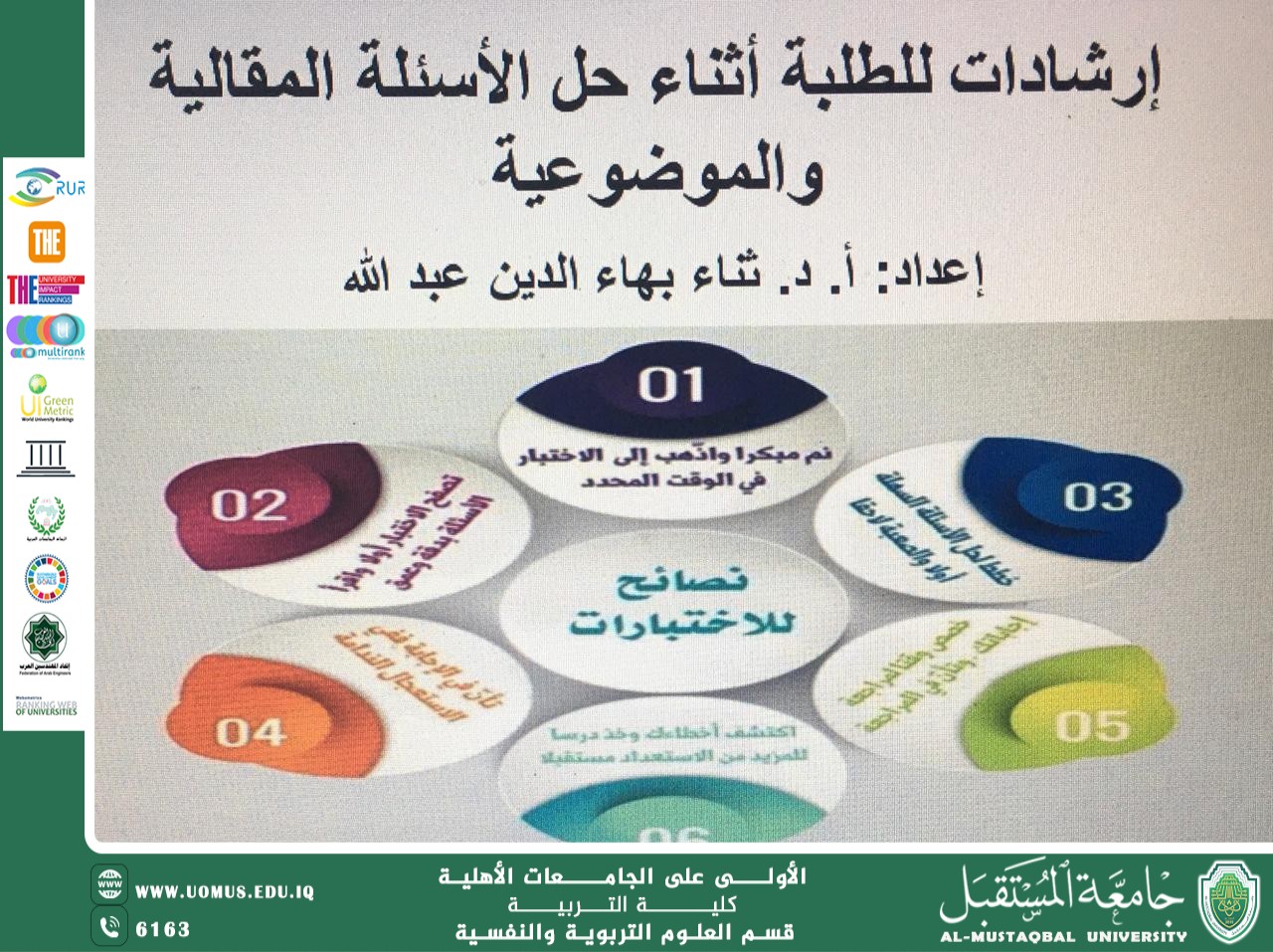
Guidelines for students when solving essay and objective questions
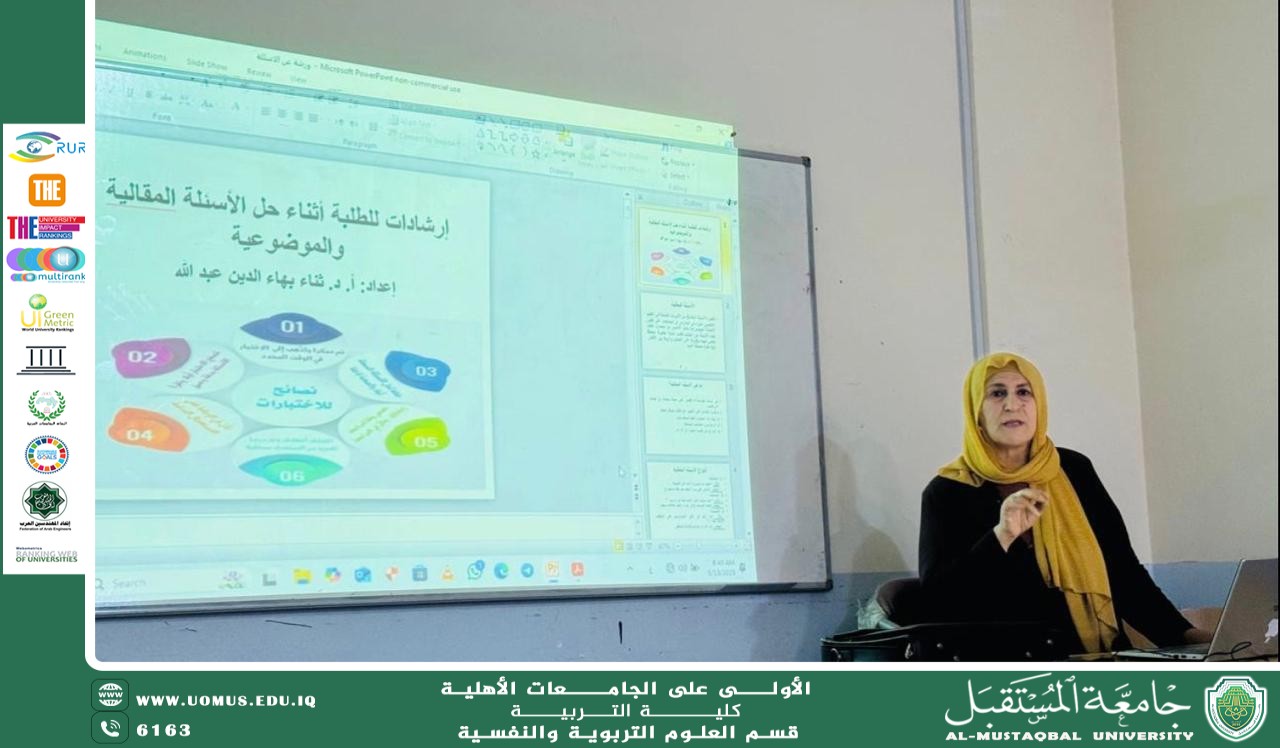
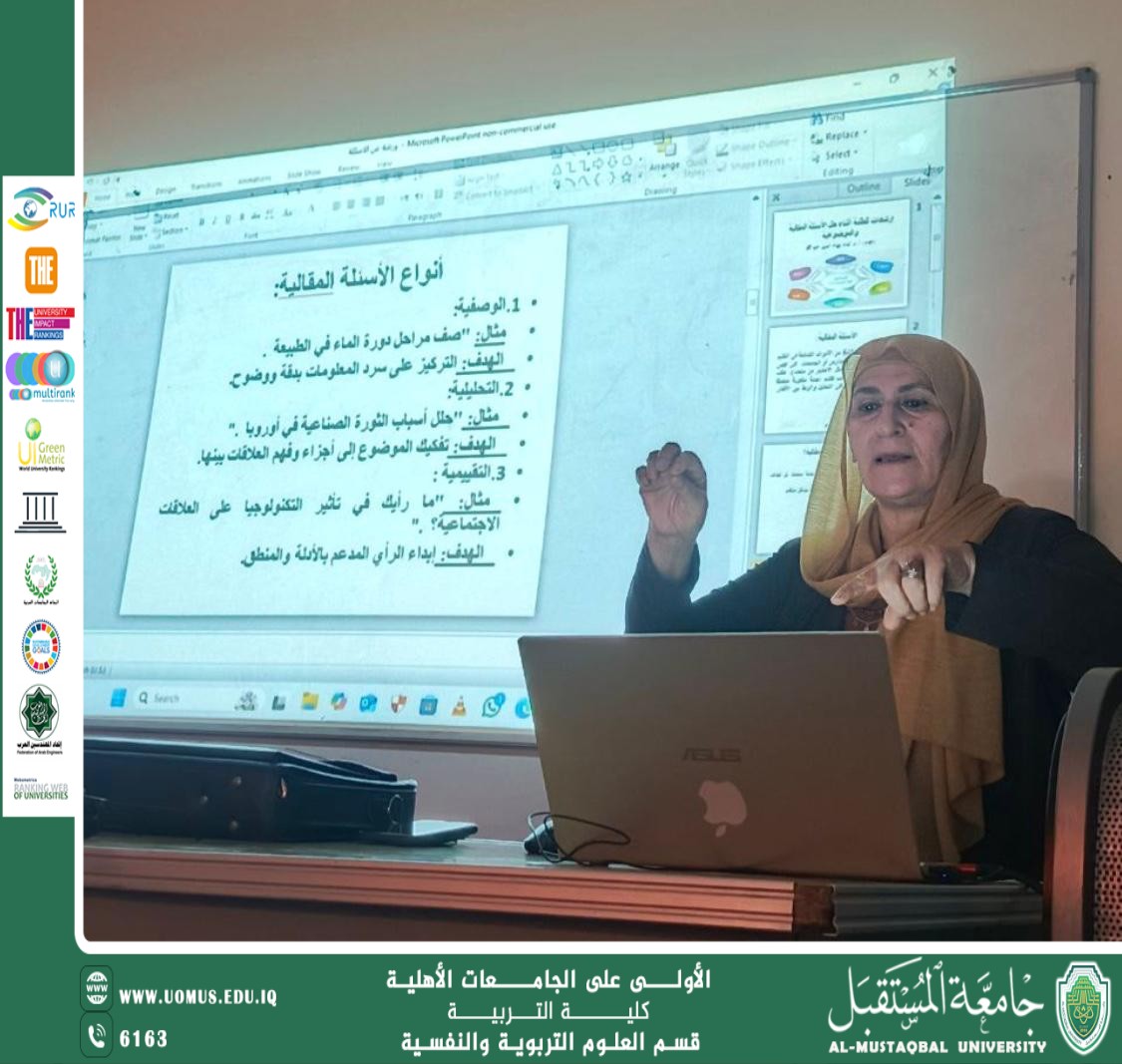
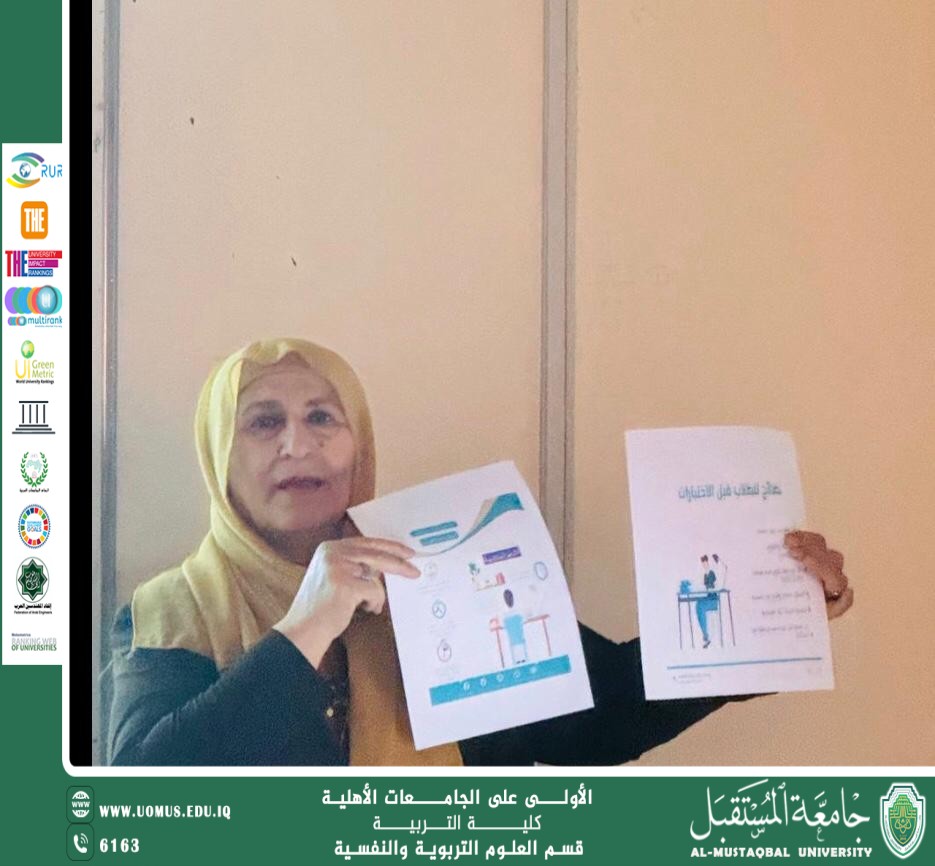
The College of Education's Psychological Counseling and Educational Guidance Unit organized a workshop for students in the Department of Educational and Psychological Sciences entitled "Guidance for Students in Solving Essay and Objective Questions." The workshop aimed to achieve the Sustainable Development Goals, which included Goal 4 (Quality Education). The workshop was held on Tuesday, May 13, 2025, at 9:00 AM in the Engineering Building, Hall 105. The workshop was delivered by Professor Dr. Thanaa Bahaa El-Din Abdullah, a counseling and psychotherapy specialist and head of the Psychological Counseling and Educational Guidance Unit at the college. The workshop addressed two main themes: "Essay Questions" and "Objective Questions." The workshop highlighted the concept of "essay questions," a common tool in educational assessment at universities. These questions require students to provide an in-depth written answer that reflects their understanding and ability to analyze and connect ideas. These are open-ended questions that do not require a specific answer, but rather aim to measure: 1. The student's ability to express their ideas in an organized manner. 2. Skills of analyzing and critiquing information. 3. Linking different concepts. 4. Creativity: in presenting solutions or opinions. Its types: 1. Descriptive: Its goal: Focusing on presenting information accurately and clearly. 2. Analytical: Its goal: Decomposing the topic into parts and understanding the relationships between them. 3. Evaluative: Its goal: Expressing an opinion supported by evidence and logic. Its advantages: 1. Encourages critical thinking and avoids reliance on memorization. 2. Reveals differences in understanding among students. 3. Develops writing and expression skills. Its challenges: 1. Difficulty in marking: It requires time and effort from the teacher and may be subjective. 2. Student anxiety: Some may face difficulty organizing ideas under time pressure. Tips and guidelines were provided for students to answer:<br />- Read the question carefully and ensure you understand the requirement, such as: (describe, compare, discuss...)<br />- Plan your answer: Write down key points before beginning.<br />- Organize your answer:<br />A. Short introduction (presenting the idea) Main (.<br />B. Body of the essay (presenting points with examples or evidence).<br />C. Conclusion summarizing the results or opinion.<br />Review your answer to avoid grammatical or logical errors.<br />In conclusion, essay questions are not just a test of information; they are an opportunity to develop higher-order thinking skills. With practice and proper guidance, students can transform them from a challenge into a means of demonstrating their intellectual excellence.<br />The second section included: Guidelines for students when answering objective questions:<br />1. Read the instructions carefully: Make sure you understand the type of question (multiple choice, true/false, etc.) and the answer method (e.g., is there a penalty for guessing?)<br />2. Focus on key words: Highlight important words in the question, such as "not," "always," "only," to avoid misunderstandings.<br />3. Manage your time wisely: Allocate a specific amount of time for each question, and do not dwell on a difficult question for too long. Return to it later if time allows.<br />4. In fill-in-the-blank questions: Read the entire sentence before answering, and predict the appropriate word before looking at the options.<br />5. Avoid random guessing: If you don't know the answer, Guess intelligently based on the context or eliminate impossible options.<br />5. Review your answers (if time allows): Don't change your answer unless you're certain it's wrong, as first impressions are often correct.<br />6. Stay calm: Don't get stressed if you encounter a difficult question; move on to the next one and come back to it later.<br />General tips and guidelines were given to students: 1. Practice previous examples: This helps you understand question patterns and improve your speed. 2. Don't leave any question blank: Unless the instructions specifically state so. 3. Make sure you understand the material (rather than memorize it), as some questions test comprehension rather than repetition.<br />4. Awareness brochures were distributed to students and discussed.<br /><br /><br />(ALMUSTAQBAL University is the first university in Iraq)