Instructions for students when solving essay and objective questions
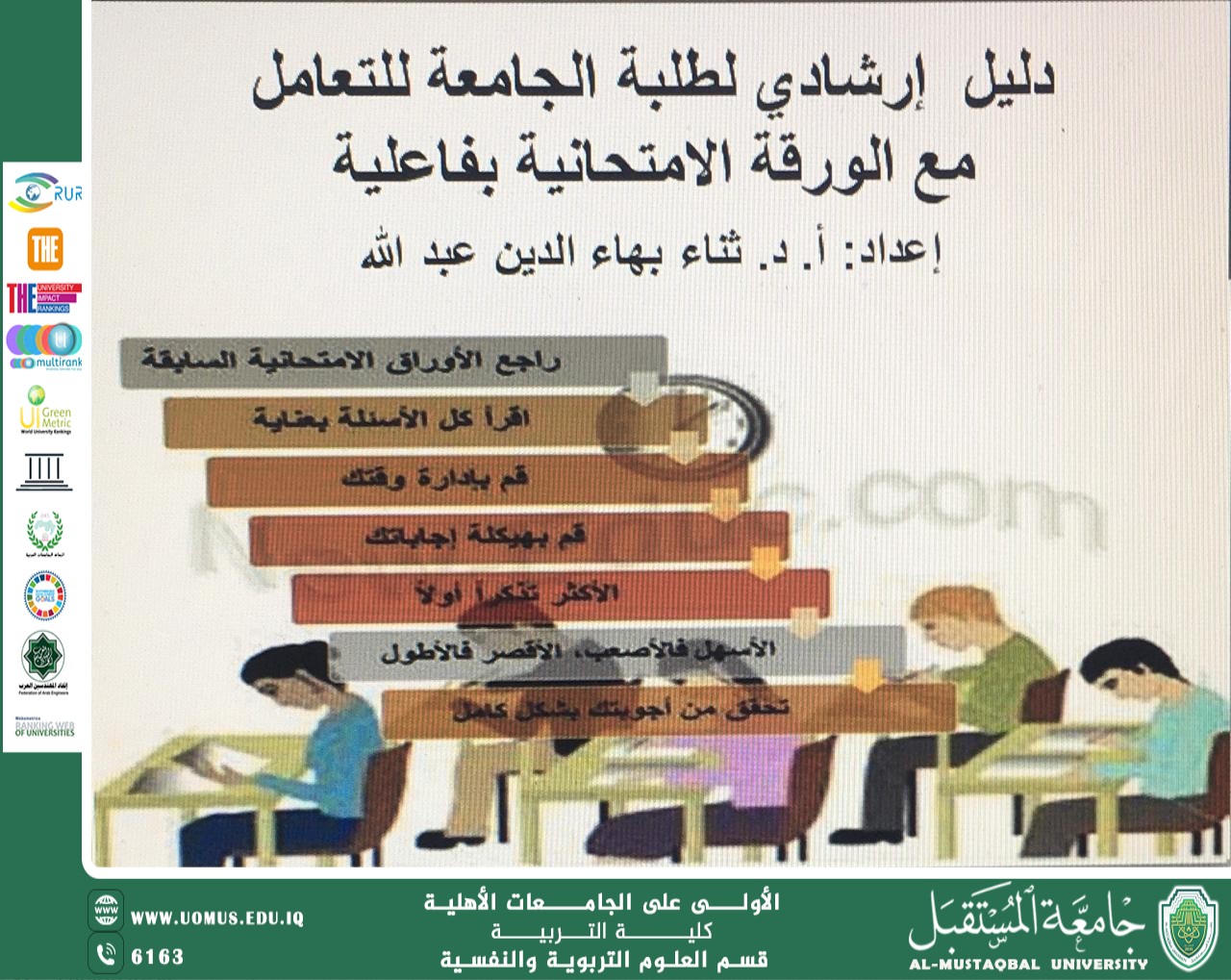
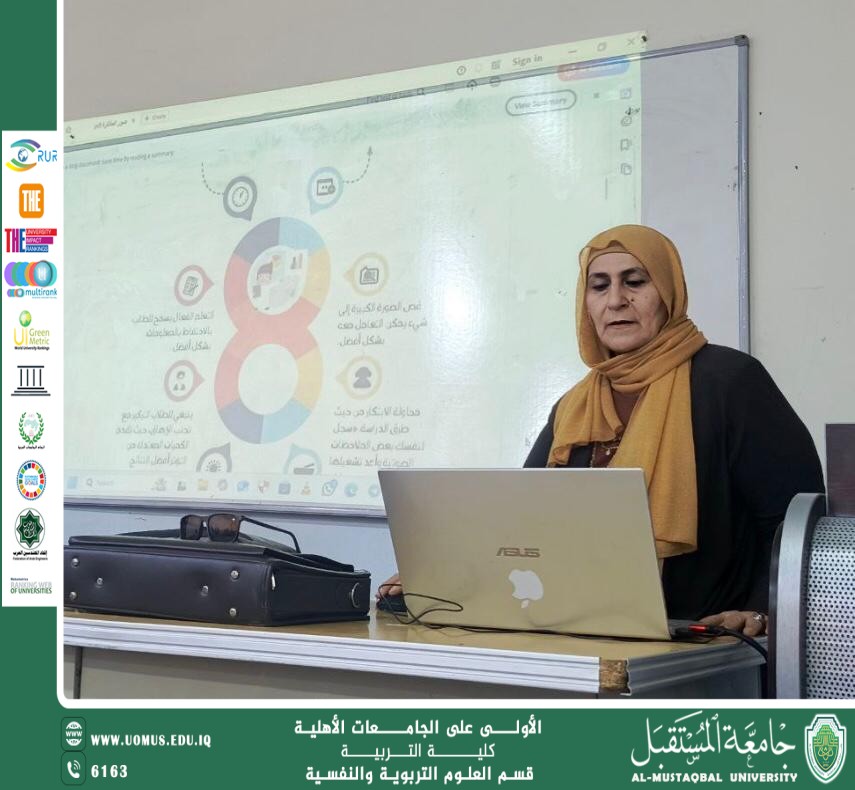
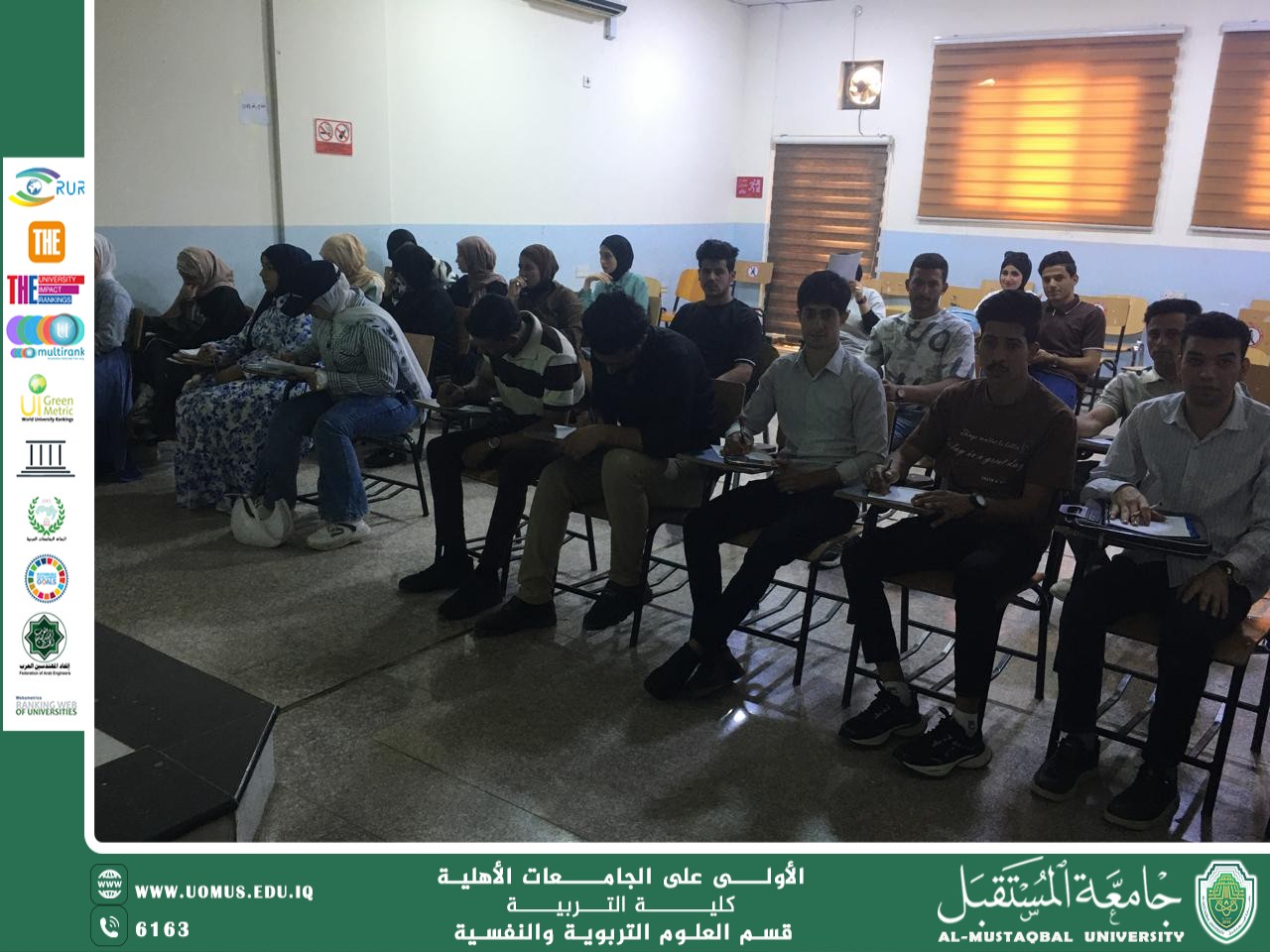
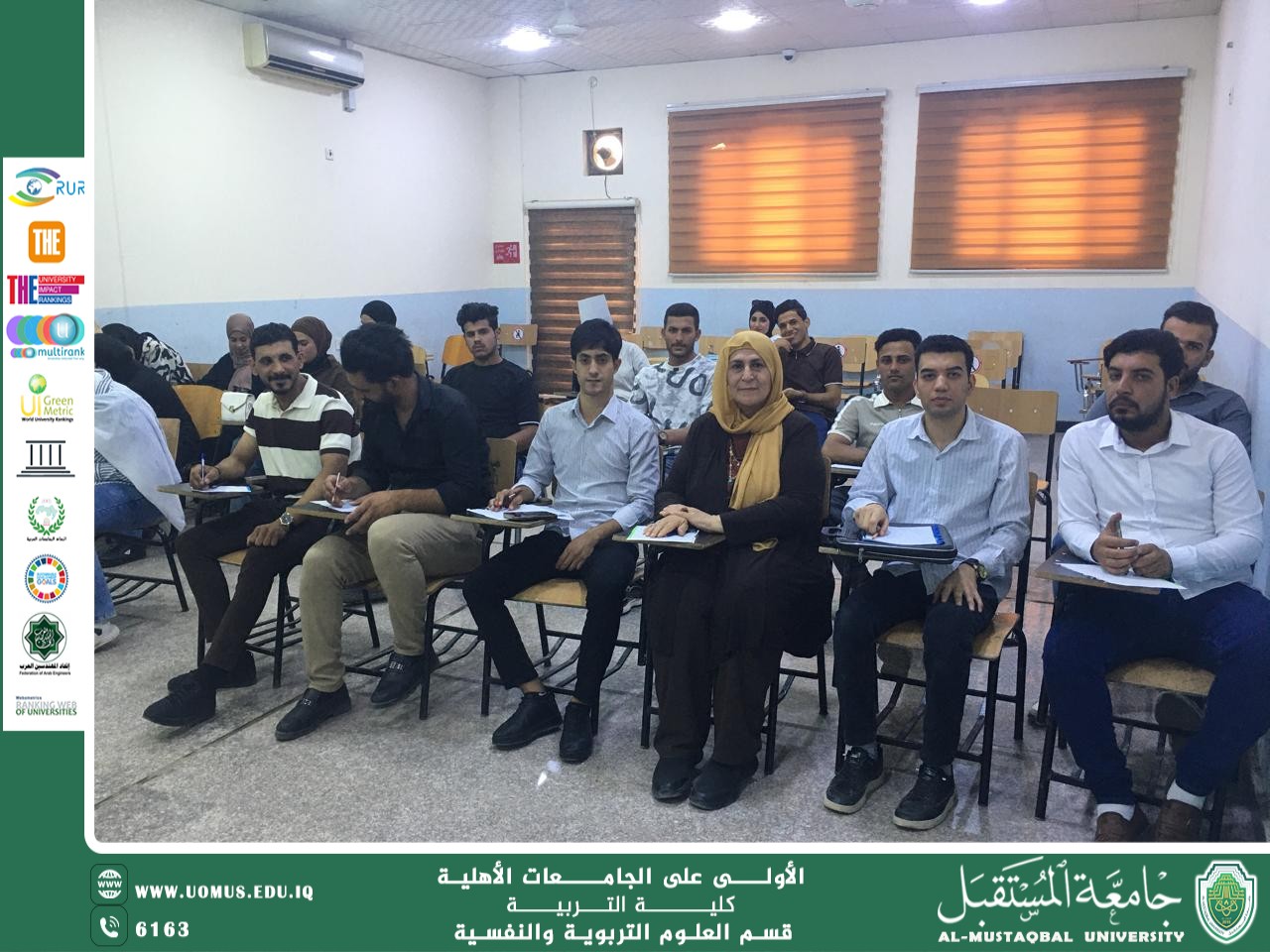
The College of Education's Psychological Counseling and Educational Guidance Unit organized a workshop for students in the Department of Educational and Psychological Sciences entitled "A Guide for University Students to Effectively Handle Exam Papers." The workshop aimed to achieve the Sustainable Development Goals, which included Goal 4 (Quality Education). The workshop was held on Tuesday, May 13, 2025, at 10:00 AM in the Engineering Building, Hall 105. The workshop was delivered by Professor Dr. Thanaa Bahaa El-Din Abdullah, a counseling and psychotherapy specialist and head of the Psychological Counseling and Educational Guidance Unit at the college. The workshop covered eight main topics:<br /><br />First: Preparing Before the Exam:<br />1. Smart Review: Focus on key and difficult points, and use mind maps or summaries.<br />2. Good Sleep: Get 7-8 hours to ensure concentration.<br />3. Basic Preparation: Prepare the required tools (pens, calculator, etc.) and document them before leaving.<br /><br />Second: The Beginning of the Exam:<br />1. Reading Instructions: Carefully check the number of questions, marks, and specific guidelines (e.g., "Choose two questions").<br />2. Quickly scan the paper: Determine the types of questions (easy/difficult) and allocate time accordingly.<br />Third: Manage time wisely:<br />1. Divide time: Allocate time for each section, leaving 10-15 minutes for review.<br />- Example: If the exam is 60 minutes long and has 6 questions, allocate ~8 minutes for each question.<br />2. Use a wristwatch: Keep track of time without panicking.<br /><br />Fourth: Answer strategically:<br />1. Start with easy questions: To build confidence and secure basic marks.<br />2. Deal with difficult questions:<br />a. Frame your answer (if it's an essay question), then move on to another question, and come back to it later.<br />b. In multiple-choice questions: Eliminate incorrect answers first and avoid random guessing.<br />Fifth: Depending on the type of question:<br /><br />1. Multiple-choice questions:<br />a. Look for words like "always" and "never," as they may be Misleading.<br />B. Check all options before choosing.<br /><br />2. Essay Questions:<br />- Write a quick outline (introduction, main points, conclusion).<br />- Use clear examples and support with statistics if possible.<br /><br />Sixth: Avoid Common Mistakes:<br />1. Skimming the questions: This may lead to misunderstandings.<br />- Example: Some people mistake the word "except" for "except" (except for ").<br /><br />2. Ensure that the answers are numbered correctly with the questions.<br /><br />Seventh: Final Review:<br />1. Review the answers: Check for spelling errors in the essays or for numerical calculations.<br />2. Ensure that all questions are answered: especially those left temporarily.<br /><br />Eighth: After submitting the paper:<br />1. Do not review with colleagues: Avoid unnecessary stress.<br />2. Take a break: Prepare for the next exam (if there is one) with a fresh mind.<br />Golden Tips:<br />1. Stay calm: Take a deep breath if you feel stressed. With stress.<br />2. Focus on your paper: Don't compare your speed to others.<br />3. Confidence is key: Remind yourself that you've prepared well.<br />In conclusion, by using these strategies, you'll improve your performance and avoid stress and exam anxiety.<br /><br /><br />ALMUSTAQBAL University is the first university in Iraq)