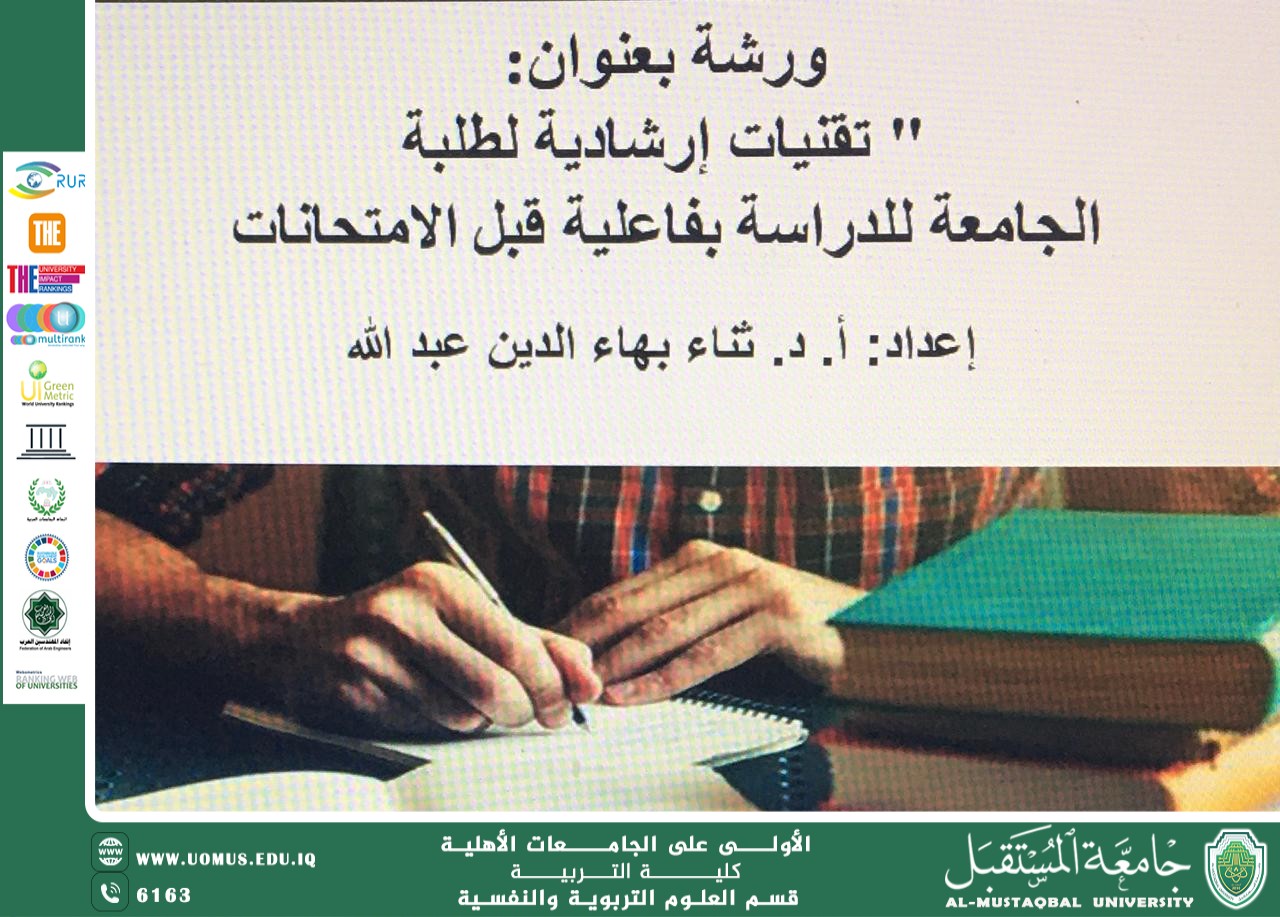
Guidance techniques for university students to study effectively before exams
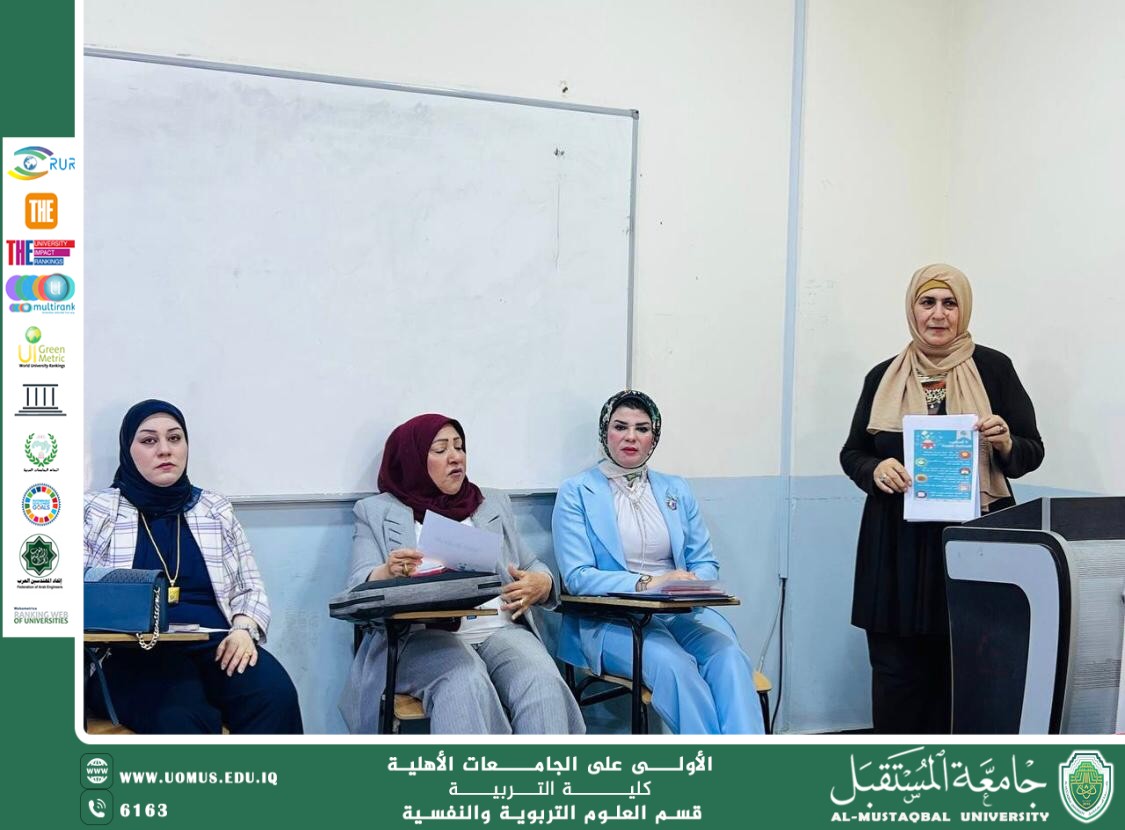
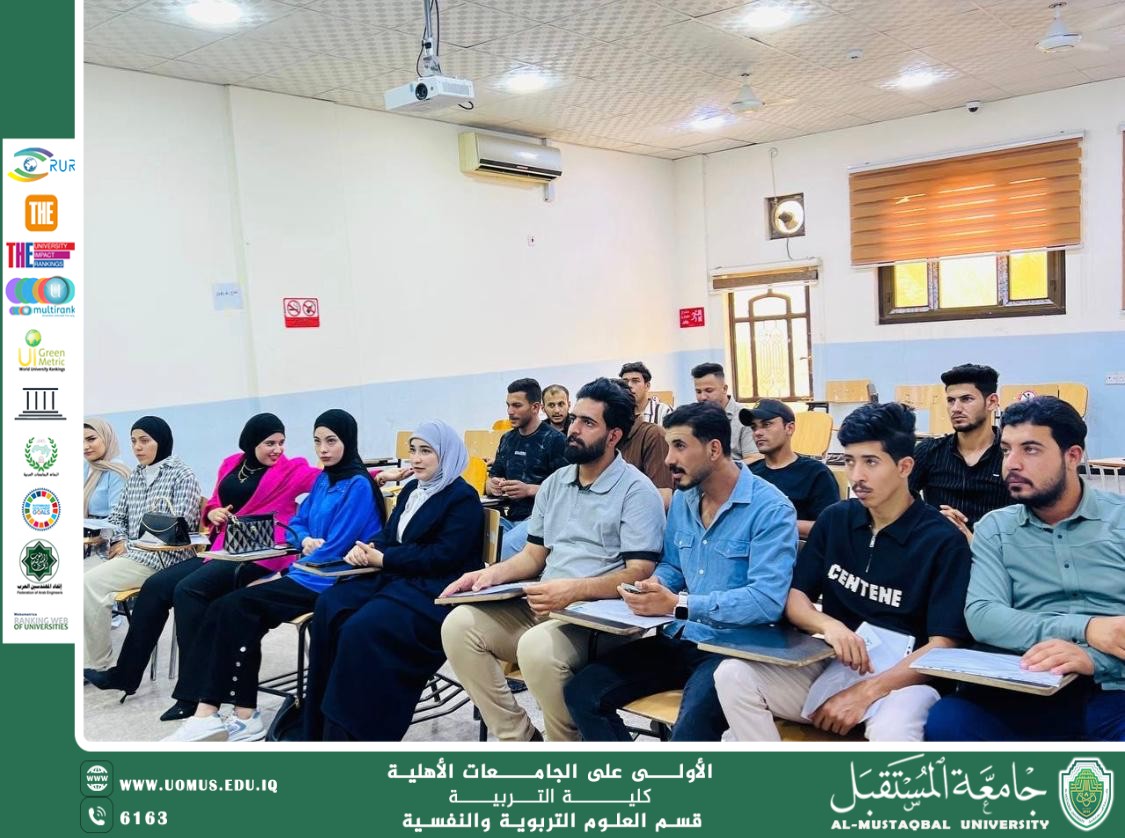
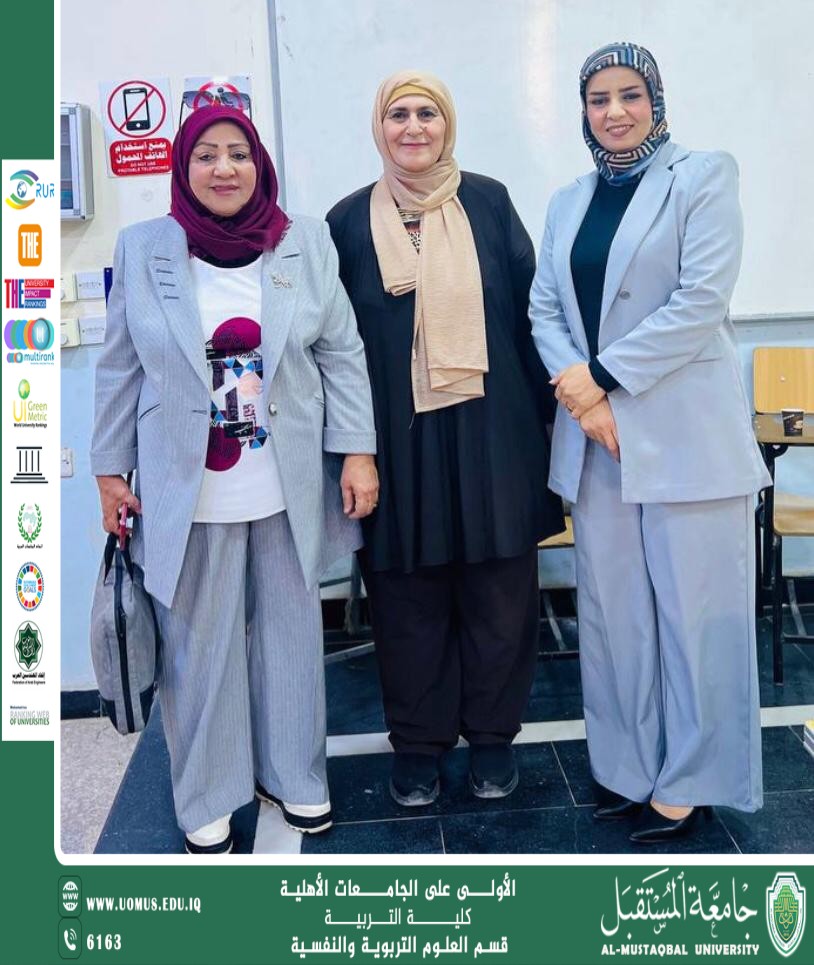
The College of Education's Psychological Counseling and Educational Guidance Unit, in cooperation with the Continuing Education Center and the Women's Affairs Division, organized an awareness seminar for students in the Department of Educational and Psychological Sciences entitled "Counseling Techniques for University Students to Study Effectively Before Exams." The seminar aimed to achieve the Sustainable Development Goals, which included the fourth goal (Quality Education). The seminar was held on Wednesday, May 14, 2025, at 10:00 a.m. in the Engineering Building, Hall 105. The awareness workshop was led by Professor Dr. Thanaa Bahaa El-Din Abdullah, a counseling and psychotherapy specialist and head of the Psychological Counseling and Educational Guidance Unit at the college. Participating in the dialogue and discussion were Professor Dr. Sahira Abdul-Jabbar Qahtan, head of the Women's Affairs Division at the university, and Assistant Professor Dr. Reda Abdel-Ati El-Fishawy, Director of the Continuing Education Center at the university. Ms. Shadan Salah Abd from the Department of Qur'anic Sciences also participated. The workshop was attended by Ms. Amal Muhammad Jaber, rapporteur of the Department of Educational and Psychological Sciences. The workshop emphasizes the importance of mastering study methods well before an exam, as this is crucial for achieving success and excellence. Therefore, students should know the strategies that help them make the most of their study hours. These guidelines and tips will apply to all academic subjects. However, these study methods are not a magic solution for overcoming laziness, as effort and perseverance are the key to success. These are the best techniques and study methods:<br /><br />1. Take a break: You should take a break every 50 or 60 minutes and engage in a 10-minute activity to combine the effort devoted to studying with leisure activities. This way, you will associate studying with something positive.<br /><br />2. Eliminate distractions and avoid distractions. Avoid using social media, hide your phone, turn it off, and stay away from the television.<br /><br />3. Listen to soothing music to focus and relax while studying. Avoid listening to songs. Listening to the radio is not recommended, as it can become a distraction while studying.<br /><br />4. Study in advance: Students should not study the day before an exam or even the day of the exam itself, especially when it comes to very important exams such as final exams. It's essential for students to prepare for the exam months before taking it, not just on the day of the exam itself. It's best to dedicate an hour or two each day to reviewing what you've studied two months before the exam. The information will be structured in your mind for the long term, and you'll be able to retain it for a long time to use it when needed.<br /><br />5. Mind Maps: A mind map is a schematic image used to represent words, ideas, or concepts linked around a central idea. It's a very good way to memorize information and is recommended by experts.<br /><br />6. Physical Activity: Physical exercise can be part of studying methods. Exercising for 20 to 30 minutes before an exam improves a student's concentration level. You can also head to the gym before taking the exam to relieve stress after having studied extensively.<br /><br />7. Change Study Locations: Changing the places where a student studies improves their concentration and their ability to retain more information. This is because studying in one place becomes annoying, so the study and review environment plays an important role in motivating us and breaking the boring routine.<br /><br />8. Eat Well and Healthily: Feeling Hungry makes a student lack energy and distracted. Mindfulness is a key factor in improving cognitive function. It's best to eat something before starting your studies, especially almonds, which contain phenylalanine, a key neurotransmitter, and beets, which contain uridine monophosphate, which helps improve cognitive abilities.<br /><br />9. Maintain a positive spirit: This is crucial when it comes to achieving good grades. It's essential for students to remain calm and positive, as pessimism about their results can be a reason to give up.<br /><br />10. Take mock exams: Taking a mock exam is a more effective method than simply reading or underlining important information. It allows students to rethink potential logical questions that may be similar to the actual exam questions. Furthermore, taking mock exams is one of the most beneficial study methods, as it helps you identify gaps and weaknesses in your knowledge. This is what was presented in the workshop.<br /><br />(ALMUSTAQBAL University is the first university in Iraq)<br />