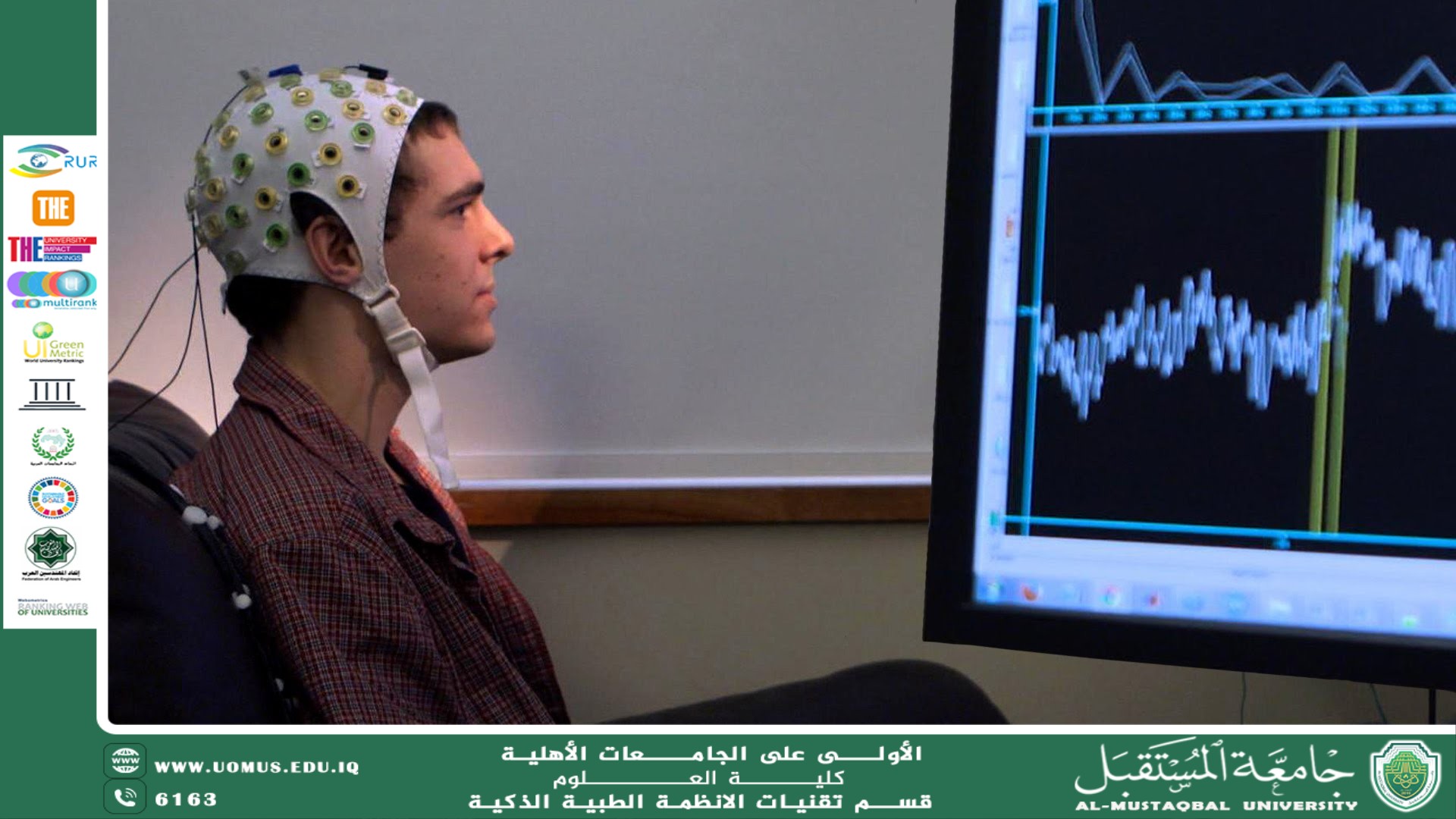
Brainwaves as a Means of Device Control(Huda Khudair Hani).
The use of brainwaves to control devices represents one of the most remarkable achievements in modern neurotechnology. This advancement enables communication between the brain and machines through interfaces known as Brain-Computer Interfaces (BCIs). These systems capture the electrical signals generated by brain activity using precise sensors and convert them into digital commands used to operate devices.<br /><br />This technology is particularly utilized to assist individuals with motor disabilities, allowing them to control wheelchairs or prosthetic limbs simply by thinking about the movement. Applications are also being developed in video gaming, virtual reality, and even in controlling smart home devices.<br /><br />The success of these interfaces relies on the accurate recording and analysis of brainwaves through deep learning algorithms, which enable the interpretation of the user's mental intentions and their translation into executable commands.<br /><br />However, this technology raises ethical concerns regarding privacy, the boundaries between thought and intention, and the need to protect neural data from hacking or misuse.<br /><br />As research progresses, this technology is expected to revolutionize the concept of human communication and our interaction with technology, opening new horizons in medicine, education, and the workplace—and bringing us closer to the model of the "technologically augmented human."