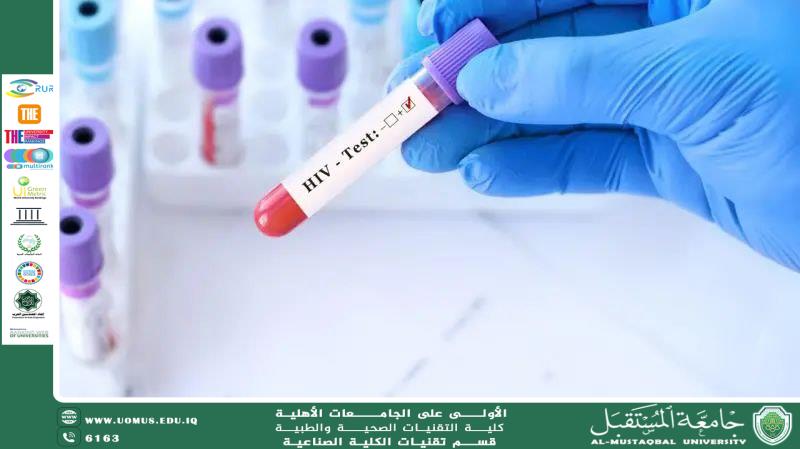
Current Developments in HIV Vaccine Development
Prepared by: Prof. Dr. Younis Abdul Redha Al-Khafaji<br /><br />The development of an effective vaccine against the Human Immunodeficiency Virus (HIV) has been an ongoing scientific challenge for decades. Researchers continue to struggle with finding a way to train the immune system to produce antibodies capable of targeting the many mutated forms of the virus. Traditional approaches have not been sufficiently successful, primarily because HIV mutates rapidly and conceals critical parts of itself from the immune system.<br /><br />In a new study that combined data from two phase I clinical trials, researchers demonstrated that a targeted vaccine strategy can successfully activate early immune responses relevant to HIV. In one of the trials, these responses advanced further toward the long-term goal of developing an effective vaccine. The international team conducting the study was led by scientists from the IAVI and Scripps Research institutes, and included nearly 80 participants from North America and Africa, laying the foundation for the development of a potential vaccine suitable for populations worldwide. The study was published in Science on May 15, 2025.<br /><br />One of the trials tested a stepwise vaccination strategy, where an initial dose was followed by a series of different booster doses designed to prime and guide the immune system through stages of antibody development. This trial demonstrated that heterologous boosting—using different booster doses—can advance immune responses in humans. The second trial focused only on the priming dose and confirmed that the vaccine could activate the targeted immune cells in African participants, supporting the use of this approach in regions most affected by HIV. In both trials, the vaccine was delivered using messenger RNA (mRNA) technology, the same platform used for COVID-19 vaccines, allowing for faster production, more efficient clinical testing, and robust immune responses.<br /><br />The lead author of the study, William Schief, Professor of Immunology and Microbiology at Scripps Research, Vice President of Protein Design for Infectious Disease Research at Moderna, and Executive Director of Vaccine Design at the IAVI Neutralizing Antibody Center, stated:<br />"We have now shown in humans that we can initiate the desired immune response with a single dose, and then push it forward using a second, different dose. We also demonstrated that the priming dose works well among African populations."<br />He added that the trials provide proof of concept for stepwise vaccination to produce customized immune responses, not only for this vaccine but also for the broader field of vaccines, including those unrelated to HIV.<br /><br />Mark Feinberg, President and CEO of IAVI, commented:<br />"These remarkable results validate the vaccine design, which is based on precise scientific reasoning. The development of a vaccine would be a huge leap forward for global health and could contribute to ending the HIV pandemic. This achievement was made possible by outstanding collaboration among research institutions, funders, private sector organizations, and governments—an excellent testament to the power of partnership-driven science."<br /><br />Broadly Neutralizing Antibodies (bnAbs) are a rare type of immune defense that can recognize and block a wide range of HIV variants. Unlike ordinary antibodies that often target only one form of the virus, bnAbs bind to parts of the virus that remain unchanged even during mutation. Scientists have long viewed them as the immune system's best bet for preventing HIV infection.<br /><br />The first step to help the body produce these antibodies is a priming vaccine designed to stimulate rare naïve B cells, which may develop into sources of these potent antibodies. This approach is known as germline targeting. B cells are a type of white blood cell that play a central role in the immune system by producing antibodies that recognize viruses and other threats. The subsequent vaccine doses, known as boosters, guide these cells through a maturation process aimed at generating antibodies that target HIV. Although the current trials were not intended to directly produce broadly neutralizing antibodies, they demonstrated that the strategy of administering a sequence of distinct doses to train the immune system holds significant promise.<br /><br />Al-Mustaqbal University the First in Iraq<br/><br/><a href=https://www.linkedin.com/company/college-of-health-medical-techniques/posts/ target=_blank>linkedin College of Health and Medical Techniques</a>