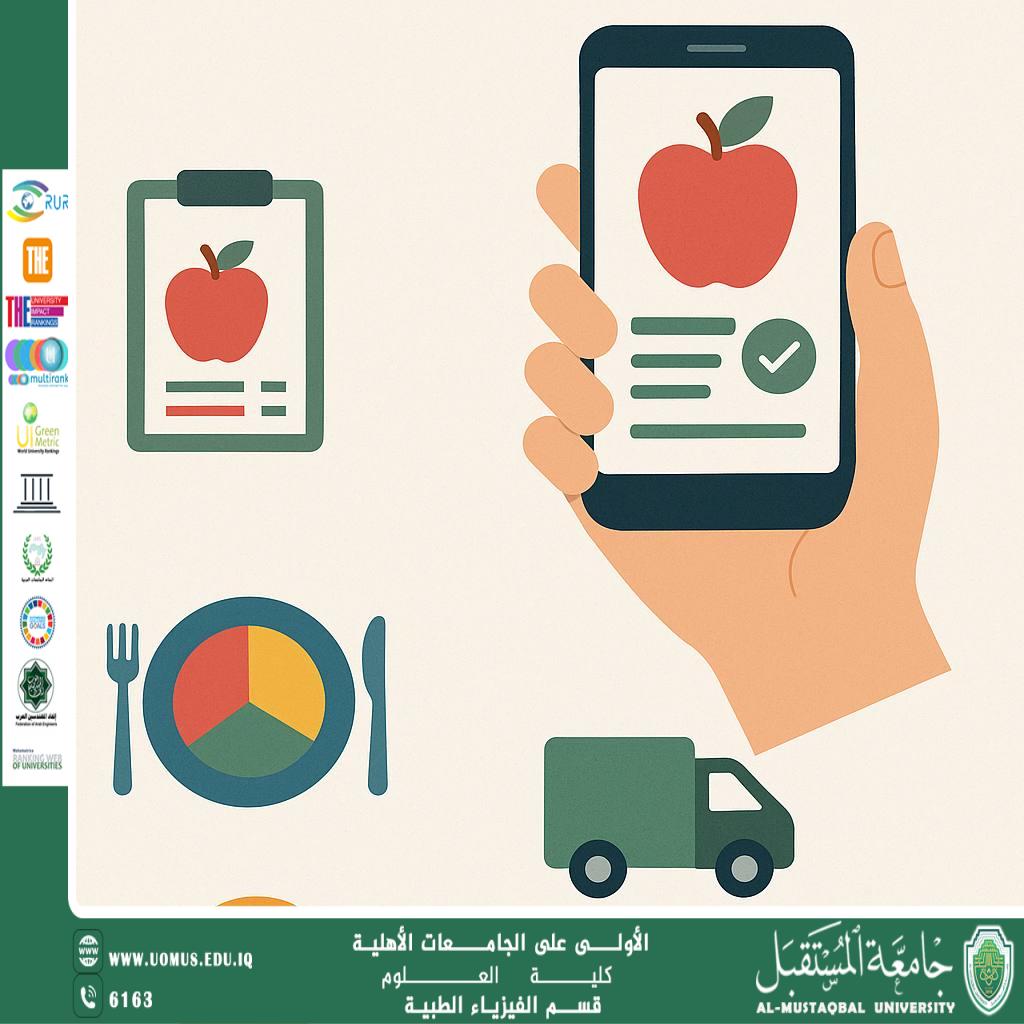
A scientific article by the teaching assistant (Maryam Reda Al-Sharaa) entitled “How do smartphone applications change our eating habits?”
In the era of digital transformation, smartphone applications have become an integral part of our daily lives — including what we eat and how we eat it. From tracking calories to ordering ready-made meals, and from nutrition education to personalized diet plans, these apps have become a powerful force in shaping our dietary behaviors.<br /><br />But how exactly have these apps changed our eating habits? And is their impact always positive? Let’s explore the matter from several perspectives:<br /><br />⸻<br /><br />1. Nutrition Awareness and Education<br /><br />Many apps provide accurate and easy-to-understand nutritional information about foods and ingredients, helping users to:<br /><br />Better read nutrition labels.<br /><br />Choose foods with higher nutritional value.<br /><br />Understand appropriate portion sizes.<br /><br />Example: Apps like MyFitnessPal and Yazio display nutritional values for each ingredient and offer daily personalized recommendations.<br /><br />⸻<br /><br />2. Tracking and Analyzing Eating Habits<br /><br />Daily tracking features help users understand their dietary patterns in terms of:<br /><br />Number of meals.<br /><br />Calorie intake.<br /><br />Consumption of sugar, fats, or proteins.<br /><br />This analysis has encouraged many to make small yet impactful long-term changes, such as:<br /><br />Reducing fast food consumption.<br /><br />Increasing vegetable intake.<br /><br />Drinking more water.<br /><br />⸻<br /><br />3. Ease of Access to Food<br /><br />Food delivery apps have drastically changed how we eat — especially in urban areas. With a single tap, we can order almost any type of food at any time.<br /><br />Positive impact:<br /><br />Availability of healthy meals from specialized restaurants.<br /><br />Diverse options for those following specific diets (vegetarian, keto, gluten-free).<br /><br />Negative impact:<br /><br />Over-reliance on ready-made meals.<br /><br />Increased calorie intake without awareness.<br /><br />Decline in home cooking skills.<br /><br />⸻<br /><br />4. Psychological and Emotional Impact<br /><br />Some apps offer psychological and behavioral support, such as:<br /><br />Reminders to drink water or eat healthily.<br /><br />Daily motivational messages.<br /><br />Interactive communities for sharing challenges and experiences.<br /><br />But on the flip side, some apps can cause psychological pressure due to excessive food monitoring or feelings of guilt after breaking a diet.<br /><br />⸻<br /><br />5. Are We Eating for Ourselves or the App?<br /><br />Over time, some users begin eating to please the app rather than their own bodies. For example:<br /><br />Eating certain foods just because the app recommends them.<br /><br />Feeling guilty for "breaking the diet," even when the body has different needs.<br /><br />⸻<br /><br />Conclusion: How Can We Benefit From Apps Without Becoming Their Slaves?<br /><br />Use apps as a guide, not as a chain.<br /><br />Don’t forget to listen to your body and its needs.<br /><br />Let technology help you learn healthy habits — not just count numbers.<br /><br />⸻<br /><br />In the End:<br /><br />Smartphone apps have indeed changed our eating habits — some of that change is beneficial, while some requires awareness. Ultimately, it’s up to us: will we use technology to improve our relationship with food, or allow it to control us?<br /><br /><br /><br /><br />"AL_mustaqbal University is the first university in Iraq"<br/><br/><a href=https://uomus.edu.iq/Default.aspx target=_blank>al-mustaqbal University Website</a>