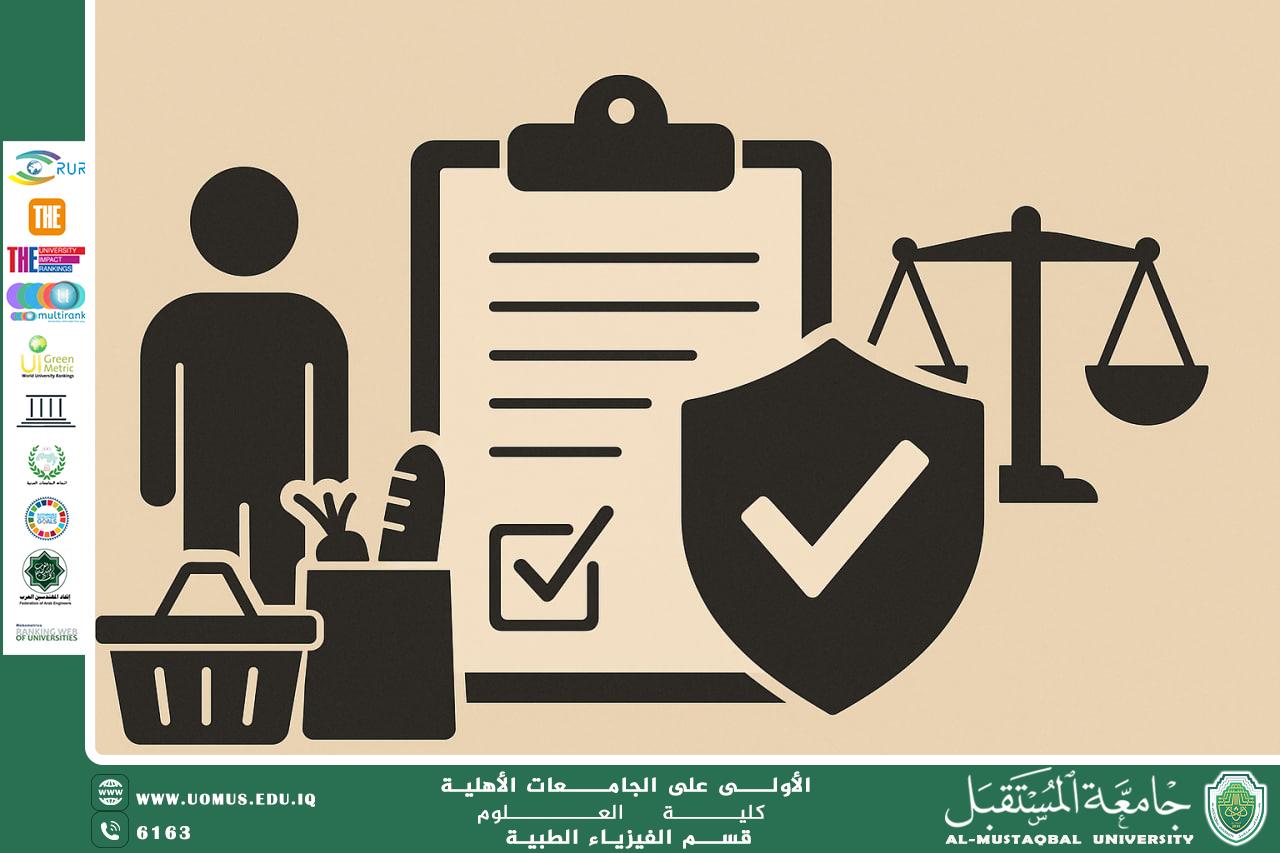
A scientific article by the lecturer (Assistant Professor Fatima Makki Shaalan) entitled “Consumer Protection: Consumer Rights and the Importance of Protecting Them”
Introduction<br />In a world marked by rapid globalization and a vast array of goods and services, consumer protection has become essential to ensuring economic fairness and safeguarding the health and safety of individuals. Protecting consumers is no longer a luxury but a fundamental right that governments and institutions strive to enforce through laws, regulations, and oversight bodies.<br /><br />1. Who Is the Consumer?<br />A consumer is any individual who acquires goods or services for personal, non-commercial use. Consumers come from all segments of society and interact daily with a wide range of products and services, making them vulnerable if there are no effective protection mechanisms in place.<br /><br />2. Basic Consumer Rights<br />According to the United Nations and various national legislations, consumers are entitled to several fundamental rights, including:<br /><br />The Right to Safety: Protection from products that may harm health or safety.<br /><br />The Right to Information: Access to accurate information about product ingredients, expiration dates, and proper usage.<br /><br />The Right to Choose: Access to a variety of products and services without monopolistic restrictions.<br /><br />The Right to Be Heard: Mechanisms must exist for consumers to voice complaints and feedback.<br /><br />The Right to Compensation: Consumers have the right to redress if harmed by a product or service.<br /><br />The Right to Consumer Education: Awareness of consumer rights and responsibilities.<br /><br />3. The Importance of Consumer Protection<br />Ensuring Market Fairness: Consumer protection ensures a balanced and just relationship between buyers and sellers.<br /><br />Building Trust: It enhances consumer confidence in both local and international products.<br /><br />Promoting Sustainability: Informed consumers tend to support eco-friendly and ethically produced goods.<br /><br />Preventing Fraud: Reduces the occurrence of price manipulation, counterfeit goods, and expired products.<br /><br />4. Tools and Mechanisms for Protection<br />Legislation and Regulations: Such as consumer protection laws, pricing controls, and quality assurance standards.<br /><br />Regulatory Bodies: Agencies like consumer protection authorities or ministries of trade.<br /><br />Awareness Campaigns: Public education initiatives to inform people of their rights and how to file complaints.<br /><br />Technology: Apps and platforms for reporting violations or comparing prices and product quality.<br /><br />5. Challenges Facing Consumer Protection<br />Lack of Awareness: Many consumers are still unaware of their rights.<br /><br />Weak Enforcement: In some regions, consumer protection laws are not effectively implemented.<br /><br />E-commerce Risks: Difficulty in monitoring online markets and verifying seller legitimacy.<br /><br />Monopolies: Limited competition can lead to high prices and fewer choices for consumers.<br /><br />Conclusion<br />Consumer protection is not solely the responsibility of governments; it is a shared duty that involves lawmakers, the private sector, civil society, and consumers themselves. A fair and safe marketplace cannot exist unless every party understands and fulfills its role in the system.<br /><br />Fostering a culture of consumer awareness is the first step toward a balanced economic society that respects rights and promotes justice.<br /><br /><br /><br /><br />"AL_mustaqbal University is the first university in Iraq"<br/><br/><a href=https://uomus.edu.iq/Default.aspx target=_blank>al-mustaqbal University Website</a>