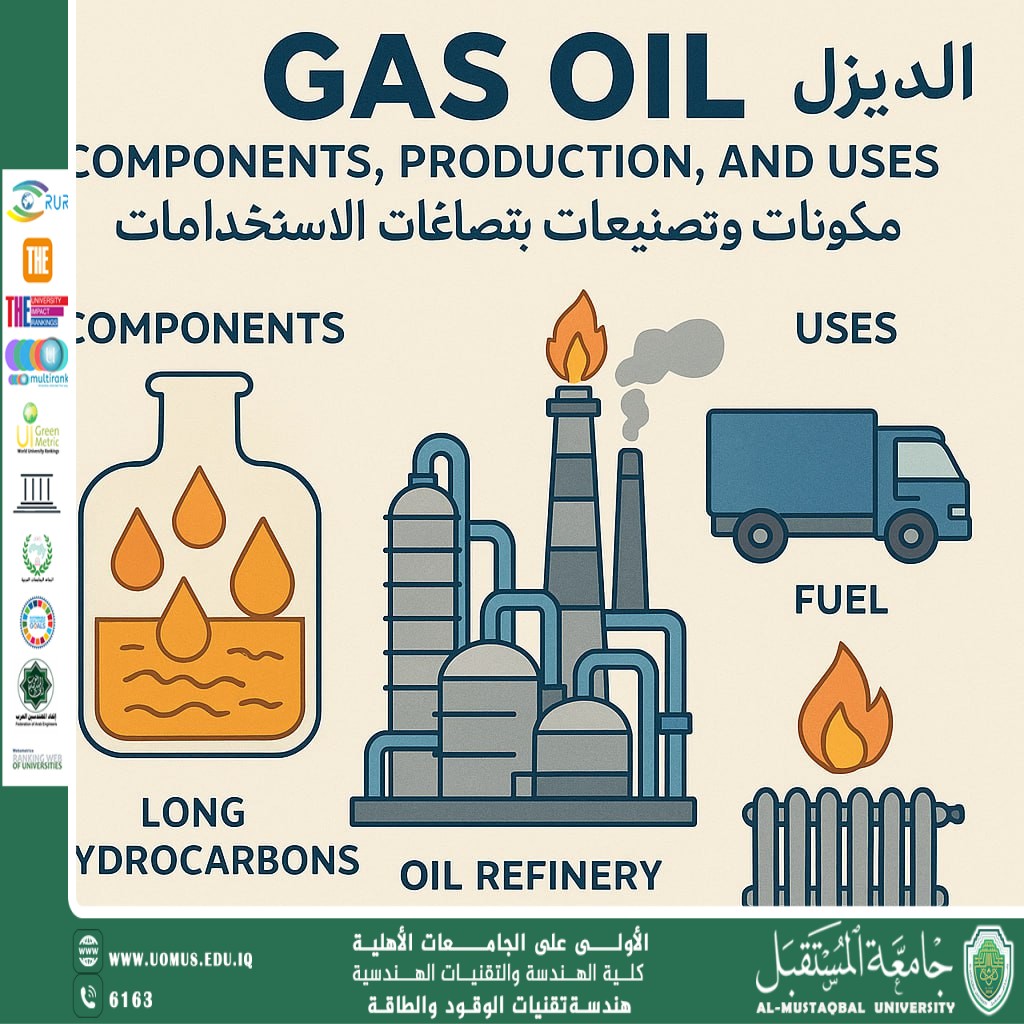
Gas Oil: Components, Production, and Uses
Gas Oil: Components, Production, and Uses<br />Dr. Malik Mustafa Mohammed<br />SDG 9 Industry, innovation and infrastructure<br />SDG 11 Sustainable cities and economies<br />SDG 13 Climate action<br />1. Introduction <br />Gas oil, commonly known as diesel fuel, is a critical petroleum-derived product used globally for transportation, industry, and energy generation. Its unique properties, including high energy density and efficiency, make it indispensable in modern economies. This report explores its composition, production process, applications, and environmental implications. <br />2. Chemical Components of Gas Oil <br />Gas oil is a complex mixture of hydrocarbons and additives: <br />1. Hydrocarbon Compounds: <br /> - Paraffins (Alkanes): Straight- or branched-chain molecules (e.g., cetane) that ensure clean combustion. <br /> - Naphthenes (Cycloalkanes): Ring-shaped hydrocarbons improving fuel stability. <br /> - Aromatics: Molecules like xylene and toluene, which enhance energy density but contribute to emissions. <br />2. Sulfur Compounds: <br /> - Present in varying concentrations (e.g., 500–3,000 ppm in conventional diesel; ≤15 ppm in ultra-low sulfur diesel (ULSD)). <br />3. Additives: <br /> - Cetane Improvers: Enhance ignition quality (e.g., alkyl nitrates). <br /> - Detergents*: Prevent injector deposits. <br /> - Lubricity Enhancers: Reduce engine wear (critical for ULSD). <br /> - Antioxidants: Prolong fuel shelf life. <br />3. Production Process <br />Gas oil is refined from crude oil through: <br />1. Fractional Distillation: Crude oil is heated, and gas oil (boiling point: 200–350°C) is extracted as a middle distillate. <br />2. Hydrotreating: Removes sulfur and impurities using hydrogen under high pressure. <br />3. Cracking/Reforming: Converts heavy hydrocarbons into lighter, more valuable products. <br />4. Blending: Additives are mixed to meet regulatory standards (e.g., EN 590 in Europe, ASTM D975 in the U.S.). <br />4. Key Properties <br />- Energy Density: ~35–40 MJ/L (higher than gasoline). <br />- Cetane Number: Measures ignition quality (40–55 for standard diesel). <br />- Viscosity: Ensures efficient fuel injection and atomization. <br />- Sulfur Content: Regulated globally to reduce emissions (e.g., 15 ppm in ULSD). <br />5. Major Uses of Gas Oil <br />1. Transportation: <br /> - l Engines: Powers trucks, buses, trains, ships, and agricultural machinery. <br /> - Automotive Diesel: Used in passenger vehicles for fuel efficiency. <br />2. Off-Road Applications: <br /> - Construction equipment (e.g., bulldozers, excavators). <br /> - Mining and logging machinery. <br />3. Industrial and Commercial: <br /> - Heating Oil: Used in boilers for residential and industrial heating. <br /> - Power Generation: Fuels backup generators and remote power plants. <br />4. Marine and Aviation: <br /> - Marine diesel for ships; specialized blends for some aircraft. <br />6. Environmental and Health Impacts <br />1. Emissions: <br /> - Particulate Matter (PM): Linked to respiratory diseases. <br /> - Nitrogen Oxides (NOx: Contribute to smog and acid rain. <br /> - Sulfur Dioxide (SO₂): Causes acid rain and ecosystem damage. <br /> - CO₂: A major greenhouse gas driving climate change. <br />2. Mitigation: <br /> - Adoption of ULSD and biodiesel blends (e.g., B20). <br /> - Use of emission control technologies (e.g., DPF, SCR). <br />7. Future Trends and Alternatives <br />1. Renewable Diesel: Produced from biomass (e.g., vegetable oils, animal fats) with lower lifecycle emissions. <br />2. Hydrogen and Electric Vehicles: Gradual shift to zero-emission alternatives. <br />3. Stricter Regulations: Global push for lower sulfur limits and carbon neutrality. <br />8. Conclusion <br />Gas oil remains a cornerstone of global energy systems, balancing high efficiency with widespread utility. However, its environmental footprint necessitates ongoing innovation in cleaner fuels, advanced engine technologies, and sustainable alternatives to meet climate <br />goals. <br />References: ASTM International, European Environment Agency, U.S. Energy Information Administration (EIA), and industry technical reports. <br />Al-Mustaqbal University The First University in Iraq<br /><br />